In This Article
- Beyond Nose Twitches: The Different Dimensions of Rabbit Intelligence
- How Rabbit Smarts Stack Up: A Rough Comparison
- Putting Their Intelligence to Work: Training and Enrichment
- Common Questions About Rabbit Intelligence (The Real Stuff Owners Ask)
- The Flip Side: Where Rabbit Intelligence *Isn't* Like Ours
I'll be honest, before I actually lived with rabbits, my idea of their intelligence was... well, pretty basic. Cute, fluffy, maybe a bit skittish. How smart could they be? Then I got my first bunny, Thumper, and let me tell you, my perspective did a complete 180. The first time he figured out how to nudge open a supposedly "secure" latch on his playpen just to get to a basil plant I'd foolishly left within sight, I knew I was dealing with a creature with a serious mind of its own. That single act sparked a years-long fascination for me. I've since spent countless hours observing, reading studies, and talking to veterinarians and animal behaviorists to really understand the question: how smart are rabbits?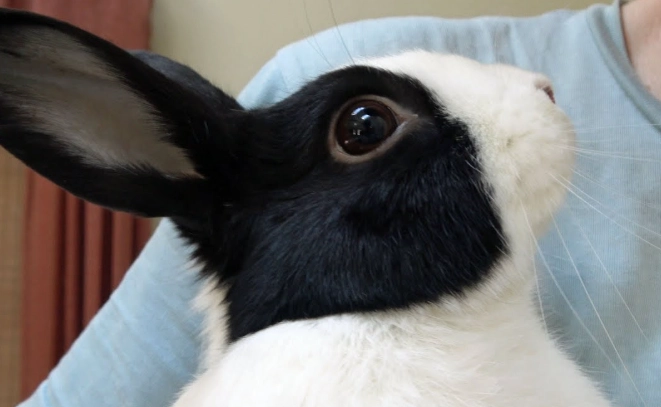
The short answer is, they're a lot smarter than most people give them credit for. We're not talking about dolphin-level problem-solving or corvid-like tool use, but within the framework of a prey animal that has evolved to survive in a dangerous world, rabbit intelligence is nuanced, practical, and often brilliantly subtle. It's a different kind of smart, one geared towards memory, social dynamics, and environmental manipulation for safety and comfort.
If you're expecting a rabbit to fetch a newspaper, you'll be disappointed. But if you want an animal that remembers complex routines, communicates its desires clearly (if you know how to listen), and can outsmart simple barriers to get what it wants, then you're starting to see the real picture of rabbit smarts.
Beyond Nose Twitches: The Different Dimensions of Rabbit Intelligence
To truly gauge how smart rabbits are, we need to break it down. You can't measure it with one test. Their cognitive abilities shine in several key areas that are crucial for a prey species.
Problem-Solving and Spatial Awareness
This is where many owners first get a glimpse of their rabbit's brainpower. Rabbits are excellent navigators. They create detailed mental maps of their territory. My rabbit knows every inch of our living room—the best escape routes under the sofa, the exact height he can jump to reach the bookshelf, the sound of the treat bag from two rooms away. It's not random exploration; it's strategic mapping.
Problem-solving often revolves around access. How do I get to that tasty cord? How do I open this cage door? I've seen rabbits work systematically on a puzzle feeder, turning it with their nose and paws until the treats fall out. A study published in the journal Applied Animal Behaviour Science has looked at learning in rabbits, showing they can learn to associate actions with rewards fairly quickly, which is a core component of problem-solving. It's not just instinct; it's learned adaptation.
They also understand object permanence—the idea that something exists even when they can't see it. Hide a treat under one of three cups, shuffle them, and a smart rabbit will often track the correct cup, using smell and memory. It's a basic test, but one many simpler animals fail.
Myth Buster: "Rabbits are destructive because they're dumb." Wrong. Chewing cords or baseboards is often a combination of natural gnawing needs and a very smart assessment of "this is in my way" or "this material feels good to chew." It's a problem for us, but from their perspective, it's a logical action. Providing better alternatives is how you outsmart their smart chewing.
Memory and Learning
Rabbit memory is seriously underrated. They have excellent long-term memory, especially for negative experiences. A single trip to the vet, a loud noise, or a person who handled them poorly can be remembered for years. This is a survival trait—remembering what and where danger is.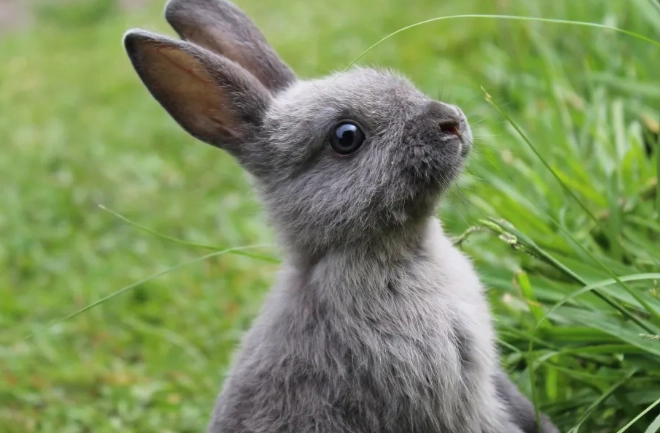
But they also remember positive things. They learn their names. They learn the specific sounds associated with food preparation. My two bunnies come running when they hear the specific crunch of the salad spinner, not just any kitchen noise. They remember people. A friend who visits only once a month is greeted differently (with cautious curiosity) than a stranger.
This memory translates directly into trainability. Which leads us to...
Social Intelligence and Communication
This, for me, is the most fascinating aspect of how smart rabbits are. They are profoundly social animals, and that requires a high degree of social intelligence. In the wild, they live in complex warren communities. Domestic rabbits retain this need and ability.
They have a rich, subtle language of body signals. A slight shift in ear position, the angle of the head, the tension in the body—it all means something. They communicate with each other and with us constantly. A rabbit that nudges your hand is asking for pets (or food). One that turns its back might be mildly offended. Circling your feet can be a sign of affection or excitement.
They form deep bonds with other rabbits (and sometimes with humans or other pets) that are based on trust and understood rituals like grooming. They can experience jealousy, boredom, and contentment. Recognizing and responding to this social vocabulary is key to answering "how smart are rabbits"—they are emotionally intelligent creatures.
How Rabbit Smarts Stack Up: A Rough Comparison
It's natural to wonder how they compare. Let's be clear: intelligence comparisons across species are tricky and often unfair. A rabbit's intelligence is perfectly suited to being a rabbit. But for perspective, here's a loose comparison based on common cognitive and behavioral metrics observed by animal behaviorists.
| Cognitive Trait | Rabbit Intelligence Level | Comparable To (Roughly) | Notes & Examples |
|---|---|---|---|
| Problem-Solving (Simple) | Moderate-High | Smart Dog / Cat | Can learn to navigate simple puzzles, open latches, dig under barriers for a goal. |
| Social Learning & Communication | High | Highly Social Animals | Complex body language, bond formation, understanding social hierarchy. The House Rabbit Society notes their intricate social structures are a sign of advanced social cognition. |
| Long-Term Memory | Very High | Elephants (for negative events) | Exceptionally good at remembering places, people (both friendly and threatening), and routines. |
| Trainability (with positive reinforcement) | Moderate | Independent Cat | Can be trained to use litter box, come when called, do tricks—but on their terms and timeline. |
| Emotional Intelligence | High | Social Herding Dogs | Capable of clear moods (grumpy, happy, scared), empathy towards bonded partners, and jealousy. |
The takeaway? They're not as biddable as a border collie, but their social and spatial memory can be superior. Their intelligence is just... different. It's like comparing a master negotiator (rabbit) to a master of commands (dog).
Putting Their Intelligence to Work: Training and Enrichment
Understanding how smart rabbits are is useless if you don't apply it. A smart animal with nothing to do becomes a bored, and often destructive, animal. Here’s where you can meet your rabbit at its cognitive level.
Training Basics (Yes, You Can!)
Training a rabbit is less about obedience and more about cooperative communication. It's built on trust and positive reinforcement (treats!). They learn best when they choose to participate.
- Target Training: Teaching them to touch their nose to a stick or your hand. This is the foundation for many other tricks and for guiding them.
- Litter Training: Most rabbits pick this up astonishingly fast because they naturally prefer to use one area. It's a clear example of their ability to learn and adapt to a domestic routine.
- Recall: Teaching them to come when called (usually by the sound of the treat bag or a specific word). This leverages their excellent associative memory.
- Agility: Some rabbits love simple agility courses—jumping through hoops, running through tunnels. It engages their problem-solving and physical skills.
The key? Keep sessions short, be patient, and never force them. Their intelligence includes a strong will.
Mental Enrichment: Beating Bunny Boredom
This is non-negotiable for a smart animal. Enrichment isn't just toys; it's providing choices and challenges.
- Foraging Toys: Don't just put food in a bowl. Hide pellets in cardboard tubes stuffed with hay, use puzzle balls, or scatter herbs in a box of shredded paper. Making them work for food mimics natural behavior and engages their brain. The RSPCA emphasizes foraging as critical for mental well-being in rabbits.
- Environmental Changes: Rotate their toys weekly. Rearrange the safe furniture in their play area (if they are free-roam) to create a "new" territory to explore. A bored rabbit is often a sign the owner hasn't kept up with the rabbit's need for novelty.
- Digging and Chewing Boxes: Provide a box filled with child-safe soil or shredded paper for digging. Offer a variety of chew toys (willow, applewood, cardboard). This channels destructive urges into appropriate outlets—a smart solution for a smart behavior.
- Social Time: If at all possible, get your rabbit a bonded friend. The daily social interaction, grooming, and communication is the best possible mental enrichment. The House Rabbit Society strongly advocates for rabbit pairing, noting it fulfills fundamental social needs a human cannot meet.
Common Questions About Rabbit Intelligence (The Real Stuff Owners Ask)
The Flip Side: Where Rabbit Intelligence *Isn't* Like Ours
It's just as important to understand the limits. This isn't a criticism; it's about setting realistic expectations.
Rabbits are not abstract thinkers. You can't reason with them or explain why chewing the internet cable is bad. Their intelligence is immediate and concrete. It's about cause and effect in the present moment: "I nudge this, it opens, I get food."
They are also governed by very strong instincts. No matter how smart, a loud noise will trigger a flight response. You can't train that out of them. Their intelligence works within the framework of being a prey animal. Sometimes instinct overrides learned behavior, and that's okay. It's kept them alive for millennia.
So, when you ask how smart are rabbits, remember you're asking about a specific, survival-oriented, socially complex kind of smart. It's not about solving puzzles for the sake of it, but about solving the puzzle of living safely and comfortably.
Final thought? Living with a smart rabbit is a partnership. It's about providing an environment where their natural intelligence can shine—through exploration, problem-solving, and social bonding—while you learn to speak their language. It's incredibly rewarding. Once you see the world from behind those twitching whiskers, you'll never look at them as just a "dumb bunny" again. You'll see a clever, emotional, and deeply interesting little creature sharing your home.
And if you ever doubt it, just wait. They'll probably figure out how to get into the treat bag you thought was secure. They're smart like that.
Reader Comments