If you're looking at a Californian rabbit and thinking it's just a white rabbit with dark points, you're missing the whole story. The official breed standard, as set by the American Rabbit Breeders Association (ARBA), is a detailed blueprint for the ideal show-quality Californian. It's not a suggestion; it's the rulebook judges use to score every rabbit on the table. Getting a 95+ score isn't about luck. It's about deeply understanding every line of that standard and how it translates to a living, breathing animal.
I've been breeding and showing Californians for over a decade. I've seen gorgeous rabbits with perfect color get hammered on body type, and compact, muscular rabbits lose because of a smudged nose marking. The standard is a puzzle where every piece must fit. This guide breaks down that puzzle, piece by piece.
What You'll Learn in This Guide
What is the Californian Rabbit Breed Standard?
Think of it as the constitution for the breed. The ARBA publishes a Standard of Perfection that defines the perfect specimen for every recognized breed. For Californians, this document outlines specific, measurable ideals for body shape, weight, fur quality, and, most famously, its Himalayan-patterned markings. Judges are trained to compare your rabbit against this mental image of perfection. Each deviation is a deduction.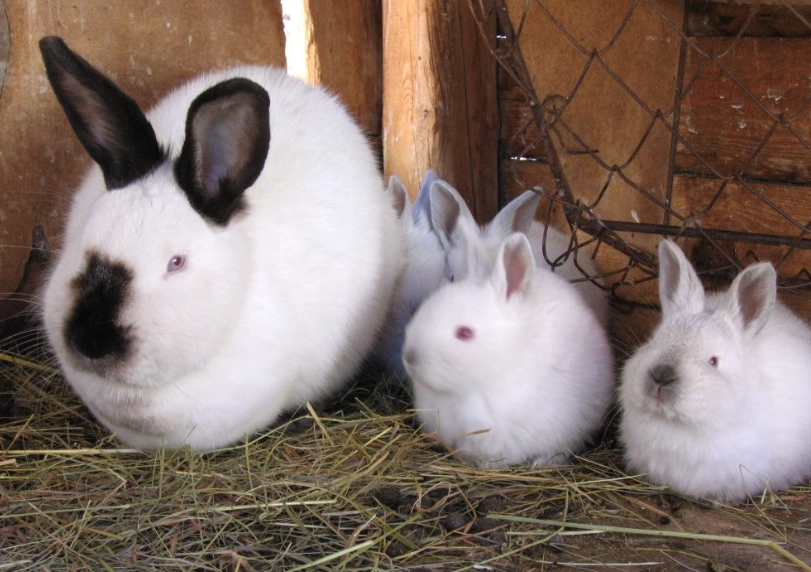
The goal isn't to create a boring, identical clone. It's to preserve and improve the breed's characteristics that make it what it is: a premier meat rabbit with a stunning, recognizable appearance suitable for the show table.
Key Takeaway: The standard prioritizes function over flash. A Californian is first and foremost a commercial-type rabbit. That deep, well-rounded hindquarter isn't just for looks; it's where the best meat is. Judges reward this functionality.
Body Type & Weight: The Foundation (Where Many Go Wrong)
This is the most critical section and carries the most points. A rabbit with poor type will never win, even with flawless color.
The Commercial "Cylinder"
The ideal Californian body is often described as a "deep, well-filled cylinder." From above, it should look like a rectangle with rounded corners, not a pear or a wedge. The midsection should be firm and well-muscled, rising to a broad, deep, and well-rounded hindquarter. The top line should form a smooth, continuous curve from the base of the ears over the hips and down to the tail. A flat or sagging top line is a major fault.
Many beginners focus too much on the head and ears. A judge's hands go to the hindquarters first. That's the money spot.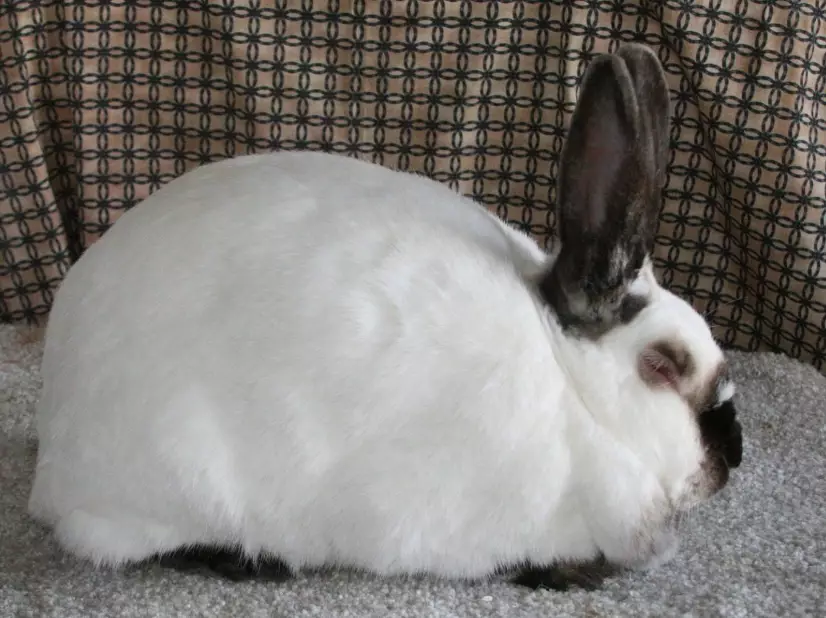
Weight Requirements
This isn't a suggestion; it's a hard limit. The ARBA standard specifies ideal weights for senior rabbits (6 months and older):
| Class | Ideal Weight | Disqualification (DQ) Weight |
|---|---|---|
| Senior Bucks | 8–10 lbs (3.6–4.5 kg) | Under 7.5 lbs or over 10.5 lbs |
| Senior Does | 8.5–10.5 lbs (3.9–4.8 kg) | Under 8 lbs or over 11 lbs |
A rabbit outside the DQ range cannot be judged for awards. I've seen beautiful rabbits sent home for being 11.1 lbs. It's brutal, but it's the rule. Juniors (under 6 months) have different scales, but the principle is the same.
Coat, Color & Markings: The Signature Look
Here's the part everyone notices. But there's nuance here that separates good from great.
The Perfect Coat
The fur should be dense, fine, and silky with good rollback. That means when you stroke the fur from rump to shoulder, it should smoothly return to position. A wooly, thin, or overly coarse coat is faulted. The undercolor should be as white as possible, which makes the contrast with the points sharper.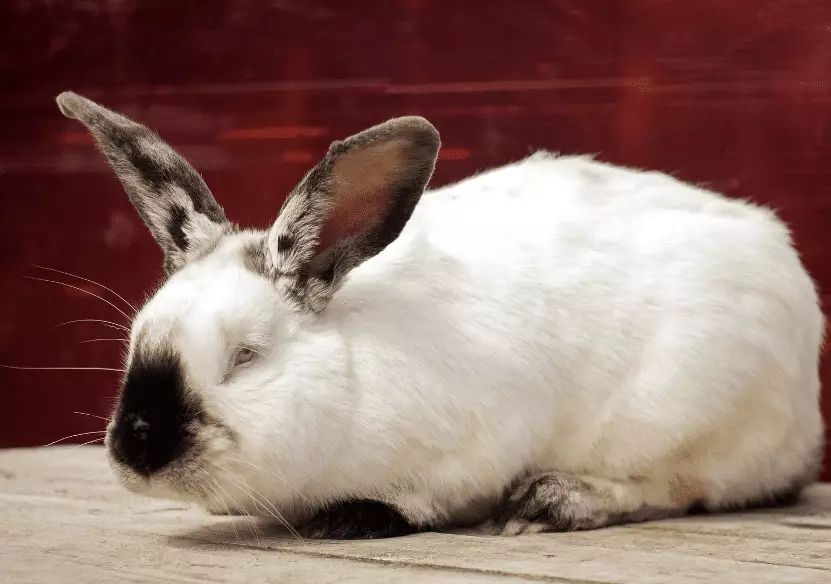
The Himalayan Pattern: Not Just Black
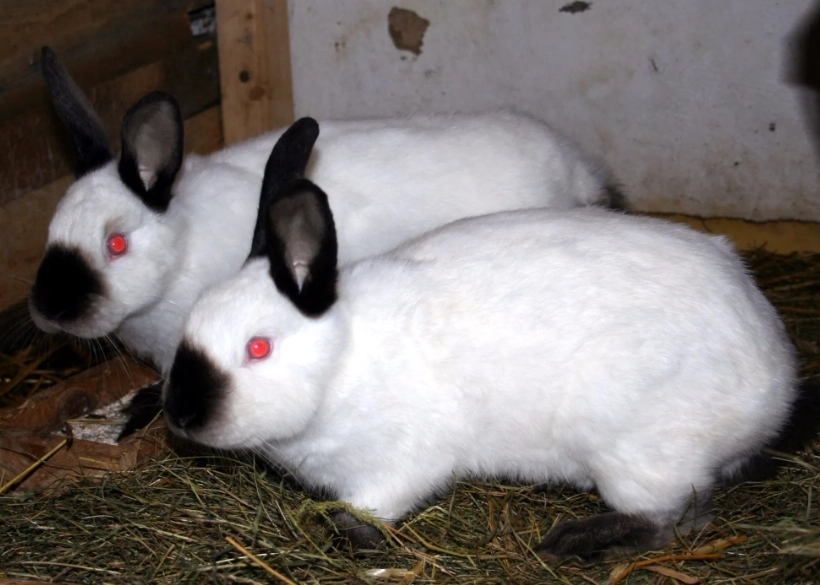
The points (nose, ears, feet, and tail) must be as dark, rich, and even as possible. The accepted color is a deep, chocolate brown, appearing almost black—this is the classic look. The nose marking should be a clean, butterfly-shaped pattern covering the nose and whisker beds, with clean edges. Smudged or uneven nose markings are common faults.
The ears should be well-colored to the base, and the feet should have color extending up the leg to the ankle (hock). Tail coloring should be complete. Eyes must be pink, reflecting the albino gene responsible for the pattern. Any blue cast or dark eye is a disqualification.
A judge once told me, "I look for a nose marking so sharp you could cut yourself on it." That stuck with me. It's about definition. A rabbit with slightly lighter but perfectly defined points will often beat one with muddy, smudged dark points.
Californian vs. New Zealand White: Spot the Difference
Newbies confuse them all the time. Both are white, commercial-type rabbits. The difference is in the eyes and points. A New Zealand White has bold, dark brown eyes and no dark points whatsoever. A Californian has pink eyes and the dark Himalayan markings. Their body types are very similar, though some argue the Californian has a slightly more refined head. On the judging table, mixing them up is a cardinal sin.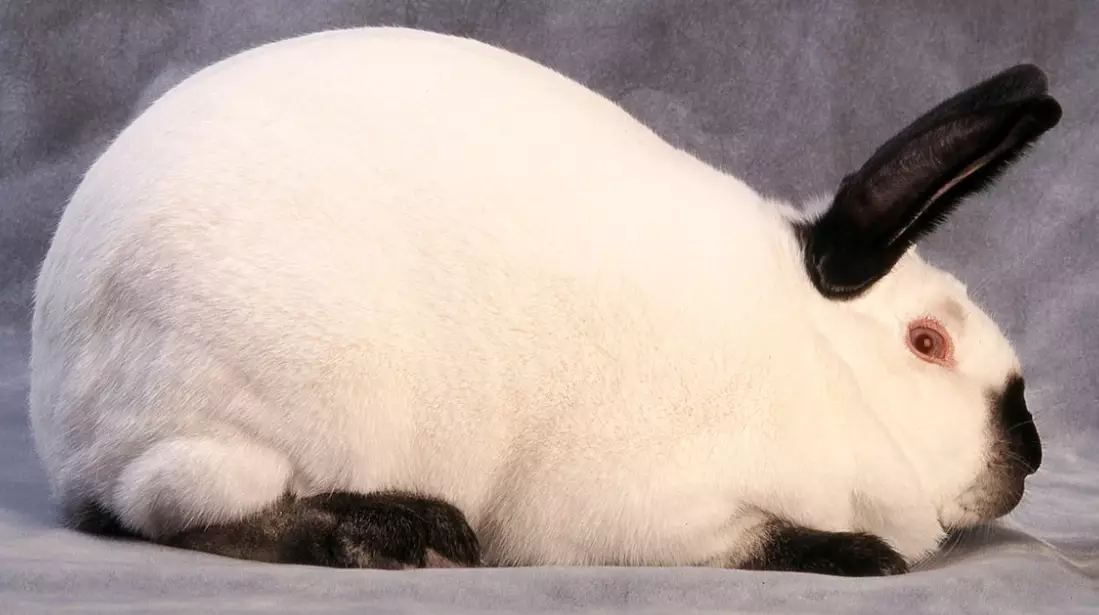
How to Prepare a Californian Rabbit for a Show
Preparation starts months in advance, not the night before.
Diet & Conditioning: You need a balanced diet to achieve that ideal weight and muscle tone without fat. Overweight rabbits lose type definition. Underweight rabbits look frail.
Coat Care: Regular grooming is essential. A matted or stained coat is a sure way to lose points. Keep them on clean bedding. Some breeders use a cornstarch-based powder to absorb oils and whiten the coat a few days before the show, brushing it out thoroughly.
The Final Check: The morning of the show, do a systematic review:
- Weight: Verify it's within the acceptable range.
- Nails: Trim them. Long nails can scratch and are a fault.
- Eyes & Nose: Check for any discharge (instant DQ for signs of illness).
- Teeth: Ensure they align properly; malocclusion is a DQ.
- Markings: A slightly damp cloth can gently clean around the nose marking if needed.
Common Mistakes That Cost You Points (The Unspoken Errors)
Beyond the obvious, here are subtle errors I see repeated.
Over-trimming foot fur: People try to "clean up" the line where the point color ends on the feet. Judges know the natural line. A scissor-trimmed edge looks artificial and can be faulted for "mutilation."
Ignoring the topline when posing: When you set your rabbit on the table, how you pose it matters. If you stretch it out, you can make a slightly saggy topline look worse. Let the rabbit sit naturally to best show its true arch.
Breeding for color only: This is the biggest trap. You can have a line with breathtaking, jet-black points but terrible body type. You'll never win. Always breed your best-bodied doe, even if her nose marking is only 90% perfect, to a buck with excellent type and good color. Type is harder to fix than color.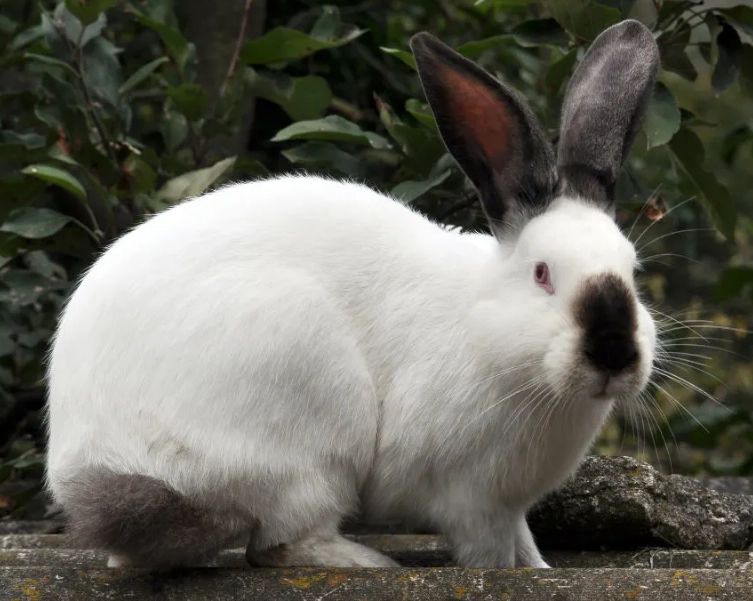
Your Californian Standard Questions Answered
My Californian's nose marking is slightly off-center. Is it a lost cause for showing?
Not at all. Unless it's extremely asymmetrical or bleeds badly into the cheek, it's a fault, not a disqualification. Judges evaluate the whole rabbit. A rabbit with a superb body type and a 90% nose marking will easily defeat a poorly-typed rabbit with a perfect nose. Focus on improving the marking in the next generation, but still show that rabbit if its body is good.
How important is the exact shade of the points? My rabbit's points are dark brown, not near-black.
The standard calls for "as dark as possible." In the showroom, the darkest, most velvety points have a clear advantage because the contrast is more striking. A medium-brown point will be faulted for being too light. It's one of the first things a judge's eye is drawn to. Breeding for depth of color is a key part of a serious breeding program.
Can a Californian have a small white spot on its point, like on an ear or foot?
Any white spot or stray white hair within the colored point areas is a major fault. It breaks the required evenness of color. A large spot could be grounds for disqualification depending on the judge's interpretation of "broken" markings. This is a common issue when points are still filling in on junior rabbits, so watch it as they mature.
Where can I read the official, word-for-word ARBA standard for myself?
You need to purchase the current ARBA Standard of Perfection book. It's updated every few years. Relying on forum summaries or old PDFs is risky because details can change. Every serious breeder and shower owns this book. It's your bible.
Understanding the Californian rabbit breed standard is a journey. It starts with memorizing the rules but evolves into developing an eye for the living ideal. Judge your own rabbits harshly before a judge ever does. Look for the slight dip behind the shoulders, the fullness of the hip, the sharpness of the nose butterfly. That critical eye, guided by the standard, is what transforms a pet owner into a successful breeder and exhibitor.
Reader Comments