You bring home this fluffy, quiet creature, thinking you've got the perfect low-maintenance pet. You buy a cute cage, a bag of colorful pellets, and a carrot-shaped toy. It seems so simple. But within months, maybe weeks, things start to feel off. Your bunny is chewing the baseboards, seems skittish, or has strange digestive issues. You're not a bad owner. You've just fallen into classic "rabbit traps"—well-intentioned mistakes based on widespread myths about what rabbits really need.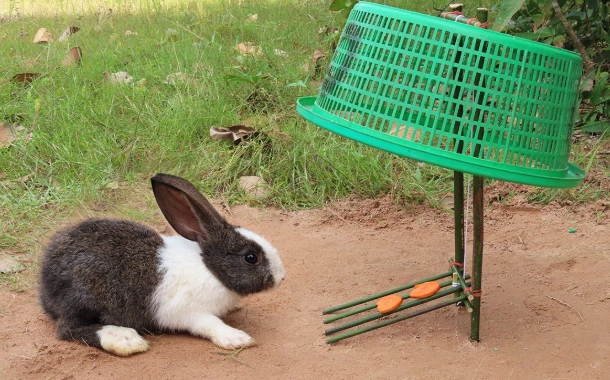
I've fostered rabbits for over a decade, and I've seen these traps snap shut time and again. They're not about malice, but misunderstanding. A rabbit's needs are subtle, specific, and wildly different from a cat or dog. Getting it wrong doesn't just lead to a misbehaving pet; it can lead to a sick, stressed, and profoundly unhappy animal. Let's walk through the seven most common traps and, more importantly, how to spring them open for good.
What You'll Learn
Trap 1: The "Easy Pet" Assumption
This is the root of almost every other problem. Society sells rabbits as simple, cage-bound pets for young kids. Nothing could be further from their biological reality.
Rabbits are complex prey animals with sophisticated social needs, a delicate digestive system, and a natural desire to run, dig, and explore. They're more like tiny, furry deer than rodent-like hamsters. Viewing them as "easy" sets you up to miss all the signs of distress or illness until it's an emergency.
Trap 2: The Lonely Bunny
We think a rabbit sitting quietly in a corner is content. Often, it's just depressed. In the wild, rabbits live in complex warren communities. Solitude is a state of constant, low-grade terror for a prey animal.
The Signs You're Missing
A lone rabbit might over-groom, leading to bald patches. They might become lethargic or, conversely, destructively hyperactive. They can develop stereotypic behaviors like endlessly pacing the cage perimeter. I fostered a rabbit named Mochi who would sit facing the wall for hours. We thought he was just calm. When we introduced him to a gentle female (after a proper bonding process), his entire personality changed. He binkied (that joyful jump-twist), he explored, he flopped over in total relaxation. He wasn't calm before; he was shut down.
Organizations like the House Rabbit Society don't just suggest companionship; they advocate for it as a core welfare requirement. The bonding process itself is a skill—it requires neutral space, patience, and sometimes a professional's help—but the result is a qualitatively different life for your pet.
Trap 3: The Pellet-Fed Gut
Here's a trap I fell into myself with my first rabbit, Thumper. The pet store sold me a big bag of sugary, seed-and-corn-mixed pellets. He loved them! He'd gobble them up and leave his hay. I thought I was giving him a treat.
I was slowly poisoning him.
A rabbit's diet should be a pyramid, and the base—about 80%—is long-strand grass hay (timothy, orchard, oat). Not alfalfa for adult rabbits (too rich in calcium). Hay does two critical things: it files down their ever-growing teeth, and its fiber keeps their unique digestive tract moving. Pellets are a concentrated supplement, not a staple. The commercial muesli mixes are like feeding a child candy for every meal.
Fresh greens (romaine, cilantro, bok choy) come next, and a strictly limited amount of pellets (about 1/4 cup per 5 lbs of body weight) and the rare treat (a blueberry, not a whole carrot) sit at the very top. Thumper's over-reliance on pellets contributed to dental spurs and a scary bout of GI stasis. We fixed his diet, but it was a hard lesson.
Trap 4: The Prison Cell Cage
That adorable, standard pet store cage? It's a prison cell for an animal built to run. A rabbit needs space to take at least three full hops, stretch out completely, and stand on its hind legs without hitting its head.
For most medium-sized rabbits, that means a minimum enclosure of about 4ft x 2ft, but that's just for their base. They need several hours daily of supervised or fully secured free-roam time in a rabbit-proofed room. The cage is their safe bedroom, not their whole world.
Think of it this way: would you keep a dog in a crate 24/7? The solution isn't necessarily a massive custom hutch. It's often an exercise pen (x-pen) attached to a larger resting area, creating a spacious, flexible living zone. The floor should be solid, not wire, to prevent painful sore hocks.
Trap 5: Handling = Holding
Children (and many adults) want to cuddle and carry their bunny. For most rabbits, being picked up triggers a primal prey response—they feel like they've been snatched by a hawk. The resulting kicking and scratching isn't "mean" behavior; it's sheer panic.
You build trust with a rabbit on the floor, at their level. Let them come to you. Pet them while they're firmly on the ground. Teach kids to sit quietly and let the rabbit explore them. The bond you form through quiet, respectful interaction is deeper and more rewarding than any forced cuddle. A rabbit that chooses to hop into your lap is giving you a gift of supreme trust.
Trap 6: The Boredom Box
No space, no friend, nothing to chew but the same old toy. Boredom in a smart, active animal leads directly to destruction and depression. Rabbits need to express natural behaviors: chewing, digging, foraging, exploring.
- Chewing: Provide a constant rotation of safe wood (apple, willow), cardboard boxes, and hay-filled toys.
- Digging: A large, shallow cat litter box filled with child-safe play sand or crumpled paper gives an outlet for this instinct.
- Foraging: Don't just put food in a bowl. Hide pellets in toilet paper tubes stuffed with hay. Scatter herbs in a pile of hay. Make them work for it.
- Exploring: Change up their free-roam area weekly. Add a new cardboard castle, a tunnel, or rearrange furniture (safely). Novelty is enrichment.
Trap 7: The Wrong Vet
This is the most dangerous trap of all. Your regular dog-and-cat vet is not equipped for a rabbit emergency. Rabbits are "exotics," with a completely different physiology. They hide illness until they are critically sick. They require specific anesthesia protocols, pain management, and diagnostic knowledge.
Find a rabbit-savvy exotic veterinarian *before* you need one. Call and ask: How many rabbits do you see monthly? What is your protocol for GI stasis? Do you use gas anesthesia? A good exotics vet is worth the drive and the higher cost. It's the difference between life and death when your rabbit stops eating at 2 AM on a Sunday.
Your Rabbit Trap Questions, Answered
Is it cruel to keep a single rabbit alone?
While not deliberately cruel, keeping a single rabbit in isolation often leads to chronic loneliness and boredom, which we now understand as a significant welfare issue. Rabbits are profoundly social. A solo rabbit might seem fine, but subtle signs like over-grooming, lethargy, or aggression can indicate distress. The House Rabbit Society and other welfare bodies strongly advocate for bonded pairs. The key isn't just having two rabbits; it's ensuring they are properly and patiently bonded, which can take weeks of neutral territory introductions.
My rabbit only eats pellets and refuses hay. What's the worst that can happen?
This is a dental and digestive time bomb. Rabbit teeth grow continuously, and only the abrasive action of chewing long-strand hay (like timothy or orchard grass) wears them down properly. Without hay, teeth overgrow, causing painful spurs that cut into the tongue and cheeks, leading to anorexia. More urgently, a rabbit's gut motility depends on the high fiber in hay. Low-fiber, high-carb diets (pellets, treats) cause the gut to slow down and can lead to GI stasis, a life-threatening condition. Transition by mixing hay with fragrant herbs like cilantro or placing pellets *under* a pile of hay to encourage foraging.
Are rabbits good 'starter pets' for young children?
This is perhaps the most pervasive and damaging myth. Rabbits are fragile, prey animals that startle easily. They often dislike being picked up—a child's natural instinct—which can lead to kicking, scratching, or dropped rabbits causing serious spinal injuries. Their care is complex (diet, vet, space), and they live 8-12 years, a long commitment. They are excellent pets for calm, older children and families who want to observe and interact with a pet on *its* terms, not as a cuddly toy. A guinea pig or a rat is often a more robust and interactive choice for a young child's first pet.
Stepping back from these seven traps isn't about achieving perfection. It's about shifting your perspective. See your rabbit not as a decorative pet, but as a small, sensitive being with specific, non-negotiable needs for companionship, space, diet, and mental stimulation. When you meet those needs, you don't just avoid problems—you unlock a wonderful, quirky, and deeply rewarding relationship with one of nature's most gentle and misunderstood creatures. The effort you put in is returned tenfold in quiet companionship and the simple joy of watching a happy, healthy bunny live its best life.
Comment