Quick Guide
You've probably scrolled past a picture online—a tiny, adorable kitten with ears that flop down instead of standing up. The caption reads "rabbit kitten," and your brain does a double-take. Is it a rabbit? Is it a cat? What on earth is a rabbit kitten, and where can you get one? I remember the first time I saw one at a friend's house. I blurted out, "What kind of cat is THAT?" It looked so different, so incredibly soft and gentle. My friend just laughed and said, "That's my little bunny-cat." That moment sparked my curiosity, and after talking to breeders, vets, and owners, I realized there's a lot of confusion and misinformation out there. So let's clear it up.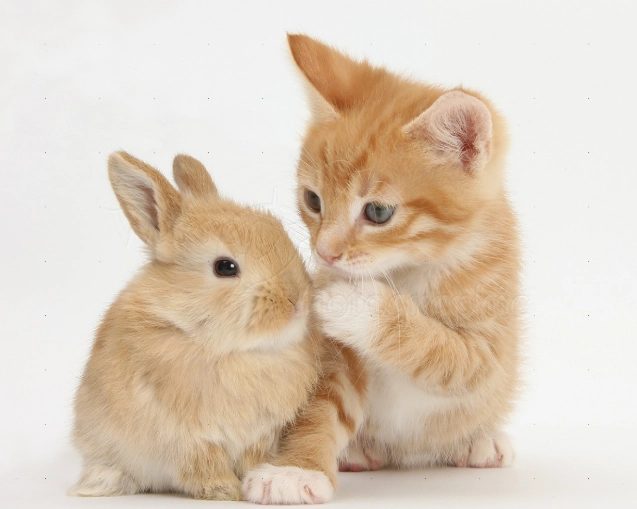
This isn't some lab-created hybrid or a magical creature from a storybook. The term "rabbit kitten" is a charming, descriptive nickname used by cat lovers and some breeders. It doesn't refer to a specific, officially recognized breed like a Persian or a Maine Coon. Instead, it's a way to describe a mixed-breed or domestic cat that happens to have a set of physical and behavioral traits that, to many people, are reminiscent of a bunny. Think of it like calling a cheerful person a "ray of sunshine"—it's a descriptive label, not a scientific classification.
But here's where it gets tricky, and where a lot of online searches for "what is a rabbit kitten" lead people astray. Some unscrupulous sellers might use the cute name to market ordinary kittens at a higher price. Other times, it genuinely describes a specific look that arises from certain genetic mixes. My goal here is to give you the full, unvarnished picture so you know exactly what you're looking at—and looking for.
The Origins of the "Rabbit Cat" Look: Genetics and Chance
No cat has rabbit DNA. Let's just get that out of the way first. The appearance is purely feline, resulting from the wonderful, random shuffle of cat genetics or, in some cases, the intentional mixing of certain purebred traits. The Cat Fanciers' Association (CFA), one of the world's largest registries of pedigreed cats, recognizes specific breeds with "mutations" like folded ears (the Scottish Fold) or extremely dense coats (the British Shorthair). When genes from these types of cats end up in the general domestic cat population through unplanned matings, you can get kittens that showcase a blend of these "bunny-like" features.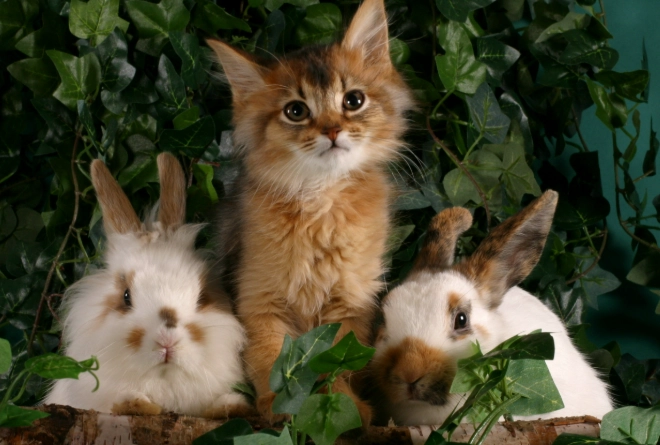
For example, a stray cat with some British Shorthair ancestry (known for its round face and dense "crispy" coat) might mate with a cat carrying a gene for smaller ears. The resulting litter could have a few kittens that look remarkably plush and rounded. Voilà—someone calls them rabbit kittens, and the name sticks. It's less of a breed and more of a type or a look.
Key Physical Traits of a Rabbit Kitten
So, what should you actually look for? If someone says they have a rabbit kitten, the cat will likely check several boxes on this list:
- Ears: This is the most striking feature. The ears aren't long and pointed like most cats'. They are smaller, rounded at the tips, and may fold forward slightly (like a Scottish Fold's) or just sit very neatly and close to the head. They don't have the tall, radar-dish appearance of a Siamese.
- Coat: The fur is a dead giveaway. It's often described as "dense," "plush," or even "crispy"—meaning it's so thick it springs back when you press it. It has a wonderful, stuffed-animal quality. The length is usually short to medium, but the density is what matters.
- Body Type: Think rounded and cobby. A rabbit kitten often has a compact, muscular body with a broad chest, short legs, and a short, thick tail. They lack the lanky, elongated build of an Oriental shorthair.
- Face: The face is typically round with full cheeks and large, round eyes. The expression is often described as sweet and innocent, contributing massively to the bunny comparison.
- Voice: An anecdotal but common trait mentioned by owners is that these cats tend to have softer, quieter meows. They're not known for being loud or demanding in their vocalizations.
It's rare to find a cat with all these traits perfectly, but having three or four is usually enough for people to use the nickname.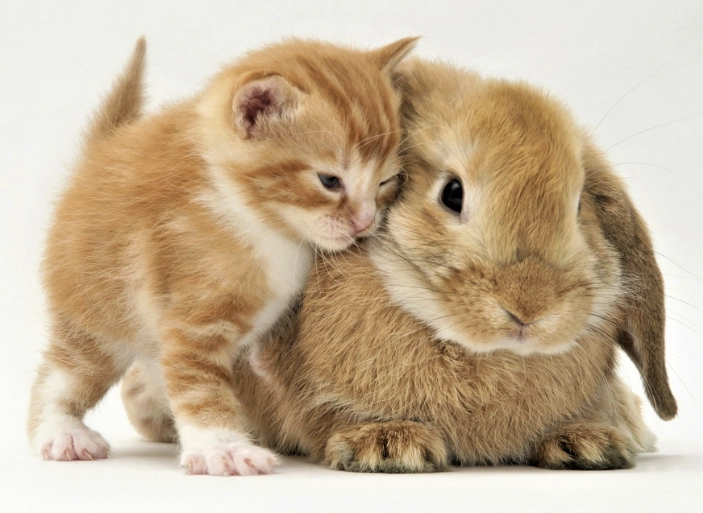
Rabbit Kitten vs. Purebred Cats: A Clear Comparison
A lot of people asking "what is a rabbit kitten" are really trying to figure out if it's a specific breed they should research. Let's break down how this type compares to the purebred cats it often gets confused with. This table should help clear things up.
| Trait | Rabbit Kitten (Mixed Type) | Scottish Fold | British Shorthair | Munchkin |
|---|---|---|---|---|
| Official Breed Status | No. A descriptive term for mixed-breed cats. | Yes. Recognized by major associations. | Yes. Recognized by major associations. | Yes, but controversial due to health concerns. |
| Ears | Small, rounded, may fold slightly. | Definitively folded forward and down. | Small, rounded, set wide apart. | Varies; not a defining trait. |
| Body | Compact, rounded, muscular. | Rounded, medium build. | Powerful, cobby, very rounded. | Short legs are the defining feature. |
| Coat | Dense, plush, often short. | Dense, can be short or long. | Very dense, crisp, "plush" texture. | Varies. |
| Common Temperament | Often reported as sweet, calm, gentle. | Typically sweet, calm, adaptable. | Calm, easygoing, not overly active. | Playful, outgoing, retains kitten-like behavior. |
| Known Health Considerations | Generally robust "moggy" health. | Osteochondrodysplasia (bone/cartilage disorder linked to the fold gene). Requires careful breeding. | Prone to obesity, some heart conditions (HCM). | Potential for lordosis (spinal issues) due to short legs. |
| Average Cost | Shelter adoption fee to moderate price from a breeder focusing on type. | High ($1000-$3000+). | High ($800-$2500+). | Moderate to High ($500-$2000+). |
See the difference? The rabbit kitten isn't in the left column as a breed. It's a look that sometimes pops up in the mixed-bcat population, often resembling a blend of the British Shorthair and maybe a hint of Scottish Fold, but without the pedigree papers or the specific, sometimes serious, health mandates of those pure breeds. The American Society for the Prevention of Cruelty to Animals (ASPCA) provides excellent general guidance on cat care that applies perfectly to these mixed-breed sweethearts.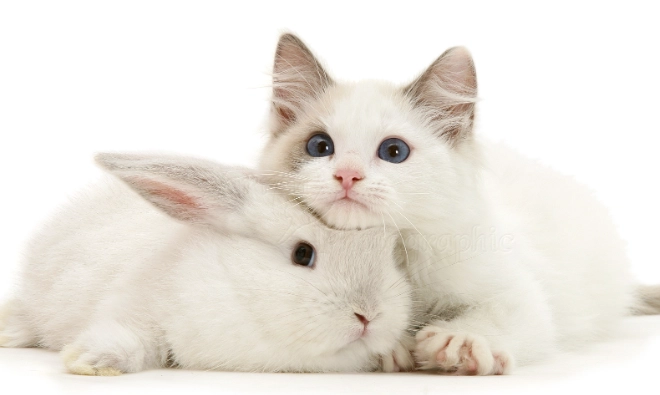
That health point is crucial. One reason people are drawn to the idea of a rabbit kitten is the perception of a unique look without the potential genetic baggage of a purebred. It's a fair thought, but not a guarantee.
The Real Deal on Temperament and Care
Okay, so they look like a stuffed animal. But what are they actually like to live with? Based on countless owner accounts and descriptions from fosters, the temperament often associated with the rabbit kitten type is a major part of its appeal.
Personality: The "Gentle Bunny" Vibe
If you're imagining a hyperactive, mischievous tornado of claws, you're probably looking at the wrong type. The consensus is that these cats tend to be on the calmer, sweeter end of the spectrum. They're often described as:
- Affectionate but not clingy: They enjoy sitting with you, maybe even on you, but aren't typically in-your-face demanding about it.
- Playful in gentle bursts: They'll chase a feather wand or a ball, but are more likely to have a short, fun play session than to race around the house at 3 AM. At least, that's the hope!
- Good with families: Their generally placid nature can make them a good fit for homes with calm children. Of course, every cat is an individual.
- Adaptable: They often handle changes in routine or environment with a bit more equanimity than some high-strung breeds.
Now, I have to add a personal note of caution here. We're generalizing. I met one so-called rabbit kitten at an adoption event who was a complete goofball, knocking over toys and leaping everywhere. His looks fit, but his personality was all kitten-crazy. So, while the trend is toward calmness, always meet the individual cat.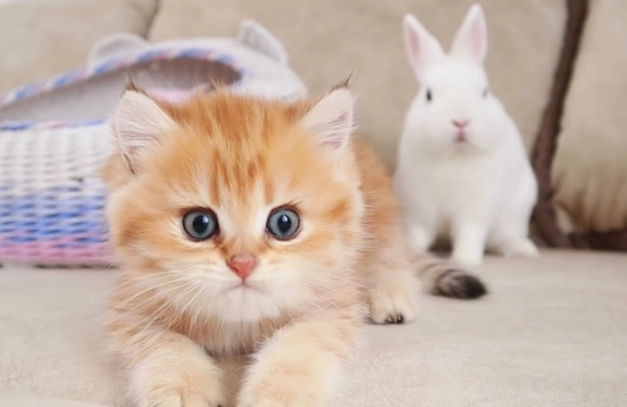
Caring for Your Plush Companion
Their care is essentially the same as for any other domestic shorthair cat, but with a couple of emphasis points:
- Grooming: That dense coat needs help. Weekly brushing is non-negotiable to prevent mats and reduce shedding. A slicker brush or a fine-toothed comb works wonders. They often love the attention, turning it into a bonding session.
- Weight Management: That cobby, rounded body can easily slide into overweight. You have to be vigilant about portion control and encourage play. A fat cat isn't a cute cat; it's an unhealthy cat prone to diabetes and joint problems. The ASPCA's cat care guidelines are a fantastic resource for nailing down the basics of diet and exercise.
- Health Checks: Because their look can come from mixed ancestry, there's no single genetic issue to screen for. However, any kitten with folded ears should be monitored for signs of joint stiffness or pain, as that can be a sign of the osteochondrodysplasia seen in Scottish Folds. A good vet will give them a thorough checkup. Responsible breeding of any cat, mixed or purebred, is key to health.
- Environment: They are perfect indoor cats. Their gentle nature and appealing looks make them a target for theft or accidents if left outside. Provide plenty of cozy beds (they appreciate soft things), scratching posts, and interactive toys.
The Ethical Considerations: What to Watch Out For
This is the part that bothers me, and it should bother you too. The cuteness of the term "rabbit kitten" can be exploited. Here are red flags:
- Sky-High Prices for "Designer Mixes": A mixed-breed cat is a mixed-breed cat. Paying thousands for what is essentially a domestic shorthair with cute ears is not advisable.
- Health Guarantees That Sound Too Good: Any breeder not discussing potential health issues, especially related to cartilage or bones if folded ears are present, is being irresponsible.
- Focus on Looks Over Temperament: A good source will talk endlessly about the kitten's personality, how it was raised, and its parents' temperaments, not just how much it looks like a bunny.
The most ethical path, in my opinion, is to adopt. You might just find your perfect "rabbit kitten" waiting in a shelter cage, overlooked because it's not a labeled breed. Giving that cat a home is a wonderful thing.
Final Thoughts: Embracing the Unique Mix
So, what is a rabbit kitten? It's a heart-meltingly cute, often sweet-natured type of domestic cat that embodies a particular set of soft, rounded physical traits. It's a testament to the delightful diversity of the common moggy. It's not a breed with a standard, but a look born from the genetic lottery or casual blending of certain cat features.
If you're captivated by the idea, go into it with open eyes and realistic expectations. Don't get swept up in hype or overpay for a label. Visit shelters, talk to rescuers, and if you consider a breeder, prioritize health and ethics above all else. Whether you find a cat that perfectly matches the rabbit kitten description or one that's completely different, the love of a cat is a special thing. And if that cat happens to look like it hopped straight out of a Beatrix Potter book, well, that's just a delightful bonus.
The search for "what is a rabbit kitten" often ends with people just wanting a gentle, adorable, and soft companion. The good news is, whether you find one with the perfect bunny-like features or not, there are countless cats out there with that wonderful temperament waiting for a home. That's the real treasure.
Reader Comments