Quick Guide
- What's Really Going On in Their Heads? (Cat & Rabbit Psychology 101)
- The Step-by-Step Blueprint: Introducing Cats, Rabbits, and Kids
- The Health and Safety Checklist You Can't Skip
- Your Burning Questions, Answered Honestly
- The Realistic Outcomes: What Success Actually Looks Like
- The Final Verdict: Making Your Decision
Okay, let's clear the air right away. When most folks type "can cats and rabbits make kids" into Google, they're not wondering about some bizarre animal hybrid. I know, the phrasing is funny. What they're really, really asking is whether having both cats and rabbits in a home with young children is a safe, sane, and manageable idea. It's about creating a family, not a science experiment.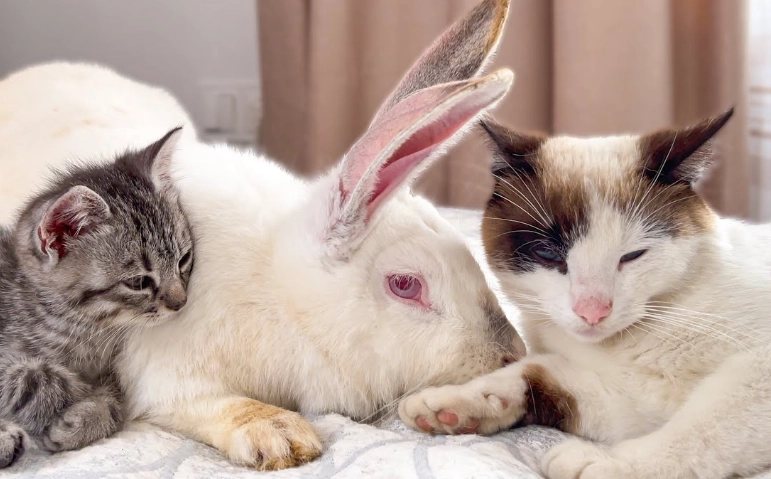
And you know what? It's a fantastic question. One I've wrestled with myself. I remember visiting a friend who had a feisty cat and a nervous bunny, and their toddler was just fascinated by both. The air was thick with a mix of curiosity and mild panic (mostly from the adults). It made me think hard about what it really takes to make such a mix work.
The short, no-nonsense answer is: Yes, cats and rabbits can coexist in a home with kids, but it's not a simple plug-and-play situation. It's a project. It requires more than just love; it needs strategy, patience, and a hefty dose of realism. Anyone who tells you it's always a perfect, Instagram-ready harmony is selling you a dream. Sometimes it's messy. Sometimes it's stressful. But when done right, it can be incredibly rewarding for everyone—kids and pets alike.
What's Really Going On in Their Heads? (Cat & Rabbit Psychology 101)
Before you even think about introductions, you need to understand who you're dealing with. Cats and rabbits aren't just fuzzy toys; they're complex creatures with hardwired instincts. Ignoring this is where most problems start.
The Feline Perspective: Predator by Nature
Cats are obligate carnivores. Their play is often practice for hunting. A quick, small, furry thing that moves erratically (like a rabbit, or a toddler's toy being dragged) can trigger a deep-seated chase instinct. It's not necessarily "mean"; it's biology. A well-fed, lazy, older cat might just see a rabbit as a large, weird-smelling roommate to ignore. A young, energetic kitten or a cat with a high prey drive might see a very large, fascinating toy.
I've seen both. My cousin's cat, a gentle giant named Leo, would just blink slowly at their rabbit from across the room. Another friend's cat, a sleek hunter named Mina, could never be fully trusted in the same space. You have to be brutally honest about your cat's personality.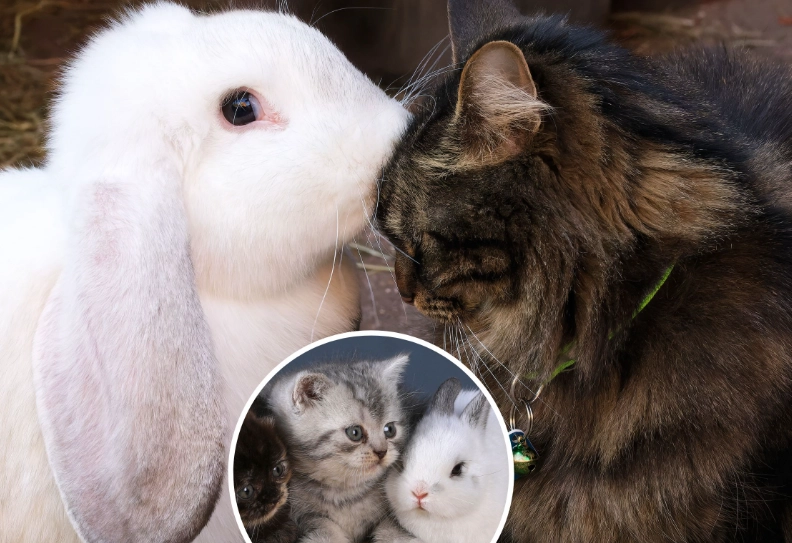
The Lagomorph Perspective: Prey Animal Always
Rabbits are prey animals. Their entire existence is built around the fear of being eaten. They are easily stressed, and stress can literally kill them (it's called capture myopathy). A rabbit's first response to a threat is to freeze, then flee. A looming cat (or a loud, grabbing child) represents the ultimate threat. A scared rabbit can scratch or bite hard in self-defense, which is dangerous for a child.
Their body language is subtle. A rabbit sitting perfectly still with wide eyes isn't being "good." It's terrified. A thumping hind foot is an alarm bell. Understanding this is non-negotiable.
The Step-by-Step Blueprint: Introducing Cats, Rabbits, and Kids
Throwing everyone together on day one is a recipe for disaster, tears, and vet bills. You need a phased approach. This isn't fast, and you have to be okay with backtracking.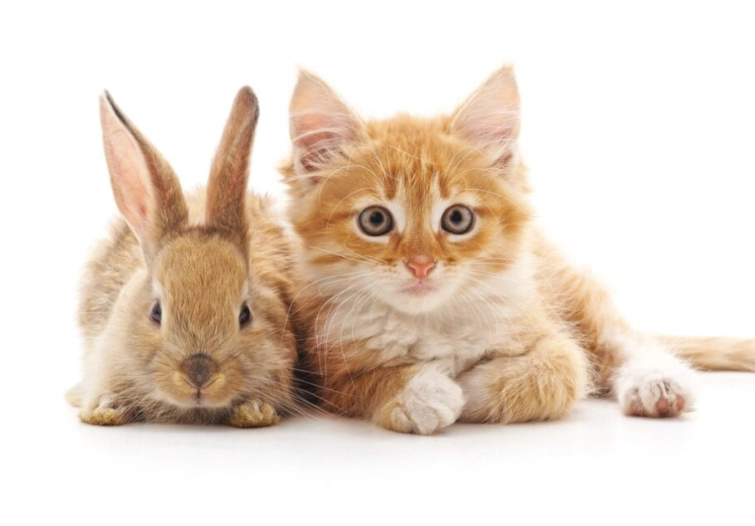
Phase 1: The Pet-to-Pet Introduction (No Kids Yet!)
This is your foundation. Get this wrong, and adding kids to the mix will be impossible.
- Scent First: Swap bedding between the cat and rabbit for a few days before they ever see each other. Let them get used to the weird new smell in their territory.
- Barrier Vision: Use a sturdy pet gate or a crate. Let them see each other while completely separated. Watch their body language. Is the cat staring intently, twitching its tail? Is the rabbit frozen in fear or thumping? These are bad signs. Calm indifference or mild curiosity is the goal.
- Controlled, Supervised Meetings: Keep the cat on a harness and leash. Have the rabbit in a large, secure enclosure. Keep sessions very short (2-5 minutes). Reward both animals with high-value treats for calm behavior. If either shows stress, end the session immediately.
- Never Force It: Some animals will never be friends. The best you can hope for is peaceful coexistence and mutual ignoring. That's still a success.
Phase 2: Introducing the Child to Each Pet (Individually)
Kids need training too. They don't instinctively know how to interact with animals.
For the Rabbit: Teach your child to sit calmly on the floor and let the rabbit approach them. Show them how to pet gently on the forehead or back, not to grab, pick up, or chase. Explain that rabbits have fragile bones and get scared easily. A great resource for gentle handling techniques is the House Rabbit Society, a long-standing authority on rabbit care.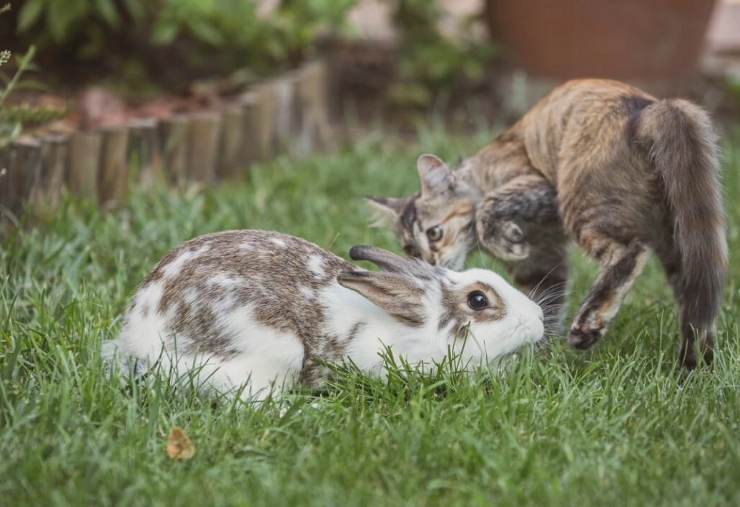
For the Cat: Teach your child to recognize when the cat has had enough (twitching tail, flattened ears, walking away). Show them how to use a wand toy to play instead of using their hands. Emphasize that the cat's food, water, and litter box are completely off-limits.
Phase 3: The Grand, Supervised Assembly
Only when both pet-to-pet and child-to-pet dynamics are stable do you attempt a group meeting. And even then:
- Always have two adults: One to manage the child, one to watch the animals.
- Keep the child in a controlled activity: Maybe reading a book on the couch or playing quietly with blocks. The goal is calm energy.
- Keep initial sessions extremely short.
- Have an escape route for both pets. The cat should have a high perch; the rabbit should have immediate access to its secure enclosure.
This is the moment where you see if the puzzle pieces fit. Sometimes they do. Sometimes you realize you can only ever have them together under the strictest supervision, or not at all. And that's okay. Forcing it helps no one.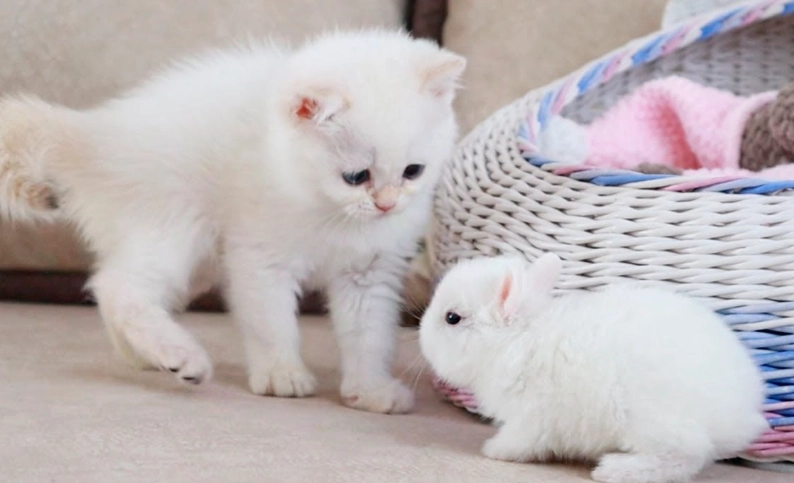
The Health and Safety Checklist You Can't Skip
Beyond scratches and bites, there are invisible risks. When pondering "can cats and rabbits make kids," health is a huge part of the equation.
| Risk Factor | Potential Concern | Mitigation Strategy |
|---|---|---|
| Zoonotic Diseases | Diseases transmissible from animals to humans (e.g., Ringworm from cats, certain parasites). | Ensure all pets are vet-checked, vaccinated (cats), and on regular parasite prevention. Supervise all child-pet contact and enforce handwashing immediately after. The CDC's Healthy Pets page is an essential government resource for this. |
| Allergies | Child (or adult) developing allergies to dander from either pet. | Consider a trial period before fully committing. Use high-quality air purifiers with HEPA filters. Groom pets regularly (brushing) away from the child. |
| Pet Stress & Injury | Rabbit suffering heart attack from fear, cat being injured by a defensive rabbit or a clumsy child. | Provide mandatory safe spaces for each pet that are 100% child-free (e.g., a cat tree in a spare room, a rabbit cage in a quiet corner). Never leave them unsupervised. Ever. |
| Behavioral Issues | Cat starting to spray due to stress, rabbit becoming aggressive or depressed. | Watch for changes in appetite, litter box habits, or grooming. Consult a veterinarian or a certified animal behaviorist (e.g., members of the American Veterinary Society of Animal Behavior) at the first sign of trouble. |
Your Burning Questions, Answered Honestly
Let's tackle the specific things people are secretly typing into search bars. The real, nitty-gritty concerns behind "can cats and rabbits make kids."
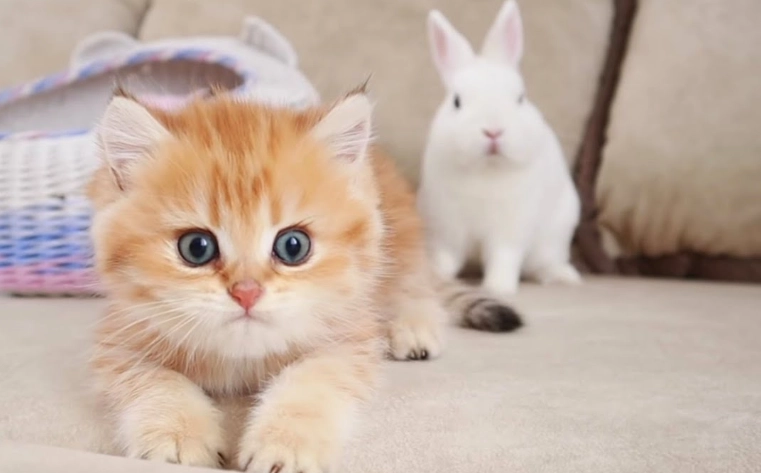
- Vertical Space for Cats: Cat shelves, tall cat trees, and window perches give your cat an escape route and a sense of security. It lets them observe the rabbit from a position of power without needing to interact.
- Ground Fortresses for Rabbits: A large puppy exercise pen (x-pen) can create a fantastic rabbit-safe zone. The rabbit has room to hop and play, but the cat and child cannot enter. You can even set it up so the rabbit can come and go into a secure hutch via a tunnel.
- Separate Core Territories: Each pet must have a private room or nook for eating, sleeping, and using the litter box/loo. This is their stress-free sanctuary.
The Realistic Outcomes: What Success Actually Looks Like
Let's manage expectations. Hollywood friendships are rare. Here’s a more realistic spectrum of outcomes, from best-case to signs it's not working.
The Dream (Rare but Possible): The cat and rabbit groom each other, sleep near each other, and seem genuinely bonded. The child interacts gently with both under supervision. This is beautiful when it happens, but it's the exception, not the rule.
The Realistic Success (The Goal for Most): The animals peacefully coexist. They largely ignore each other. The cat walks past the rabbit's pen without a second glance. The rabbit doesn't thump or freeze when the cat is in the room. The child understands the rules and enjoys watching both pets from a respectful distance. The home is calm. This is a major win. This is a valid, positive answer to "can cats and rabbits make kids."
The Red Flag Scenario (Time to Re-evaluate):
- The cat constantly stares, stalks, or paws at the rabbit's enclosure.
- The rabbit is consistently hiding, not eating, or showing aggressive behavior when the cat or child is near.
- The child is fearful of the animals or cannot follow the safety rules.
- Any pet shows signs of prolonged stress (hiding, aggression, changes in elimination habits).
In this case, you may need to permanently separate their living spaces or, in the toughest scenarios, consider rehoming one of the pets for everyone's wellbeing. There is no shame in this. It's responsible.
The Final Verdict: Making Your Decision
So, after all this, can cats and rabbits make kids? Can they be part of a happy family unit?
They can, but it's a conditional yes with a mountain of caveats. It's for the organized, patient, and observant family. It's for the parent who is willing to be a full-time referee, safety officer, and animal behavior student. It's not for the chaotic household or for parents who are already stretched too thin.
If you're willing to put in the work—the slow introductions, the constant supervision, the environmental modifications—then it can be a wonderful experience that teaches your child profound lessons about empathy, responsibility, and respecting other living beings.
But if you're looking for a low-maintenance, easy companion for your child, a single, well-chosen pet (a sturdy, friendly adult cat or a gentle, handleable guinea pig) is almost certainly a better and safer choice. The question "can cats and rabbits make kids" isn't really about possibility; it's about your family's capacity for a complex, rewarding, but demanding pet-parenting project.
Look at your life, your home, your schedule, and your own patience level. Be brutally honest. The animals, and your kids, will thank you for it.
Reader Comments