Quick Navigation
- Why Can Rabbits Jump So High? It's All in the Build
- Breaking Down the Numbers: Breed, Age, and Motivation
- The Practical Guide: Rabbit-Proofing for World-Class Jumpers
- Beyond the Jump: Horizontal Leaps and Other Moves
- Health and Safety: When Jumping Becomes a Risk
- Answers to Your Burning Questions (FAQ)
So, you're looking at your pet rabbit, all fluffy and cute, and then you see it. That look in their eye. The twitch of the nose. The coiled-spring posture in the back legs. You just know they're about to launch. And then you think—wait, just how high do rabbits jump anyway? Is that little fence I put up actually going to hold them? Let me tell you, I learned the hard way. I had a Netherland Dwarf named Pepper who turned my living room into her personal parkour course. The answer isn't as simple as a single number, and honestly, most people—even some rabbit owners—underestimate them. Wildly.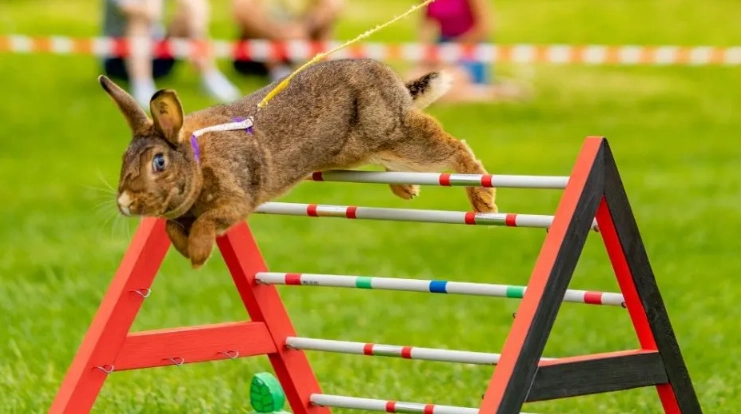
We're not just talking about a little hop here. We're talking about a survival skill honed by evolution. Whether you're rabbit-proofing your home, building an outdoor run, or just plain curious, understanding the "how" and "why" behind their jumping is crucial. It's the difference between a safe, happy bunny and a great escape story (followed by a panic attack). So, let's dig into the real facts, bust some myths, and talk about what this all means for you and your furry friend.
Why Can Rabbits Jump So High? It's All in the Build
It's not magic, it's biomechanics. Think of a rabbit's back legs as a pair of powerful, coiled springs. I remember watching Pepper launch herself onto the back of my sofa—a good 2.5 feet up—without a running start. It was all in the legs. The muscles there, especially the gastrocnemius and quadriceps, are massive for their body size. They're built for explosive power, not endurance.
Then there's the skeleton. Their long hind limbs act like levers, giving them incredible leverage. The bones in their feet are elongated, which increases the range of motion and the force they can apply against the ground. It's the same principle behind a pole vaulter's pole. Combine that with a lightweight body frame (hollow bones help with that too) and you've got a natural-born jumper.
And let's not forget the tail—or rather, the lack of a big one. A heavy tail would throw off their balance mid-air. A rabbit's cute little puffball tail is perfectly designed for aerodynamics. Every part of them is built for the leap.
Breaking Down the Numbers: Breed, Age, and Motivation
Asking "how high do rabbits jump" is like asking how fast humans can run. It depends. A lot. A senior rabbit with arthritis won't be setting any records, while a teenage Belgian Hare is basically an Olympic athlete waiting for a medal.
Here's a rough guide. Remember, these are general ranges for vertical leaps from a standstill or short approach.
| Rabbit Type / Situation | Typical Jump Height | Notes & Why It Matters |
|---|---|---|
| Average Adult Domestic Rabbit (e.g., Mini Lop, Holland Lop) | 2 - 2.5 ft (60 - 75 cm) | This is your baseline. Any barrier lower than 2 feet is just a suggestion to them. |
| Athletic & Lean Breeds (e.g., Belgian Hare, English Spot) | 3 - 4+ ft (90 - 120+ cm) | Bred for show and form, these rabbits are incredible athletes. A 3-foot fence is a minimum. |
| Large/Breeder Breeds (e.g., Flemish Giant) | 1.5 - 2.5 ft (45 - 75 cm) | Their power is immense, but their larger mass can limit extreme height. Don't be fooled—they can still jump surprisingly high. |
| Young, Healthy Rabbit (Prime Age) | Maximum ability (3ft+) | Peak physical condition. This is when most "escape artist" stories happen. |
| Senior or Overweight Rabbit | 1 - 2 ft (30 - 60 cm) | Joint issues and extra weight significantly reduce lift. Their safety needs change. |
| Motivated by Fear or Food | Can exceed normal max by 25%+ | Adrenaline is a heck of a drug. A scared rabbit can clear obstacles you thought were safe. |
See what I mean? It's a spectrum. My Pepper was a small breed, but her motivation (usually a coveted piece of parsley on the coffee table) turned her into a superstar. Which brings us to the single most important factor after physical ability: why they want to jump.
The Motivation Factor: What Makes a Bunny Go Airborne
Rabbits don't just jump for fun (though they do binky, which is a joyful jump-twist). They jump for survival-based reasons. Understanding these triggers is key to managing their environment.
- Fear/Startle: This is the big one. A loud noise, a sudden movement, or a perceived predator (like your dog walking by) can trigger an instinctive, powerful leap. This is how rabbits in seemingly secure pens suddenly vanish. The barrier was only secure for a calm rabbit.
- Curiosity & Exploration: Rabbits are prey animals, but they're also curious. If they see something interesting on the other side—a new rug, a plant, sunlight—they will assess the jump. If it seems doable, they'll try it.
- Food Motivation: You'd be amazed what a rabbit will do for a favorite treat. If they can see or smell it, the jump height calculation in their little bunny brain gets very optimistic.
- Territory & Social Reasons: To get to a bonded partner, or to access a preferred resting area they've claimed.
I made the mistake once of putting a bag of greens on the kitchen counter, thinking it was safe. Pepper saw it, calculated the jump from the floor to a chair to the counter, and executed it perfectly. Lesson learned.
The Practical Guide: Rabbit-Proofing for World-Class Jumpers
Okay, so you know how high do rabbits jump. Now what? This is where theory meets practice. Rabbit-proofing isn't just about height; it's about psychology and physics.
Let's break it down by area:
1. Indoor Playpens & Room Dividers
Those cute, 24-inch (60 cm) tall puppy pens? Useless for most rabbits. They'll hop right over without breaking a sweat. For indoor confinement, you need something at least 36 inches (90 cm) tall. Even better, get one with a roof or cover if you have a real escape artist. I eventually had to get a covered pen for Pepper's time-out area because she saw the top of the pen not as a limit, but as a challenge.
For free-roam bunnies, pay attention to furniture placement. A couch next to a bookshelf creates a stairway to heaven for them. They'll jump from one to the other to access heights you never intended.
2. Outdoor Hutches & Runs
This is critical for safety. An outdoor run must be secure from all angles: high jumps, digging out, and predators breaking in. The RSPCA recommends a minimum height that accounts for a rabbit's natural jumping behavior. For a permanent outdoor run, I'd never go below 4 feet (120 cm) in height. And the roof should be solid or strong wire mesh—not just to contain them, but to prevent birds of prey from swooping in.
A roof is non-negotiable outdoors.
Also, consider the "take-off" zone. A rabbit can jump higher if they have a running start. If your run has a sheltered hutch at one end, they can use the roof of that hutch as a launching pad to clear the main run wall. Think like a rabbit!
3. Garden Fencing
Want to let your bunny enjoy the lawn? Temporary garden fencing needs to be just as high as a run. And it needs to be secured at the bottom so they can't lift it with their nose and scoot under. The classic mistake is using those short, decorative garden fences. They're purely decorative when it comes to rabbits.
Beyond the Jump: Horizontal Leaps and Other Moves
While we're obsessed with vertical height, rabbits are just as talented horizontally. A running jump can cover 6 to 10 feet (1.8 to 3 meters) easily. This is how they navigate rough terrain in the wild. Indoors, this means they can clear a wide sofa or a group of chairs in a single bound. When planning space, think in 3D.
And then there's the binky—that crazy, twisting jump in the air that signifies pure joy. It's not about height or distance; it's about expression. But it shows you the raw physical capability they have on tap.
Health and Safety: When Jumping Becomes a Risk
This isn't all fun and games. A rabbit's powerful legs are also relatively delicate. Incorrect landings on slippery surfaces (hardwood, tile, laminate) are a major cause of injury. They can sprain or break a leg, or damage their spine.
- Provide traction: Use rugs, mats, or fleece blankets on slippery floors where your rabbit runs and jumps.
- Watch for arthritis: Older rabbits lose spring and may struggle with jumps they used to make. You might need to add ramps to their favorite perches.
- Avoid extreme heights: While they can jump onto a bed or high table, the landing impact can be hard. It's better to provide intermediate steps (ottomans, sturdy boxes).
The American Rabbit Breeders Association (ARBA), while focused on show rabbits, emphasizes the importance of proper housing that allows for natural movement without undue risk of injury. A safe environment is a priority.
Answers to Your Burning Questions (FAQ)
Let's tackle some of the specific questions people have when they search about this.
Can a rabbit jump over a 3-foot fence?
Yes, absolutely. A 3-foot fence (about 90 cm) is within the ability of many average, healthy rabbits from a standstill. For an athletic breed or a scared rabbit, it's a certainty. For true containment, you need higher.
How high can a wild rabbit jump?
Similar to domestics, but often leaner and more muscular. A wild cottontail can easily clear 3 feet. Their survival depends on it. They're also more consistently "motivated" by fear, so they operate at peak jumping capacity more often.
My rabbit never jumps high. Is something wrong?
Maybe, maybe not. Some rabbits are just more laid-back. But a sudden decrease in jumping willingness or height can signal pain (arthritis, dental pain that affects balance, sore hocks), obesity, or general illness. A vet check is a good idea if you notice a change.
What's the highest a rabbit has ever jumped?
There are anecdotal reports of rabbits clearing 4.5 feet. The world of rabbit hopping (yes, it's a competitive sport, like dog agility) pushes this further. According to rabbit hopping club records, trained rabbits with specialized harnesses and encouragement have cleared over 39 inches (nearly 1 meter) in competition settings. But that's with training, optimal conditions, and a running start. It shows their potential, but your pet bunny at home shouldn't be pushed to these extremes.
How can I safely test how high my rabbit can jump?
I don't recommend "testing" it. You might create an unsafe situation or teach them to jump barriers you need them to respect. Instead, observe their natural behavior. What furniture do they get onto? Use that as your guide. Assume they can jump at least as high as the highest thing they regularly access.
Final Thoughts: Respect the Jump
At the end of the day, understanding how high do rabbits jump is about respecting their nature. They aren't being "naughty" when they escape; they're following millions of years of instinct paired with impressive physical hardware. Our job is to channel that energy safely.
Pepper taught me that. My initial failures in containing her weren't her fault—they were mine for not doing my homework. Once I got the right height pen, provided safe platforms for her to climb and survey her kingdom, and made sure her landing zones were padded, our coexistence got a lot more peaceful (though never boring).
So look at your rabbit with new eyes. See them as the agile, powerful, and curious creatures they are. Plan your space accordingly. Build high, secure well, and always err on the side of caution. Because when it comes to answering "how high do rabbits jump," the safest bet is always to assume they can jump just a little bit higher than you think they can.
Trust me on that one.
Comment