Quick Navigation
Let's cut to the chase. If you're a rabbit owner like me, you've probably tiptoed into the living room late at night and seen your bunny's eyes glowing back at you from a dark corner. It's a bit spooky, right? And it immediately makes you wonder—can rabbits see in the dark, or are they just sitting there blind and confused? I used to worry my rabbit, Thumper, was scared of the dark. I'd leave a hallway light on, thinking I was doing him a favor. Turns out, I had it all backwards.
The simple, direct answer is yes, rabbits can see in the dark much better than we can. But before you think they have some kind of superhero night vision goggles, it's not like they see a full-color, crystal-clear picture at midnight. Their vision is adapted for survival, not for reading a book. It's a fascinating mix of strengths and weaknesses, and understanding it completely changed how I care for my rabbit at night.
How Rabbit Eyes Are Built for Low Light
To get why rabbits have decent night vision, you have to look at their eye anatomy. It's seriously different from ours. I remember the first time I looked this up; it felt like I was learning about a different creature entirely, not just my fluffy pet.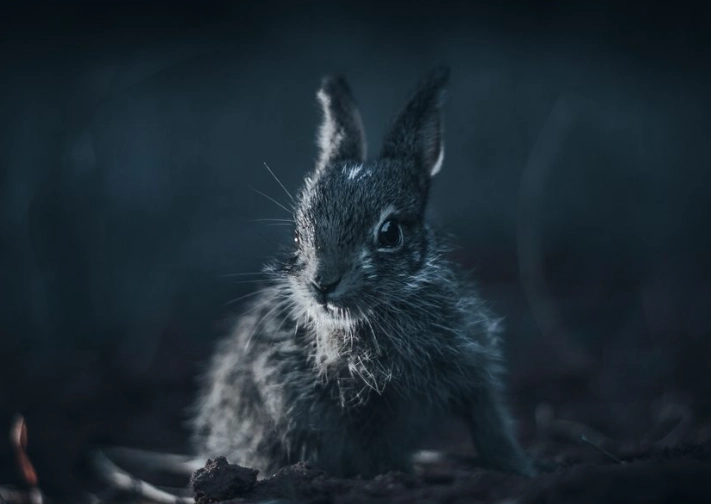
The biggest giveaway for night vision is the tapetum lucidum. Sounds like a spell from Harry Potter, but it's just a reflective layer behind the retina. It acts like a mirror, bouncing light that wasn't absorbed the first time back through the retina for a second chance. This is what causes that eerie eye-shine when light hits them in the dark. Cats have it too. This layer is the main reason rabbits can see in the dark better than humans—it basically doubles the available light for their eyes to use.
Then there's the pupil. Rabbit pupils can open incredibly wide. In low light, that pupil becomes a huge black circle to let in every possible photon. More light in means a better chance of forming an image, even if it's not super sharp.
But here's the trade-off, and it's a big one. To be sensitive to light, their retinas are packed with more rod cells than cone cells. Rods detect light and motion in shades of gray. Cones are for color and fine detail. So, while a rabbit can navigate a dark room, the world probably looks blurry and mostly in black, white, and shades of blue and green (the colors their limited cones can pick up). Their vision is optimized for spotting the slight movement of a predator in near-darkness, not for admiring the pattern on your rug.
So, How Well Can Rabbits Actually See in the Dark?
Okay, so they have the equipment. But what does that mean in practice? Can a rabbit see in the dark well enough to play, or are they just cautiously shuffling around?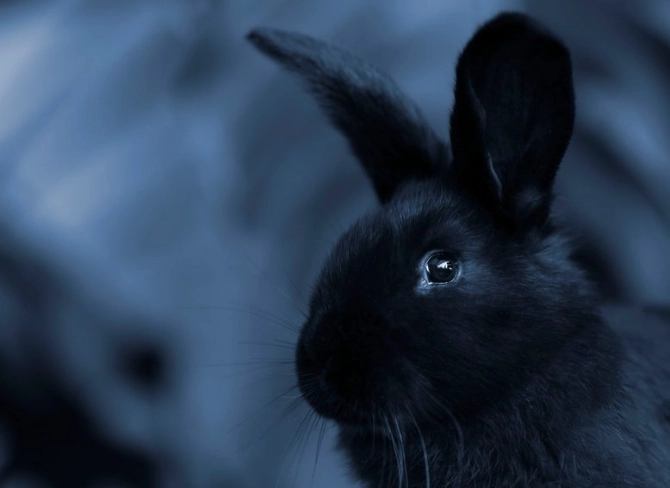
Think of it like this. In a pitch-black room where you literally cannot see your hand in front of your face, your rabbit isn't doing much better. They need some light. But in a room with just the faint glow from a streetlight outside, or the dim light from under a door, they are in their element. They can map out the room, avoid major obstacles, and hop around with surprising confidence.
I tested this (gently!) with Thumper. I turned off all the lights one evening, leaving only the tiny standby LED from my TV. I sat quietly for 20 minutes. After a cautious start, he was hopping from his hide to his litter box, navigating around his tunnel, and even doing a few lazy binkies. He wasn't running a marathon, but he was clearly comfortable and not blindly bumping into things. It was proof that rabbits can see in low light conditions effectively.
Their vision in this dim light is motion-based. A sudden shadow or movement will register instantly, triggering their flight response. That's the survival part kicking in.
Rabbit Vision vs. Human Vision in the Dark
It's helpful to compare. We're pretty pathetic in the dark. Our eyes take a long time to adjust (that's dark adaptation), and even then, we see vague shapes and no color. Rabbits adjust faster and see more defined shapes and movements in the same low light. However, our daylight and color vision blows theirs out of the water.
| Feature | Rabbit Vision (Low Light) | Human Vision (Low Light) |
|---|---|---|
| Primary Cell Type | Rod cells (light/motion) | Mix, but fewer rods than rabbits |
| Color Perception | Very limited (blues/greens) | None (monochrome) |
| Image Clarity | Blurry, focused on outlines & motion | Very blurry, poor detail |
| Light Amplification | High (tapetum lucidum) | None |
| Field of View | ~360 degrees | ~180 degrees |
| Best For | Detecting predators at dawn/dusk | Not much! We're day creatures. |
Looking at that table, it's clear why the question "can rabbits see in the dark" has a positive answer. They are simply better equipped.
Do Rabbits Need a Light On at Night?
This is the million-dollar question for owners. Based on everything above, the answer is a firm no. In fact, leaving a bright light on can be more stressful and disruptive.
Rabbits need a regular day/night cycle for their health. Constant light can mess with their circadian rhythms. More importantly, darkness makes them feel secure. In the wild, darkness is when they are safest from many predators and can relax in their burrow. A completely dark, quiet room mimics that safe burrow environment.
If you're worried about total blackness, an ultra-dim night light plugged into a far corner is okay. But avoid anything bright. The goal is to let their natural vision do its job.
What They DO Need in the Dark: Safety First
Since rabbits can see in the dark well enough to move, your job isn't to provide light. It's to provide a safe and predictable environment so their vision can work effectively.
- No Rearrangements at Night: Don't move their pen, furniture, or toys after dark. They memorize the layout. If you change it, even with good vision, they might bump into the new obstacle.
- Bunny-Proof Thoroughly: This is always important, but double-check for hazards at their eye level—wires they could trip on, sharp corners, gaps they could get stuck in.
- Provide a Secure Hide: Every rabbit must have a completely enclosed, dark hidey-house (with two exits is best). This is their "burrow," where they feel 100% safe to sleep and retreat.
- Consistent Routine: Feeding and interaction at roughly the same times helps them feel secure, day or night.
It's less about their ability to see and more about minimizing surprises. A startled rabbit in the dark is more likely to bolt and injure itself.
Common Myths and Questions About Rabbits and Darkness
You hear a lot of things as a rabbit owner. Let's clear some of them up.
Myth 1: Rabbits are nocturnal. Nope. They are crepuscular. Big difference. Nocturnal animals are active in full darkness. Rabbits are most active in the semi-dark of dawn and dusk. They'll take naps both during the bright day and the deep night.
Myth 2: If a rabbit's eyes glow, they can see perfectly. The glow just means the tapetum is working. It doesn't mean they have perfect vision. It's an aid, not a magic solution.
Myth 3: Blind rabbits are helpless in the dark. This one is interesting. Rabbits rely heavily on other senses—hearing, smell, and whiskers (vibrissae). A blind rabbit, in a familiar and safe environment, can navigate surprisingly well using these other tools. So a sighted rabbit's ability to see in the dark is just one part of their toolkit.
Answers to Your Burning Questions
Putting It All Together: Your Nighttime Rabbit Care Checklist
Forget wondering "can rabbits see in the dark." Focus on setting up the right environment. Here’s my practical, no-nonsense checklist based on years of trial and error.
- Embrace the Dark: Turn off the lights at night. Let your rabbit's natural vision work.
- Create a "Burrow": Provide at least one fully enclosed hide. Cardboard boxes with two holes work great.
- Freeze the Layout: Once your rabbit is familiar with a room's setup, avoid moving furniture or their main pen around.
- Bunny-Proof Relentlessly: Get on the floor at rabbit level. Look for wires, chew hazards, and unstable items they could knock over in the dark.
- Trust Their Senses: If you hear them hopping around at 3 AM, don't panic. They're likely just enjoying their crepuscular time. They can see enough.
- Vet Check: During annual check-ups, a good exotic vet will briefly check their eyes. This is important for older rabbits especially.
I used to worry so much about Thumper being alone in the dark. Now I know that's when he feels most like a rabbit—exploring, nibbling hay, and doing zoomies on his own terms. His ability to see in low light is a key part of that independence.
The bottom line is that rabbits are not helpless in the dark. They are exquisitely adapted to it. Our job isn't to illuminate their world like ours, but to make their naturally dim world a safe and enriching place. Once you understand that, nights become a lot less stressful—for both you and your bunny.
So next time you see those glowing eyes in the corner, don't feel sorry for them. Just smile, know they're comfortable, and go back to bed. They've got this.
Comment