Quick Guide
- What Exactly is the Gestation Period for Rabbits?
- Factors That Influence How Long Rabbits Are Pregnant
- The Day-by-Day: What Happens During the Gestation Time of Rabbits?
- Spotting the Signs: Is My Rabbit Really Pregnant?
- Essential Care During the Gestation Period
- The Big Event: Kindling and Immediate Aftercare
- Common Questions About Rabbit Gestation Time
- Final Thoughts on Navigating Rabbit Pregnancy
So, you think your rabbit might be pregnant, or maybe you're planning a litter? The first question that pops into any rabbit owner's head is always about the gestation time of rabbits. How long do you actually have to prepare? Let's cut straight to the chase – it's not a one-size-fits-all answer, and that's where things get interesting. I remember when my doe, Thistle, was expecting her first litter; I was checking on her constantly, completely unsure of the timeline. It's a mix of excitement and nail-biting anticipation.
The classic textbook answer you'll find everywhere is 31 days. And for the most part, that's a good ballpark. But stick with me here, because the real-world story of rabbit pregnancy is way more nuanced. I've seen litters come early and litters that made me sweat it out for an extra day or two. It depends on so much: the breed, the size of the litter, the individual doe, even her environment. If you're looking for a simple number, you might leave disappointed. But if you want to truly understand what's happening during those weeks and how to navigate them successfully, you're in the right place.
What Exactly is the Gestation Period for Rabbits?
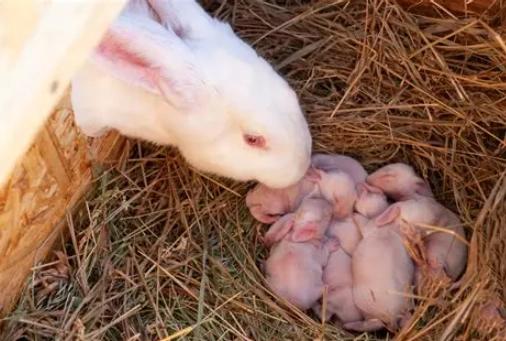
In simple terms, gestation is the time between conception and birth. For rabbits, this is a remarkably efficient and fast-paced process. From a single mating, a doe's body kicks into high gear, developing an entire litter of kits in about a month. It's one of the shorter gestation periods among common mammals, which is part of why rabbits have their famous reputation for rapid reproduction.
Why does this matter to you? Knowing the expected rabbit gestation period is the cornerstone of proper care. It tells you when to expect the birth (kindling), when to introduce the nesting box (around day 28), and when to start being extra vigilant about the doe's diet and comfort. Getting this timeline wrong can mean a nasty surprise – finding kits on the cage floor without a proper nest, which is a risky situation for the newborns.
Key Takeaway: Don't just circle day 31 on your calendar and call it a day. Mark a window from day 28 onwards. Start watching for nesting behavior then. The most common range is 30-32 days, but mother nature doesn't read our calendars.
Factors That Influence How Long Rabbits Are Pregnant
Here's where we go beyond the basic fact. The gestation time of rabbits isn't a fixed stopwatch. Several factors can pull it shorter or stretch it longer. It's not an exact science, but observing these patterns can make you a more prepared owner.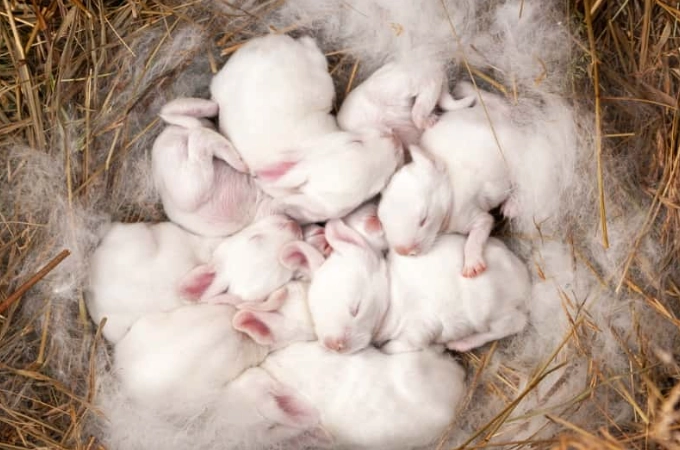
Litter Size: The Biggest Predictor
This is the most consistent factor I've observed. It seems counterintuitive at first. You'd think more babies would need more time to cook, right? Wrong. It's actually the opposite. A doe carrying a large litter (say, 8-12 kits) will often have a shorter pregnancy, sometimes as brief as 28-29 days. The theory is that the space inside her is more crowded, triggering an earlier birth.
Conversely, a doe with a small litter (1-3 kits) will frequently go longer, potentially hitting 33 or even 34 days. Those few kits have more room and seem to develop at a more leisurely pace. I had a doe who consistently had tiny litters of two, and she was always late, driving me crazy with worry every single time.
Breed and Size of the Rabbit
Generally, larger rabbit breeds tend to have slightly longer gestation periods than smaller breeds. A Flemish Giant might average on the higher end of the scale, while a Netherland Dwarf might be on the shorter end. However, the difference is usually only a matter of a day or two and is often less significant than the litter size effect. The breed plays a bigger role in how many kits to expect rather than precisely when.
First-Time Moms vs. Experienced Does
First pregnancies can be a bit unpredictable. A young doe's body is going through this for the first time, and sometimes things don't follow the textbook schedule. She might kindle a day early or a day late as her system figures things out. Experienced does often settle into a more predictable pattern over subsequent litters.
Environmental Stress and Health
A stressed or unhealthy doe can experience disruptions. Extreme heat, constant loud noises, or illness can potentially influence hormones and timing. Providing a calm, quiet, and consistent environment in the final week is one of the best things you can do. Good nutrition is non-negotiable – a poorly fed doe can have complications that affect timing and kit health.
Let's visualize the breed and size influence. Remember, these are general trends with lots of individual variation.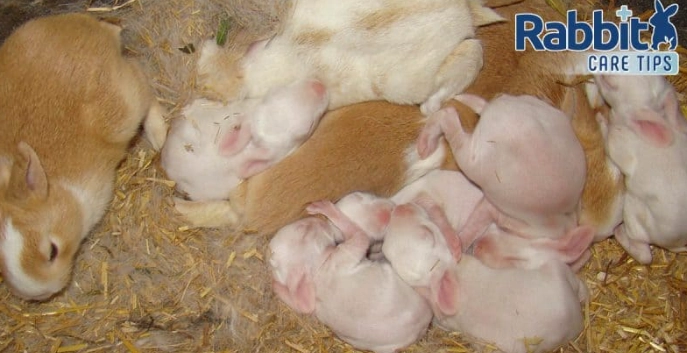
| Rabbit Size / Breed Type | Typical Gestation Range | Notes |
|---|---|---|
| Small Breeds (e.g., Netherland Dwarf, Polish) | 29 - 32 days | Often quicker, but litter size is a stronger factor. |
| Medium Breeds (e.g., Rex, Holland Lop, Standard) | 30 - 33 days | This is the most common "average" range. |
| Large/Giant Breeds (e.g., Flemish Giant, Checkered Giant) | 31 - 34 days | May trend toward the longer end. |
The Day-by-Day: What Happens During the Gestation Time of Rabbits?
Understanding the internal timeline helps you make sense of the external signs. It's not just a waiting game; there's a lot of development happening.
Week 1 (Days 1-7): Right after mating, fertilization happens. The embryos travel to the uterine horns and begin implanting. You won't see any outward changes in the doe. It's business as usual.
Week 2 (Days 8-14): The embryos are developing rapidly into fetuses. By around day 10-12, a veterinarian or very experienced breeder might be able to feel the pregnancy through gentle palpation. I don't recommend beginners trying this, as it's easy to mistake fecal pellets for kits or, worse, injure the developing litter. When I first tried it, I was utterly convinced I felt something, only to realize later it was just… well, rabbit poop. It's a skill that takes practice.
Week 3 (Days 15-21): The fetuses grow significantly. The doe's nutritional needs start to increase. This is when you should gradually start increasing her high-quality pellet ration and ensure unlimited hay. Her appetite will pick up.
Week 4 (Days 22-28): The final growth sprint. The kits are developing fur. The doe's belly will become visibly rounded and firm. You might see her resting more. Her appetite may peak, and she'll start drinking more water. This is the critical preparation week.
Week 5 (Days 29-35): The home stretch. Around day 28, you must provide a nesting box filled with soft hay. She will start showing clear nesting behavior: gathering hay, pulling fur from her chest and belly to line the nest. This fur-pulling is a surefire sign birth is imminent, usually within 24-48 hours. She may become more reclusive or seem restless.
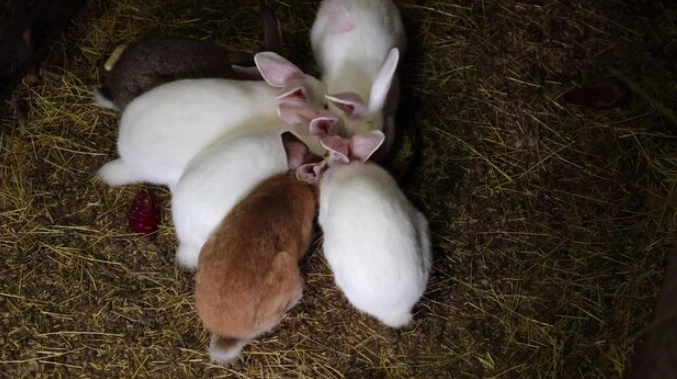 The pull of fur is nature's final countdown timer.
Spotting the Signs: Is My Rabbit Really Pregnant?
Unlike some animals, rabbits don't get morning sickness. Early signs are subtle, which is why many owners get a surprise litter. Here’s what to look for, moving from early hints to definite proof.
- Weight Gain & Shape Change: Around the third week, her abdomen will lose its slim, tucked-up look and become fuller and rounder. Don't just rely on a scale; a visual and gentle feel (without pressing) is better.
- Appetite Changes: A steady increase in appetite is a good clue. A pregnant doe is eating for a whole litter, after all.
- Behavioral Shifts: She might become more affectionate or, conversely, more territorial and grumpy. Every rabbit is different.
- Nesting Behavior (The Big Giveaway): This is the unambiguous sign. When she starts frantically gathering hay into her mouth and, crucially, pulling tufts of her own fur out, the babies are coming very soon.
- The "Feel" Test (Palpation): As mentioned, this is a professional technique. Around day 14, a vet can feel marble-sized embryos in the abdomen. Leave this to the experts unless you're trained.
A Word of Caution: Rabbits can experience false pregnancies (pseudopregnancy). After a mating (even an unsuccessful one) or sometimes just due to hormonal surges, a doe can show nesting behavior, pull fur, and even have a swollen abdomen, but not be pregnant. It lasts about 16-18 days and then resolves. It's frustrating, but it's a reminder not to count your kits before they're kindled!
Essential Care During the Gestation Period
Proper care during these 31-ish days directly impacts the health of the doe and the viability of the litter. It's not just waiting.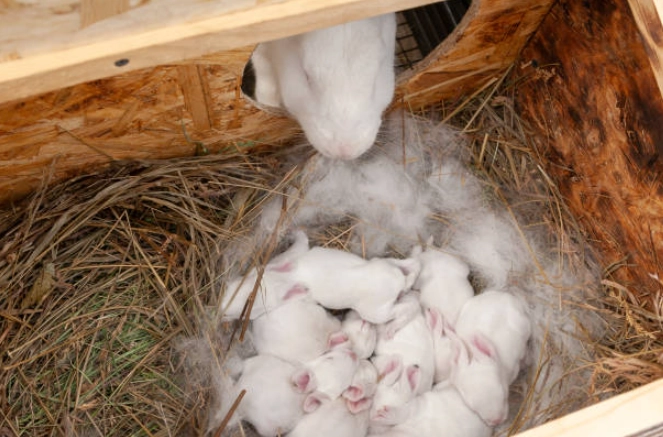
Diet: Feeding for Two (or Eight)
This is the most important adjustment. From week three until she weans the kits, her nutritional demands are the highest they will ever be.
- Unlimited Grass Hay: Timothy hay or another grass hay should always be available. It provides essential fiber for her digestive system, which is crucial.
- Increased Pellets: Gradually increase her portion of high-quality, plain alfalfa or timothy-based pellets. By the final week, she might be eating nearly double her maintenance amount. Alfalfa-based pellets are often recommended for pregnant/nursing does due to higher protein and calcium.
- Fresh Greens & Water: Continue daily leafy greens (romaine, kale, cilantro) for vitamins. Fresh, clean water is absolutely critical. A nursing doe will drink more than a quart a day. Check that water bottle or bowl constantly.
Housing and Environment
Keep her cage or hutch clean, dry, and in a quiet, draft-free location. Stress is the enemy. Avoid introducing new animals or making major changes to her space. In the last week, minimize handling her unless necessary. You want her calm and secure.
The All-Important Nesting Box
Put it in on day 28 at the latest. Use a sturdy wooden or plastic box with low sides so she can hop in. Fill it with a thick layer of soft, absorbent bedding like straw or hay. I prefer straw for the base as it's less likely to mold than hay if it gets damp. Once she starts pulling fur, she'll arrange everything to her liking. Don't fuss with her nest unless absolutely necessary.
I learned the hard way that a cheap plastic bin isn't always the answer. One of my more… enthusiastic… does chewed through the side of a flimsy one. A solid wooden box is worth the investment.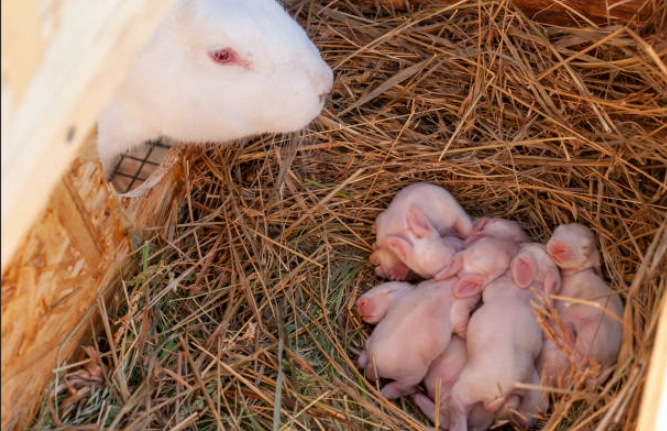
The Big Event: Kindling and Immediate Aftercare
Rabbits almost always give birth at night or in the early, quiet hours of the morning. It's usually quick and doesn't require assistance. The best thing you can do is give her privacy.
Check the nest carefully the next morning. The doe will have covered the kits with a thick layer of fur. They will be hairless, blind, and deaf. Count them quietly and remove any that didn't survive (this is sad but a natural part of breeding). Do this quickly and with minimal disturbance. The mother will nurse them once or twice a day for just a few minutes, usually when you're not around. Don't panic if you never see her feeding them.
Pro Tip: To check if the kits are being fed, look at their bellies in the morning. A fed kit will have a plump, round, milk-white belly. A skinny, wrinkled belly with a dark line (the skin showing through) means they aren't getting enough milk. This is when intervention might be needed.
Common Questions About Rabbit Gestation Time
Let's tackle the stuff people are really searching for, the questions that keep new breeders up at night.
Can a rabbit's gestation period be longer than 35 days?
Extremely rarely. If a doe goes past 35 days, she is almost certainly not pregnant, or there has been a serious developmental issue. A veterinary consult is urgent at that point.
My rabbit mated, but it's been over 35 days and no babies. What happened?
This is common. The mating might not have been successful. She could have had a very early, unnoticed resorption of the embryos (where the body absorbs them). Or, as mentioned, she might have had a false pregnancy. Re-breeding is usually the next step.
How soon after giving birth can a rabbit get pregnant again?
Technically, a doe can conceive within 24 hours of kindling. This is called a "back-to-back" pregnancy and is incredibly taxing on her body. Responsible breeders always allow the doe at least 6-8 weeks to recover and wean her current litter before considering another breeding. Her health comes first.
Is there a way to calculate the exact due date?
You can't get an exact date, but you can calculate a very likely window. If you know the mating date, add 31 days. Then be prepared for action 3 days before and 3 days after that date. That's your high-alert period. Some breeders use online rabbit gestation calculators, which are just simple date-add tools. They're helpful for marking your calendar.
Where can I find more authoritative information on rabbit reproduction?
For in-depth, science-backed information, it's best to consult resources from agricultural extensions or rabbit breeding associations. For example, the American Rabbit Breeders Association (ARBA) is the premier organization for rabbit husbandry standards in the US. Many university agricultural extensions, like those from Penn State Extension, also publish excellent, factual guides on rabbit care that cover gestation and breeding practices. These are reliable sources that go beyond forum advice.
Final Thoughts on Navigating Rabbit Pregnancy
Understanding the gestation time of rabbits is more than memorizing "31 days." It's about understanding a biological process with natural variation. It's about observing your individual doe, preparing her environment, and supporting her nutritional needs. The timeline gives you a framework, but her behavior gives you the final cues.
The biggest mistake is being too rigid. The second biggest is being unprepared. Get that nesting box in on time. Ramp up her food. Provide peace and quiet. Then, let nature take its course. Most of the time, rabbits handle this process perfectly well on their own. Our job is to set the stage and then be ready to support if anything goes off-script. It's a fascinating, and sometimes nerve-wracking, part of sharing your life with these incredible animals. Just breathe, prepare, and enjoy the miracle. There's nothing quite like seeing a nest box full of healthy, wriggling kits for the first time—it makes all the planning and waiting completely worth it.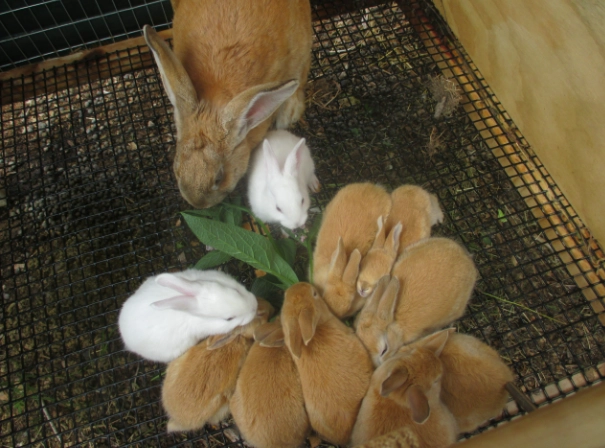
And remember, if you're ever in serious doubt about your doe's health or the progression of her pregnancy, a good veterinarian experienced with rabbits is your best resource. Don't hesitate to call them.
Comment