You see a photo of a Checkered Giant rabbit online—a majestic creature with striking black and white markings, looking almost as big as a small dog. The thought crosses your mind: "Could I have one of those?" It's an exciting idea, but caring for a rabbit of this scale is a different ball game compared to a standard Netherland Dwarf. I've been around rabbits for over a decade, and I've seen the unique joys and very specific challenges that come with giant breeds. This guide isn't just a list of facts; it's a deep dive into what it really takes to provide a good life for a Checkered Giant, covering the stuff most general care sheets gloss over.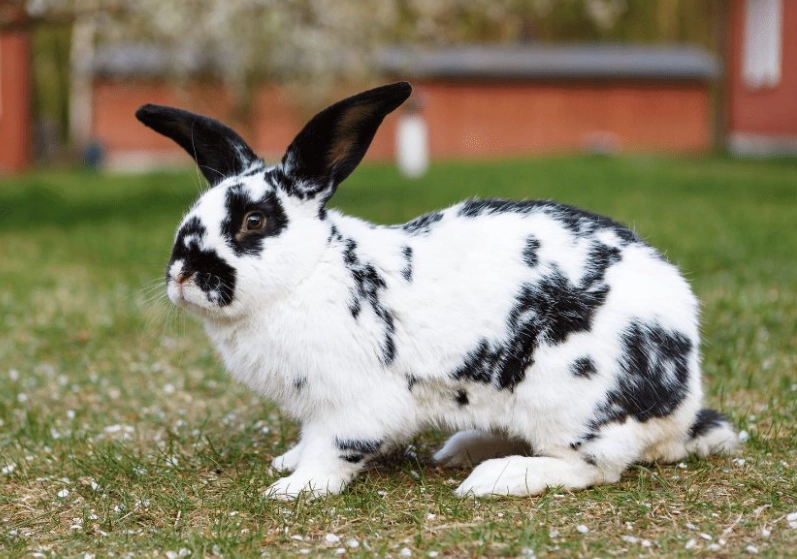
Your Quick Guide to Checkered Giants
What Exactly is a Checkered Giant Rabbit?
Let's clear something up first. The "Giant" in their name isn't marketing. We're talking about rabbits that regularly tip the scales at 11 to 16 pounds, with some specimens even larger. They have a distinctive "full arch" body type—a pronounced arch in the spine from neck to tail that gives them a sleek, athletic look when stretched out, quite different from the compact, rounded shape of many pet breeds.
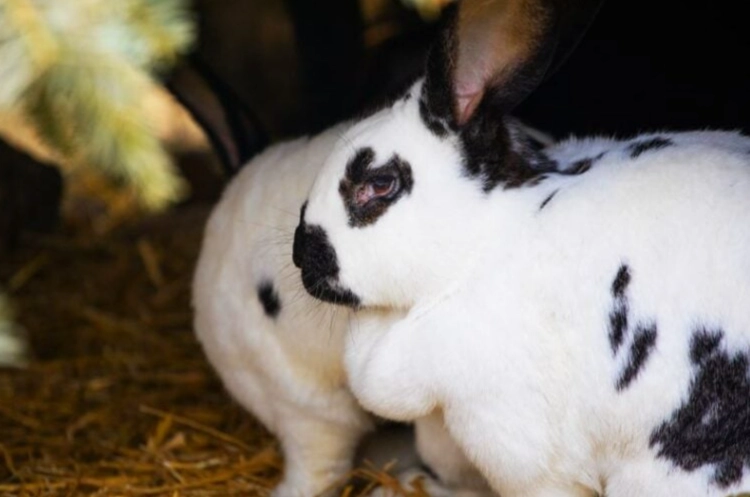
Their signature look is the bold, broken black markings (the "checkering") on a pure white background. According to the standard set by the American Rabbit Breeders Association (ARBA), the ideal pattern includes a butterfly shape across the nose, eye circles, cheek spots, and a spine stripe that branches into a chain of spots down each side. It's a striking coat that makes them instantly recognizable.
Their history is a bit of a transatlantic journey. They originated in Europe (likely France and Germany) in the early 1900s, developed from Flemish Giants and other breeds. They were brought to the United States and formally recognized by the ARBA in the 1930s. While they were initially promoted for meat and show, today they are cherished primarily as show animals and, for the dedicated few, unique companion pets.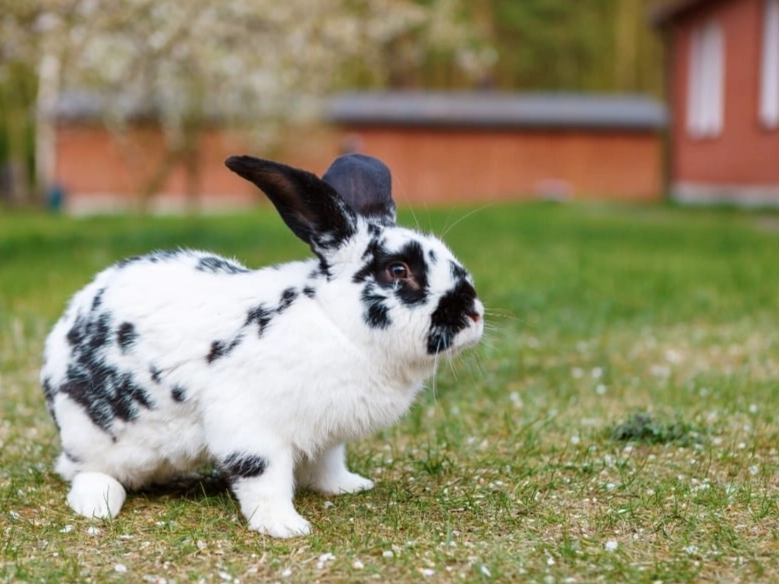
Personality & Temperament: More Than Just Size
Describing the temperament of any rabbit breed is tricky because individual personality varies so much. However, giant breeds like the Checkered Giant often share some common traits shaped by their breeding history.
They are typically more laid-back and less skittish than some smaller, "high-strung" breeds. That massive size seems to come with a degree of calm confidence. But here's the nuance many miss: "laid-back" does not mean "cuddly lap rabbit." Many Checkered Giants retain an independent, somewhat aloof streak. They might enjoy being near you, flopping contentedly on the floor while you work, but they may not tolerate being held or restrained for long periods. Their strength makes any objection to handling very effective.
They are intelligent and curious. A bored giant rabbit is a destructive giant rabbit. Their enrichment needs are substantial. I remember one owner who thought a couple of chew toys would suffice; their Checkered Giant systematically deconstructed a wooden bookshelf out of sheer boredom. Mental stimulation through puzzle feeders, digging boxes, and novel toys is non-negotiable.
Are They Good with Children and Other Pets?
With proper supervision, they can be. Their size makes them less fragile than tiny rabbits, but their potential for powerful kicks if scared means interactions with young children must be closely guided, focusing on quiet interaction on the floor. As for other pets, slow, scent-first introductions are key. Their size might intimidate a curious cat, but never leave them unsupervised.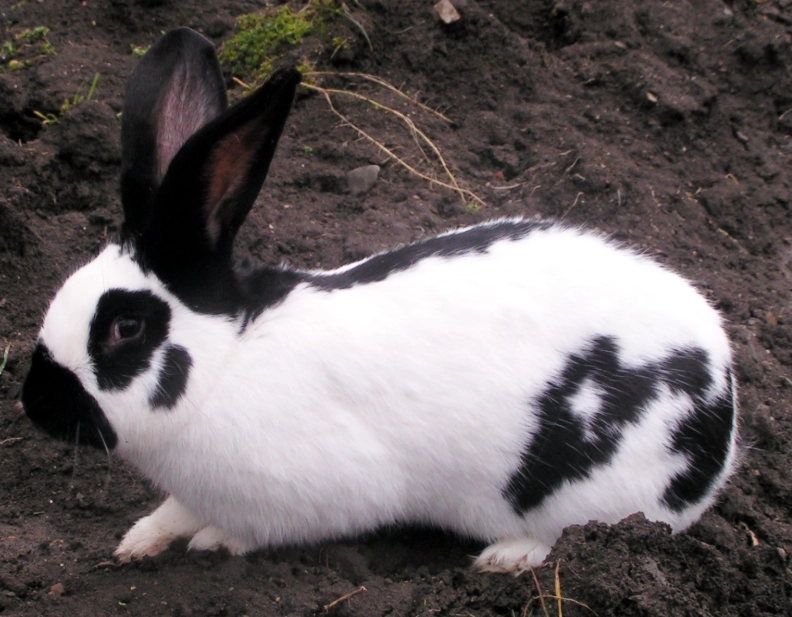
How to Set Up the Perfect Habitat for Your Giant Rabbit
This is where most first-time giant rabbit owners make their first major mistake. You can't just buy the largest cage at the pet store and call it a day. The standard commercial cages are almost universally inadequate. The primary need is horizontal running space, not vertical height.
| Enclosure Type | Minimum Dimensions (for a Checkered Giant) | Pros & Cons |
|---|---|---|
| X-Pen (Exercise Pen) | At least 4ft x 4ft (16 sq ft), taller than 36 inches. | Pro: Highly customizable, great space. Con: Requires a separate, large resting base. |
| Custom-Built Pen/Condo | 6ft x 3ft (18 sq ft) or larger. | Pro: Perfect fit for your space. Con: Requires DIY skills or commissioning. |
| Rabbit-Proofed Room | An entire spare room or large section of a room. | Pro: Ideal for space and exercise. Con: Requires extensive bunny-proofing of everything. |
The flooring is critical. Never use wire mesh flooring. The weight distribution of a giant rabbit makes them extremely prone to a painful condition called sore hocks (pododermatitis). You need a solid, supportive surface. Interlocking foam mats topped with seagrass or washable fleece liners are a popular choice. Provide a large, flat resting board or a low, solid platform as a "cool down" spot.
Inside this space, you need a hidey-house big enough for them to turn around in comfortably (think large dog crate or a custom wooden hut), a jumbo-sized litter box (like a cement mixing tub from a hardware store), a heavy ceramic food bowl they can't flip, and a water source—both a bowl and a bottle is best for redundancy.
Diet & Nutrition: Fueling a Large Frame
The dietary principles are the same as for any rabbit, but the quantities and some specifics shift with size.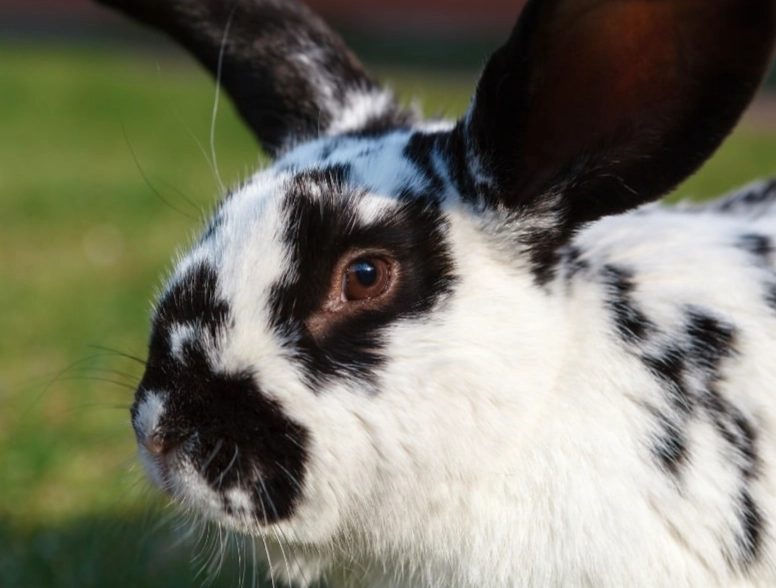
Unlimited Grass Hay: This is 80-90% of their diet. Timothy hay is perfect. They will consume a startling amount. Plan to buy hay by the bale or from a farm supplier to keep costs manageable. A hay rack is useless; they need a large pile they can burrow into.
Leafy Greens: About 2 packed cups of greens per 6 lbs of body weight daily. For a 12-pound Checkered Giant, that's roughly 4 cups. Rotate between romaine, kale, cilantro, bok choy, and dandelion greens. Introduce new greens slowly to avoid GI upset.
Pellets: Quality matters. Look for a timothy-based pellet with at least 18% fiber and low protein (under 14%). A common error is overfeeding pellets. A Checkered Giant only needs about 1/4 to 1/2 cup of pellets per day, split into two feedings. Pellets are a supplement, not the main event.
Treats & Fruits: Keep these minimal. A thin slice of apple or a single blueberry once or twice a week is plenty. Their large size doesn't mean they can process sugar any better.
Health & Wellness: Proactive Care for a Giant Breed
Find a rabbit-savvy veterinarian before you get your rabbit. Not all vets are experienced with giants. The two biggest health concerns are GI Stasis and Sore Hocks.
GI Stasis (a slowdown of the gut) is a killer for all rabbits, but you have less time to react with a giant. Know the signs: small or no fecal pellets, lethargy, hunched posture, grinding teeth. Have critical supplies on hand: simethicone (infant gas drops), a feeding syringe, and a vet's emergency number.
Sore Hocks are almost a given if you don't manage their environment perfectly. Check the bottoms of their feet weekly. Look for hair loss, redness, or open sores. Prevention is everything: soft flooring, keeping nails trimmed, and maintaining a healthy weight. Obesity puts immense pressure on their hocks.
Other considerations include arthritis in older age (ramps over stairs, low-entry litter boxes) and a higher anesthetic risk due to size, making preventative care even more vital.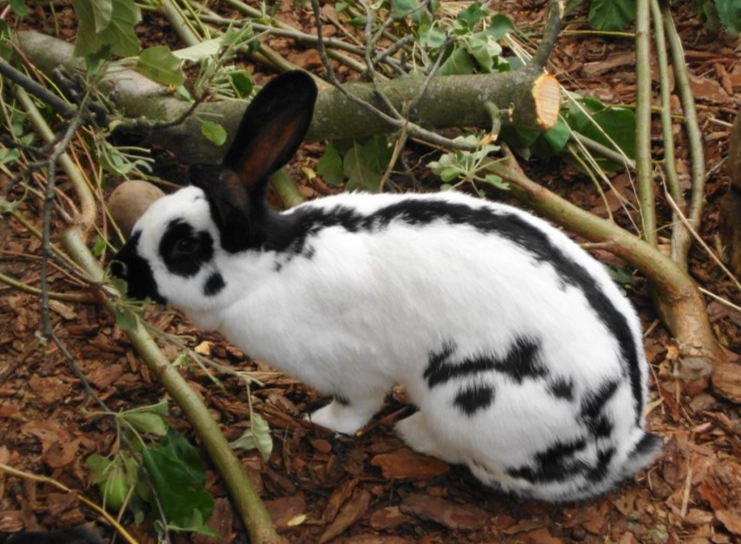
Your Checkered Giant Questions Answered
 Owning a Checkered Giant is a commitment that shouldn't be entered into lightly. It's expensive, space-consuming, and requires dedicated daily care. But for the right person—someone with the room, resources, and desire to care for a truly magnificent animal—the reward is a unique and awe-inspiring companionship. You're not just getting a pet rabbit; you're welcoming a gentle giant into your home.
Comment