Quick Navigation
- Why the "Can They Swim?" Question is So Tricky
- The Real Risks: What Happens When a Rabbit Swims
- Safe and Happy Alternatives: How to Help Your Bunny Cool Down
- What About Different Rabbit Breeds? Do Any Like Water?
- Emergency Situations: What If My Rabbit Falls In?
- Answering Your Burning Questions (FAQs)
- The Bottom Line: Reframing the Question
You know how it is. You're watching your rabbit hop around, maybe you've filled up a kiddie pool for yourself on a hot day, and the thought pops into your head: Can a bunny rabbit swim? It seems like a simple question. I mean, lots of animals can swim, right? Dogs paddle, cats (reluctantly) manage, even elephants love a good soak.
So what about our floppy-eared friends?
The short, direct answer is yes, physically, most rabbits can swim. Their bodies will do the doggy paddle if they have to. But here's the critical part that every single rabbit owner needs to understand: just because they can doesn't mean they ever should. Asking "can a bunny rabbit swim?" is like asking "can a human technically survive a fall from a certain height?" It misses the point entirely. The real question we should be asking is about safety, stress, and what's truly best for the animal.
Why the "Can They Swim?" Question is So Tricky
This topic is a perfect storm of curiosity and misinformation. You might see a rare, viral video online of a rabbit paddling in a pool. What you don't see is the sheer panic that rabbit is experiencing. Our human brains see splashing and think "play." A rabbit's brain is screaming "PREDATOR! DROWNING! EXTREME DANGER!"
I remember talking to a friend who thought letting her Netherland Dwarf wade in a shallow dish was fine. She didn't know. Nobody had told her. That's why I'm writing this – to lay out the facts so you can make the best choices for your bun.
The Rabbit Body: Built for Burrows, Not Backstroke
To understand why swimming is such a bad idea, you need to look at how rabbits are built. Evolution designed them for quick escapes on land, not aquatic adventures.
- The Fur Coat Problem: A rabbit's fur isn't waterproof like a duck's. It's dense and absorbent. When it gets soaked, it becomes incredibly heavy, weighing the rabbit down and making movement exhausting. This leads to rapid heat loss.
- Delicate Bone Structure: Rabbits have lightweight, fragile skeletons. The frantic, uncoordinated paddling in water puts immense stress on their spine and limbs, which are prone to fractures.
- Stress Response: Rabbits are prey animals. Their entire physiology is geared towards a massive adrenaline surge when terrified. Being placed in water triggers this full-blown panic mode, which is incredibly taxing on their heart and system.
The House Rabbit Society, a fantastic and authoritative resource for all things rabbit care, is very explicit on this topic. They state that swimming is extremely stressful and dangerous for rabbits and should never be used as a form of exercise or play.
So physically, can a bunny rabbit swim? Technically, its limbs will move. But every other part of its biology is screaming in protest.
The Real Risks: What Happens When a Rabbit Swims
Let's break down the specific dangers. This isn't just about them not liking it; it's about genuine harm.
Top Dangers of Letting Your Rabbit Swim
| Risk | Why It Happens | Potential Outcome |
|---|---|---|
| Hypothermia | Wet fur loses insulating power fast. Rabbits have a high body temperature (101-103°F) and can't regulate it well when wet. | Shock, organ failure, death. This can happen even in seemingly warm water. |
| Extreme Stress & Shock | Water is an unnatural, inescapable element triggering primal prey-animal panic. | Heart failure, a condition known as capture myopathy, or long-term psychological trauma. |
| Inhalation of Water | Panicked breathing can cause them to inhale water into their lungs. | Aspiration pneumonia, a serious and often fatal lung infection. |
| Skin Infections & Fur Matting | Skin stays damp under thick fur, creating a perfect environment for bacteria and fungus. | Sore hock, urinary scalding, painful matting, and overall poor skin health. |
| Physical Injury | Slippery surfaces, frantic scrambling, and improper handling can lead to broken bones or spinal damage. | Fractures, dislocations, and permanent disability. |
Looking at that list, it becomes clear. The question isn't "can rabbits swim," but "why on earth would we ever make them?" The risks so catastrophically outweigh any perceived benefit.
Some people argue that wild rabbits swim across streams sometimes. Even if that's occasionally true (and it's a big if – rabbits will go to great lengths to avoid water), it's a life-or-death survival move, not recreation. A pet rabbit's life shouldn't mimic a desperate survival scenario.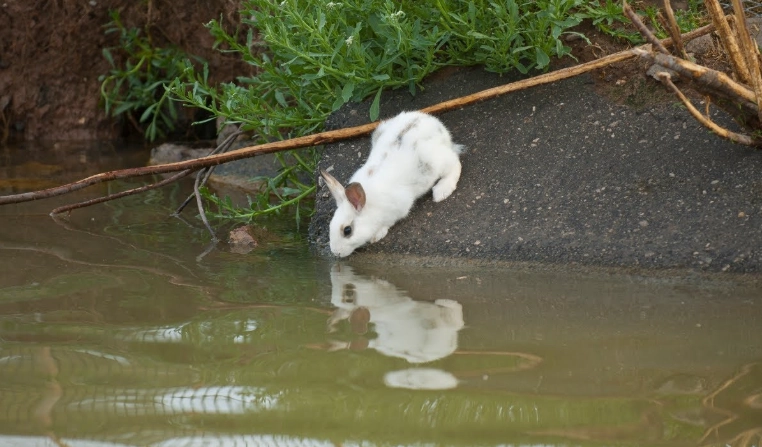
Safe and Happy Alternatives: How to Help Your Bunny Cool Down
Okay, so we've established that putting your bunny in a pool is a firm no. But what about a hot summer day? Don't rabbits overheat easily? Absolutely they do. So what can you do?
Here's the good news: there are plenty of safe, effective, and bunny-approved ways to help them beat the heat that don't involve asking "can a bunny rabbit swim" and then testing the theory.
Bunny-Approved Cooling Methods
- Ceramic or Stone Tiles: Pop a few tiles in the freezer for a bit, then place them in your rabbit's enclosure. They'll love stretching out on the cool surface.
- Frozen Water Bottles: Wrap a frozen plastic water bottle in a towel. Your bun can lean against it.
- Misting with Water: Lightly mist your rabbit's ears with cool water. A lot of their heat is dissipated through their ears. Avoid soaking their body fur.
- Cool, Damp Towels: Drape a damp towel over part of their enclosure or in a hidey-hole to create a cooler microclimate.
- Fresh, Cold Water: Always, always provide unlimited fresh water. You can add a few ice cubes to their bowl on very hot days.
- Hydrating Veggies: Offer water-rich vegetables like cucumber (peeled), romaine lettuce, or celery for extra hydration.
See? No swimming required. These methods work with a rabbit's physiology, not against it.
What About Different Rabbit Breeds? Do Any Like Water?
Another common myth is that certain breeds might be more inclined to swim. You might hear someone say, "Oh, but my big Flemish Giant wouldn't mind," or "Swimming might be okay for a bunny with a thinner coat."
Let's squash this one. No domestic rabbit breed has been selectively bred for aquatic tendencies. Their shared ancestry as prey animals and their fundamental physiology override any minor breed differences.
The RSPCA (Royal Society for the Prevention of Cruelty to Animals), a leading animal welfare authority, includes stress from inappropriate environments as a key welfare concern. Forcing a rabbit into water, regardless of breed, directly contravenes their fundamental need for a safe, low-stress environment.
While a breed with a thinner coat, like a Rex, might dry slightly faster than a long-haired Angora, the initial risks of hypothermia, stress, and injury are identical. The core answer to "can rabbits swim safely" remains a universal no across all breeds.
Emergency Situations: What If My Rabbit Falls In?
Life happens. A rabbit could accidentally fall into a pool, pond, or deep bath. Knowing what to do in this emergency is crucial, because this is the only scenario where the question "can a bunny rabbit swim" has practical urgency.
- Get Them Out Immediately: Don't wait to see if they'll paddle. Get them out of the water as fast as you safely can.
- Prevent Hypothermia: Wrap them immediately in a dry, absorbent towel. Rub gently to soak up as much water as possible. Avoid vigorous rubbing which can hurt their skin.
- Keep Them Warm: After the initial drying, wrap them in a fresh, dry towel or blanket. You can use a heating pad set on low placed *under* half of their carrier (so they can move off it if too warm).
- Stay Calm & Check for Distress: Your rabbit will be terrified. Handle them calmly and securely. Listen for wheezing, clicking, or labored breathing which could indicate water inhalation.
- Call Your Vet, Now: This is non-negotiable. Even if your rabbit seems okay, they need a veterinary check. The vet will look for signs of shock, hypothermia, and early-stage pneumonia. The American Veterinary Medical Association (AVMA) emphasizes that prompt veterinary care after any accident is critical for a pet's recovery.
The goal is to make this scenario as unlikely as possible. Supervise your rabbit around any open water, just as you would a toddler.
Answering Your Burning Questions (FAQs)
Most rabbits have a natural aversion to deep, open water. They will drink from it, but getting into it is a different story. They might play with a shallow dish of water, tipping it over (classic bunny move), but that's more about object manipulation than a desire to bathe. Bathing is something cats and some dogs do; it's not a rabbit behavior.
As mentioned, in extreme circumstances where the alternative is certain death (like a predator), a wild rabbit might enter water and paddle to the other side. It's a last-resort survival tactic, not a lifestyle choice. It's also incredibly risky for them, with many likely perishing from hypothermia or exhaustion afterwards. Using this to justify making a pet rabbit swim is a major logical fallacy.
This idea is not just bad, it's dangerous. The stress alone is harmful. Safe weight loss for rabbits involves a proper diet (unlimited hay, limited pellets, measured veggies), and safe land-based exercise in a large, bunny-proofed space. Consult your vet for a weight loss plan. Never use swimming.
Almost never. Rabbits are meticulous groomers. For minor messes, spot-clean with a damp cloth. For serious messes (like if they have diarrhea stuck on their fur), consult your vet. The mess might be a symptom of illness, and submerging a sick rabbit is doubly dangerous. Your vet can show you how to clean soiled areas safely without full immersion.
Animal behavior is often misinterpreted. What looks like "paddling" can be frantic scrambling. A rabbit's face isn't expressive in ways we easily read. The absence of loud screaming (which rabbits can do) doesn't mean an absence of terror. Stress in prey animals is often silent and internal. Trust the science of their physiology and the consensus of rabbit welfare experts over a potentially misleading 30-second clip.
The Bottom Line: Reframing the Question
So, we've taken a deep dive into the world of rabbits and water. I hope by now the initial query, "Can a bunny rabbit swim?" feels a bit simplistic.
The more meaningful, responsible questions are:
- Is it safe for my rabbit to swim?
- What are the risks involved with putting my rabbit in water?
- How can I keep my rabbit cool and hydrated without causing them stress?
- What should I do if my rabbit has an accidental water exposure?
The answers are clear. No, it is not safe. The risks are severe and range from psychological trauma to fatal physical conditions. You can keep them cool with tiles, misting, and frozen tools. And if an accident happens, you dry them, warm them, and call the vet immediately.
Rabbits are incredible, complex pets. They form deep bonds, have hilarious personalities, and deserve care that respects what they are: delicate, stress-sensitive, land-loving creatures. Throwing them in the deep end to satisfy our curiosity about whether can rabbits swim fails that basic test of respect.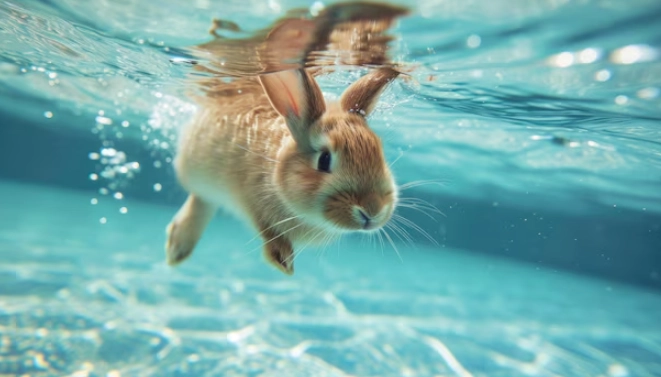
Let's give our bunnies what they truly need—a safe, dry, enriching space on solid ground where they can binky, dig, and nap in peace. That's the hallmark of a truly great rabbit caretaker.
Reader Comments