Quick Guide
You see the pictures online. A bizarre creature that's half-cat, half-rabbit. Or maybe a majestic-looking wildcat with the temperament of a house cat. The internet is full of wild claims about mixing cats with other species. It got me wondering, what's actually possible? What animals can cats crossbreed with in real life, not just in Photoshop or folklore?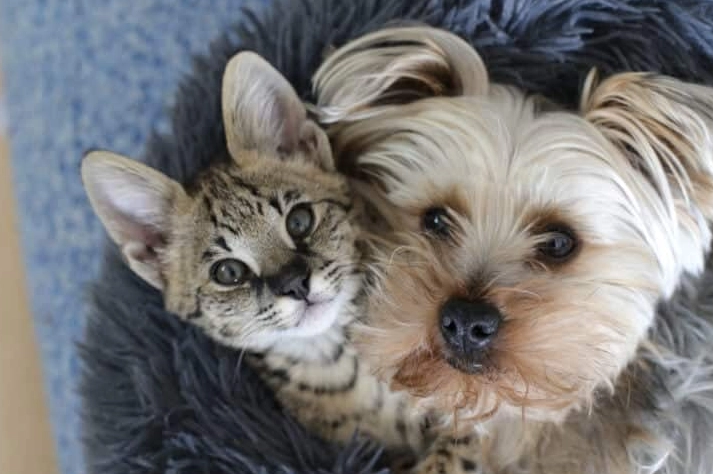
I remember scrolling through social media a while back and stumbling on a photo of a "cabbit." It looked so convincing for a second. Short front legs, long back legs, a cat's face. The comments were a mess of people believing it and others calling it fake. That's what sparked my deep dive into this whole topic. I wanted clear answers, not just memes.
Let's cut through the noise. The short, somewhat boring scientific answer is that domestic cats (Felis catus) can only successfully and naturally breed with other, very closely related members of the Felis genus. That's it. They can't make babies with rabbits, dogs, foxes, or raccoons, no matter how many weird YouTube videos claim otherwise. Those stories are biological impossibilities.
But the longer answer is where it gets fascinating, complicated, and sometimes ethically murky. We're talking about creating hybrid cat breeds by crossing domestic cats with small wild felines. This isn't just theoretical; it's how we got some of the most popular and controversial breeds today.
Key Takeaway Right Off the Bat: A cat's potential mates are limited by genetics. Successful crossbreeding requires two animals to be very closely related, sharing a similar number of chromosomes and compatible reproductive systems. Cats and animals from entirely different families or orders (like lagomorphs—rabbits—or canids—dogs) are genetically too far apart. The embryo simply won't form or develop.
The Big Myth vs. Reality List
Before we get into what is possible, let's ruthlessly debunk what isn't. This table should kill off the most persistent rumors for good.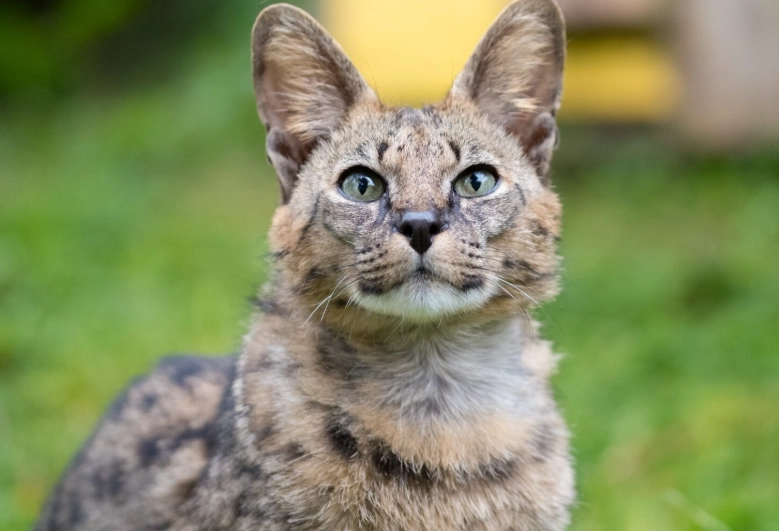
| Rumored Hybrid | Why It's Biologically Impossible | Origin of the Myth |
|---|---|---|
| Cabbit (Cat + Rabbit) | Cats and rabbits are in completely different biological orders (Carnivora vs. Lagomorpha). Chromosome count, gestation period, and reproductive anatomy are utterly incompatible. A cat has 38 chromosomes, a rabbit has 44. | Photoshop, genetic conditions in cats (like Manx syndrome causing short spines and hopping), or simple misidentification of a rabbit with cat-like markings. |
| Dog (Cog? Dat?) | Again, different families within Carnivora (Felidae vs. Canidae). Vast genetic divergence over millions of years. Different mating behaviors and signals don't help either. | Wishful thinking from owners of pets that seem to get along, or mistaken identity of unusual-looking stray animals. |
| Fox (Fox-Cat) | Foxes are canids. The genetic gap is massive. Even if by some freak accident cells fused, development would fail immediately. | Some fox species have cat-like features (pointed ears, slinky bodies). The "fennec fox cat" myth is particularly stubborn due to their large ears. |
| Raccoon ("Maine Coon" myth) | No relation. Raccoons are procyonids. The myth is especially ironic as the Maine Coon's name likely comes from "Captain Coon," not the animal. | The bushy, ringed tail of the Maine Coon breed superficially resembles a raccoon's. A classic case of "looks like" turning into a tall tale. |
| Skunk, Squirrel, etc. | All belong to entirely separate taxonomic families with no recent common ancestor with cats. | Internet humor, AI-generated images, or pure fantasy. |
See the pattern? When people ask "what animals can cats crossbreed with," they're often picturing these bizarre mixes. The truth is far less fantastical, but grounded in real science. The barrier is called "reproductive isolation," and it's nature's way of keeping species distinct.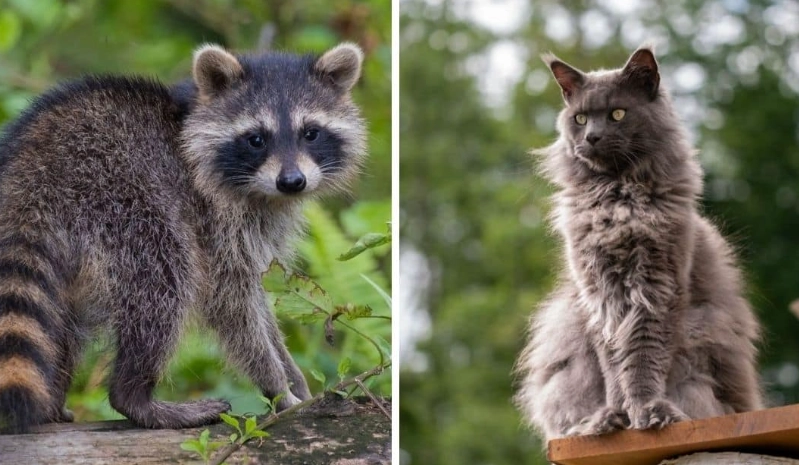
The Real Deal: Cats That Can (and Do) Crossbreed
This is where we move from fiction to documented fact. The successful crosses all happen within the feline family (Felidae). But even here, there are layers. Some happen naturally where territories overlap. Others are human-driven, often requiring intervention.
1. Domestic Cat to Domestic Cat (Different Breeds)
This one seems obvious, but it's the foundation. A Siamese can mate with a Persian, a Maine Coon with a Sphynx. They're all the same species, Felis catus. This is just breeding, not crossbreeding in the hybrid sense. All the diversity in our 40-70 recognized cat breeds comes from selecting and mixing traits within this one species pool. It's important to remember this because when we talk about hybrid cats like Bengals, we're talking about introducing new genetic material from a different, though closely related, species.
2. Domestic Cat x Wildcat (Felis silvestris)
This is a natural one that happens without human help. The European wildcat (Felis silvestris silvestris) and the African wildcat (Felis silvestris lybica, the direct ancestor of the domestic cat) can and do interbreed with feral domestic cats where their ranges meet. This is a huge conservation concern, especially in Europe, as it dilutes the pure wildcat gene pool. It proves how closely related they are—they're practically cousins who haven't been separated that long in evolutionary terms. You could argue this is the most "authentic" answer to what animals can cats crossbreed with—their own wild ancestors.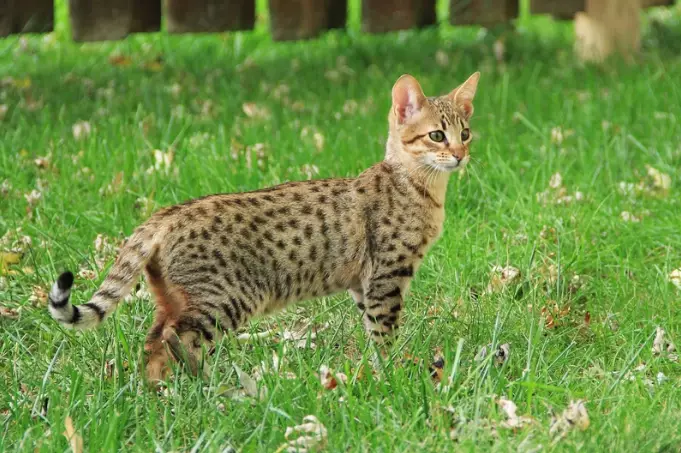
3. The Human-Created Hybrid Breeds (The Main Event)
This is what most people are curious about when they search for hybrid cats. Breeders have intentionally crossed domestic cats with specific small wild cat species to create new breeds with distinctive looks. It's controversial, it's regulated, and it's a multi-generational process.
A Critical Note: The first-generation hybrid (called an F1) is typically 50% wild cat. These animals often have strong wild instincts, can be difficult to handle, and may have special legal requirements. Reputable breeders spend generations (F2, F3, F4, etc.) breeding hybrids back to domestic cats to stabilize temperament while retaining desired physical traits. An F4 or later Bengal, for example, is considered a domestic cat in temperament but retains the stunning leopard-like spots.
Let's break down the most well-known hybrid cat breeds. This isn't an endorsement of the practice—I have mixed feelings about it, which I'll get into—but a factual rundown.
- Bengal Cat: The poster child for hybrids. Created from crosses between the domestic cat and the Asian leopard cat (Prionailurus bengalensis). Jean Mill is credited with founding the breed in the 1960s/70s. The goal was a domestic cat with the gorgeous, glittered rosettes and spots of a wild leopard. It worked. Bengals are incredibly popular, energetic, and need lots of engagement. The International Cat Association (TICA) has a detailed breed standard for them.
- Savannah Cat: A cross between a domestic cat (usually a Siamese or Egyptian Mau) and the serval (Leptailurus serval), a tall, large-eared African wild cat. The result is a stunning, leggy cat that can be very large, especially in early generations. They are known for their dog-like loyalty, high jumping ability, and love of water. Their ownership is restricted or banned in some states and countries due to concerns about size and retained wild instincts.
- Chausie: Originating from crosses with the jungle cat (Felis chaus), found in Asia and the Middle East. Chausies are large, athletic cats with a "puma-like" appearance and a reputation for being intelligent and active. They are less common than Bengals or Savannahs.
- Safari Cat: A very rare hybrid involving the Geoffroy's cat (Leopardus geoffroyi) from South America. They are extremely uncommon as pets due to the challenges involved.
- Caracat: An experimental and extremely rare cross with the caracal. These are not a recognized breed and are largely considered a bad idea by most ethical breeders and feline experts due to the significant size and temperament differences.
You'll notice all the wild parents are small to medium-sized wild felids. You won't see a domestic cat crossed with a lion or tiger—the size difference and genetic distance make it impossible. The "liger" (lion x tiger) is possible because those two big cats are in the same genus (Panthera) and are closer to each other than a house cat is to either of them.
The Nuts and Bolts: How Does Feline Crossbreeding Even Work?
It's not as simple as putting two cats together and hoping for the best. The logistics are tricky, which is part of why these hybrids are rare and expensive.
First, there's the size mismatch. A male serval is much larger than a female domestic cat. This often requires artificial insemination for safety and success. Second, their reproductive cycles might not sync up perfectly. Third, and this is a big one, the hybrid offspring themselves can face challenges.
A phenomenon called "hybrid sterility" or reduced fertility is common. Male hybrids (especially F1 and F2) are often sterile. This is a known biological rule (Haldane's rule) where if one sex is infertile in a hybrid cross, it's usually the heterogametic sex (males in mammals, as they have XY chromosomes). So, female F1 Bengals are fertile, but the males usually aren't. This is why breeding programs rely on breeding fertile female hybrids back to domestic males for several generations.
Then there are genetic compatibility issues. Even closely related species have genetic differences that can cause problems in development. This can lead to higher rates of fetal loss, smaller litter sizes, or kittens with health issues. Responsible breeders screen for known genetic problems, but the long-term health profile of some hybrid breeds is still being studied.
The Elephant in the Room: Ethics, Welfare, and Legality
Okay, time for my personal take. I find hybrid cats like Bengals beautiful. I've met a few, and their intelligence and energy are astounding. But the whole industry makes me uncomfortable in ways that purebred domestic cat breeding doesn't (and that has its own issues).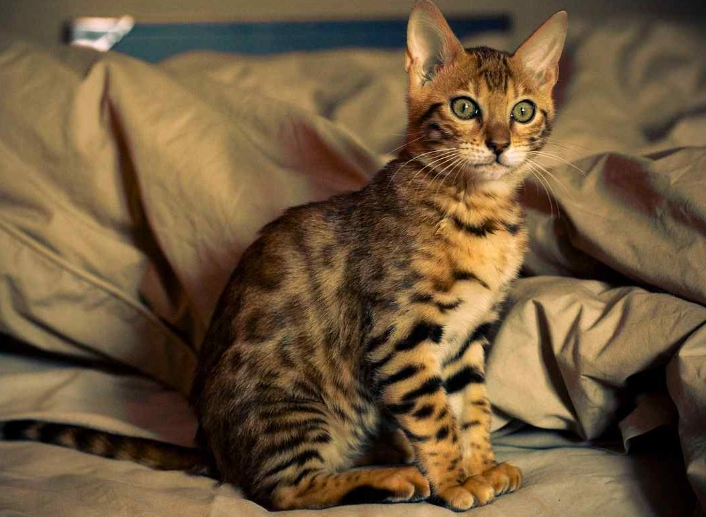
When you create an animal that is part wild, what life are you creating it for? Is a typical suburban home, no matter how loving, a fair environment for an animal with the hardwired instincts of a serval or leopard cat, even if it's only 12.5% (F4)? These cats often have extreme energy needs, a strong prey drive, and can be destructive if bored. I've read too many stories from overwhelmed owners and rescue groups about hybrid cats being surrendered because people weren't prepared.
The welfare of the wild parent animals is another concern. Where are they sourced from? What are their living conditions? Reputable breeders of Savannahs, for example, often work with captive-bred servals from responsible sources, but the market can attract less scrupulous players.
Legality is a patchwork. In the United States, laws vary by state, county, and even city. Savannah cat ownership is heavily regulated. Some places ban ownership of any cat over a certain generation (e.g., F4 and earlier). Other countries, like Australia and parts of Europe, ban certain hybrids entirely. You must check your local laws before even considering one. The USDA Animal and Plant Health Inspection Service and state wildlife agencies are key resources.
My view? If you are utterly fascinated by the question "what animals can cats crossbreed with" and are considering one, you must move from curiosity to extreme due diligence. You're not just getting a pet; you're taking on a lifelong project with potential legal hurdles. Adopt a high-energy domestic cat from a shelter first. See if you can handle that.
Common Questions (The Stuff You Actually Want to Know)
Q: Can a cat get pregnant by a rabbit or other animal?
A: Absolutely not. This is a physiological impossibility. Different species have different mating mechanisms, sperm that won't recognize the egg, and incompatible DNA. A cat can only become pregnant by the sperm of a male from a very closely related feline species.
Q: Are hybrid cats healthier?
A: Not necessarily, and sometimes the opposite. While "hybrid vigor" can occur in some crosses, introducing wild genes can also bring in unknown genetic issues or create new ones through incompatible gene interactions. Some hybrid lines are prone to specific problems. For example, some Bengal lines have had issues with a heart condition called hypertrophic cardiomyopathy (HCM). A reputable breeder will do genetic and health screening.
Q: Do hybrid cats act wild?
A: It depends on the generation and the individual. An F1 or F2 Savannah will have much stronger wild instincts (hiding, startling easily, different vocalizations, powerful hunting drive) than an F5 or later. Later generations are bred specifically for domestic temperament. But even in later gens, you often get a cat that is more active, intelligent, and demanding than your average domestic shorthair.
Q: Why are they so expensive?
A: The process is difficult, time-consuming, and risky. From acquiring and caring for the wild stock (ethically), to the specialized breeding (often AI), to the high kitten mortality rates in early generations, to the years of selective breeding to reach sellable later-generation kittens—the costs are enormous. An F1 Savannah kitten can cost over $20,000. An F5 Bengal might be $1,500-$3,000.
Q: What's the difference between a hybrid and a "wild-looking" domestic breed?
A: Genetics. An Ocicat or an Egyptian Mau has the spotted look of a wild cat but was developed solely from domestic cat breeds. No wild blood was introduced. A Bengal or Savannah has confirmed wild ancestry in its pedigree. This is a crucial distinction for legality, temperament expectations, and breed registry recognition.
Looking Ahead: The Future of Feline Hybrids
Where is this all going? The trend seems to be towards stabilizing the existing popular hybrid breeds (Bengal, Savannah) as consistent, healthy domestic companions. The cat fancy associations are careful about accepting new hybrid breeds, requiring several generations of documented breeding and a stable population. The era of experimenting with new wild cat species seems to have slowed, partly due to ethical pushback and legal restrictions.
Advances in genetic testing might allow us to understand the health implications better. Maybe one day we can identify exactly which genes from the Asian leopard cat give the Bengal its glitter coat and which ones might cause problems, allowing for more precise breeding. But that's speculative.
Personally, I hope the fascination shifts more towards appreciating and conserving the wild ancestor species in their natural habitats. The Asian leopard cat is stunning. The serval is incredible. Maybe instead of wanting a piece of them in our living rooms, we can support efforts to protect them in the wild. Organizations like the Wildcat Conservation Alliance work on this front.
So, when you ask, "what animals can cats crossbreed with?" you're really opening a door to a world of genetics, ethics, and human desire to touch the wild. The answer is a short list of small wild felines. The implications of that answer, however, are long, complicated, and worth thinking deeply about.
If your curiosity is satisfied but you still want a unique, active cat, please check your local shelters and breed-specific rescues. You'd be surprised how many beautiful, high-energy cats—and yes, even the occasional surrendered hybrid—are waiting for a truly informed home.
Reader Comments