Quick Navigation
So you're sitting there, maybe with a purring cat on your lap and a bunny hopping around the living room, and a wild thought pops into your head. Can these two ever, you know, make a... cabbit? Or maybe you saw some weird photo online that sparked the question. It's a bizarre query that somehow finds its way into search engines, especially with a location tacked on. "Can cats and rabbits breed in California" is one of those strangely specific searches that mixes basic biology with local curiosity. I get it. California feels like its own world sometimes, with unique laws and ecosystems. But here's the straight answer, before we dive into the nitty-gritty: No. Absolutely not. A cat and a rabbit cannot produce offspring together, in California or anywhere else on Earth. The location doesn't change the fundamental rules of life. But why does this question even exist? And what should you actually be worried about if you have both pets? That's where things get interesting.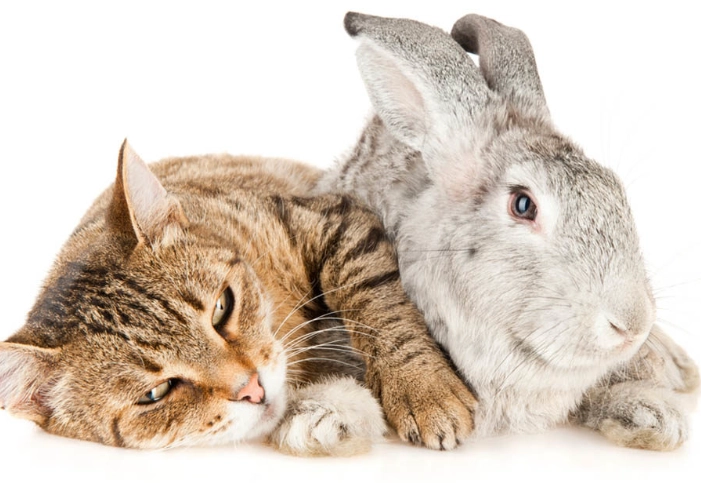
Why Biology Says a Firm "No" to Cat-Rabbit Offspring
This is the core of it all. When people ask if cats and rabbits can breed, they're really asking if two very different species can create a new one. The short, snarky answer is that they're about as compatible as a toaster and a dolphin. But let's be kinder and break down the science, because it's actually fascinating how many barriers exist.
They're Not Even Distant Cousins
Think about the animal family tree. Cats (Felis catus) are carnivores. They belong to the order Carnivora and the family Felidae. Their closest relatives are other cats—lions, tigers, and your neighbor's grumpy tabby. Rabbits (Oryctolagus cuniculus for the domestic ones) are lagomorphs. That's their own entire order, Lagomorpha. Their family is Leporidae. Their closest relatives are hares and pikas.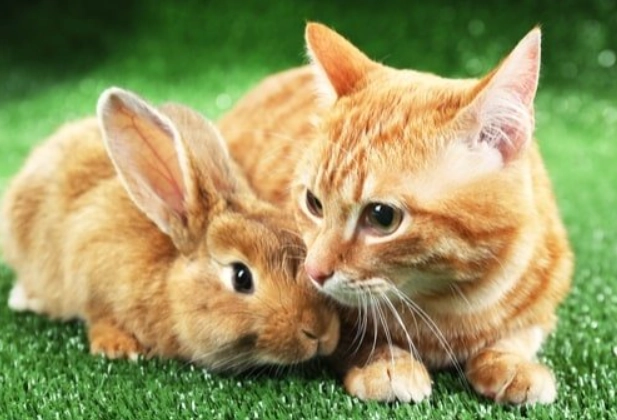
These two branches split apart on the evolutionary tree tens of millions of years ago. We're talking about a genetic gap wider than the Grand Canyon. For successful breeding, animals need to be incredibly closely related, typically within the same genus or family. A lion and a tiger can sometimes produce a liger (though with health issues) because they're in the same genus, Panthera. A cat and a rabbit? They're in different orders. It's a non-starter.
The Chromosome Countdown
Every living thing has a set number of chromosomes, which are the packages of DNA. For two species to create viable offspring, these chromosome numbers need to be compatible so they can pair up correctly during fertilization and cell division.
- Cats: 38 chromosomes.
- Rabbits: 44 chromosomes.
See the problem? Even if, against all odds, an egg was fertilized (which it wouldn't be), the resulting cells wouldn't know how to divide. The instructions are written in two completely different formats and lengths. The embryo would fail to develop at the earliest possible stage. This is one of the most basic, unbreakable rules of mammalian reproduction.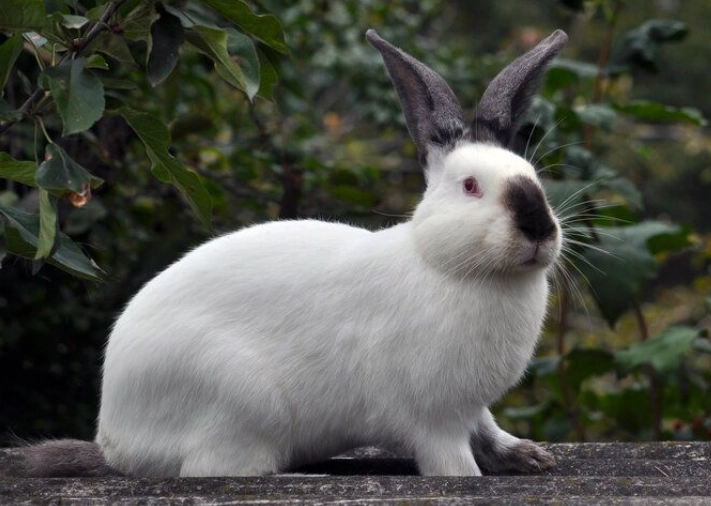
Anatomy and Physiology: A Mismatch at Every Level
Let's get practical for a second. Even ignoring genetics, the physical and behavioral differences make the idea laughable.
The internal "blueprint" for development is timed for a specific species.
| Factor | Cat (Felis catus) | Rabbit (Oryctolagus cuniculus) | Why It Matters for Breeding |
|---|---|---|---|
| Reproductive Anatomy | Feline-specific structure. | Lagomorph-specific structure. | Physical incompatibility. It simply wouldn't work mechanically. |
| Reproductive Strategy | Induced ovulator (ovulation triggered by mating). | Spontaneous ovulator (ovulates on a cycle). | Their reproductive timing and hormonal signals are completely different. |
| Gestation Period | Approximately 63-65 days. | Approximately 28-31 days. | |
| Natural Instinct | Obligate carnivore predator. | Prey animal. | A rabbit's instinct is to flee from a cat, not mate with it. This is a huge behavioral barrier. |
Looking at that table, it's pretty obvious, right? The notion isn't just scientifically implausible; it's practically absurd. The question can cats and rabbits breed in california ignores these fundamental biological realities that are true globally. The Pacific Ocean breeze doesn't change a cat's DNA.
Where Did This "Cabbit" Myth Come From, Anyway?
I've spent a lot of time in online pet forums, and this myth is weirder and more persistent than you'd think. It doesn't spring from nowhere. A few things feed it.
First, internet hoaxes and photoshop. A quick image search might turn up some convincing-for-a-second fakes. People love creating mythical creatures, and the "cabbit"—with cat ears and a rabbit body, or vice versa—is a popular one. Don't believe everything you see.
Second, misunderstood animal behavior. Sometimes a cat might mount a rabbit, or vice versa. This is almost never a sexual act. In animals, mounting can be a display of dominance, play, or just confused behavior, especially if one or both pets are not spayed/neutered. Someone seeing this might jump to the wildest conclusion instead of the simple one: it's about social hierarchy, not reproduction.
Third, rare genetic conditions. Very, very rarely, a cat might be born with a genetic mutation causing deformities that someone might misinterpret. For example, the Manx cat breed has a naturally short or absent tail, which from a certain angle, to an imaginative eye, might look a bit rabbit-like. But it's still 100% cat. This is a classic case of correlation (looking slightly similar) not equaling causation (being related).
What DOES Matter in California? Responsible Pet Cohabitation.
Okay, so we've firmly established that cats and rabbits cannot breed. Phew. But if you're a Californian asking this question, your real concern probably isn't about creating a mythical hybrid. It's more likely: "I have a cat and a rabbit, or I want to have both. How do I keep them safe and happy together? Are there any laws I need to know about?" Now these are excellent, practical questions where your location actually matters.
You're not wondering if they can breed; you're wondering if they can peacefully coexist. That's a much better and more important thing to focus on.
California-Specific Pet Regulations You Should Know
California has some of the most progressive animal welfare laws in the US. While none directly address cat-rabbit interactions (why would they?), several create a framework for responsible ownership that impacts multi-pet households.
- Anti-Tethering Laws: Many cities and counties have laws restricting or prohibiting the tethering of dogs. While aimed at dogs, the spirit of these laws emphasizes providing safe, contained environments—a good principle for any pet, including rabbits who should never be left tethered outside where cats (or other predators) might stalk them.
- Mandatory Spay/Neuter Laws: Numerous California jurisdictions have ordinances requiring the spaying or neutering of cats and dogs, often with some exceptions. The California Legislative Information site is the place to check state codes, while your local city/county animal control website will have local ordinances. Why is this relevant? A spayed/neutered cat is generally calmer, less territorial, and has a significantly reduced prey drive. This is the single most important thing you can do to improve the safety of a household with both a cat and a rabbit.
- Rabbit as "Prey Animal" Awareness: California animal control agencies, like LA Animal Services, often emphasize the special care needs of "prey" species like rabbits, guinea pigs, and birds when housed with traditional "predator" pets. Their guidelines stress secure, separate housing as a baseline.
So, while the law doesn't say "thou shalt not put thy cat and rabbit together," it sets a standard of care that makes reckless cohabitation a potential welfare issue.
The Real Challenge: Predator vs. Prey Dynamic
This is the heart of the matter. Even the sweetest, most docile house cat retains its instinctual wiring as a hunter. A rabbit is hardwired to see sudden movements, certain stares, and pouncing postures as life-threatening danger. This isn't about malice; it's about millions of years of evolution.
I made the mistake once, years ago, of being too lax during an introduction. I thought my elderly, lazy cat couldn't care less. Then one quick, jerky hop from the rabbit triggered a chase instinct I'd never seen before. Nothing bad happened, but it was a stark, scary reminder. The stress alone on the rabbit was unfair. You can't love or train this fundamental difference away. You can only manage it.
A Practical Guide to Cats and Rabbits Sharing a Home (Safely)
If you're determined to have both, it's not impossible, but it requires work, constant vigilance, and accepting that it might never be fully safe to leave them unsupervised. Here's a breakdown of the non-negotiable steps.
Step 1: The Foundation - Health and Preparation
Both pets must be spayed or neutered. This reduces hormonal drives, aggression, and territorial marking. Ensure both are up-to-date on vaccinations. Rabbits need species-specific vaccines (like for RHDV2, which has been a concern in California), and cats need their core shots. A sick rabbit is an easier target, and a sick cat might behave unpredictably. Also, get your rabbit a massive, secure enclosure. We're talking a large exercise pen or a custom-built space with a solid roof that the cat cannot break into or tip over. This is the rabbit's fortress of solitude.
Step 2: Controlled, Gradual Introduction
Start with complete separation for at least a week, letting them smell each other under a door. Then, try a barrier introduction—the rabbit in its secure pen, the cat on the outside. Watch the cat's body language. Dilated pupils, a twitching tail, a low crouch, or a fixed stare are red flags. If the cat shows relaxed, indifferent behavior (the best you can hope for), you can proceed to short, leashed/harnessed sessions. Always have one person per animal. If the rabbit freezes, thumps, or tries to hide, end the session. This is about building neutral associations, not friendship.
Step 3: Long-Term Management Rules
- Never Leave Them Unsupervised. Ever. I don't care if they seem fine for months. The predator-prey switch can flip in an instant.
- The Rabbit's Space is Sacred. The cat should never be allowed in the rabbit's primary enclosure. This must be the rabbit's 100% safe zone.
- Provide Vertical Space for the Cat. Cat trees and shelves allow the cat to observe from a safe height, satisfying its curiosity without threatening the rabbit.
- Watch for Stress Signs in the Rabbit: Hiding constantly, not eating, excessive thumping, wide "panicked" eyes. This means the setup is not working.
- Separate Feeding Areas. Food can trigger resource guarding. Feed them in separate, closed rooms.
Honestly, for most people, the safest and kindest option is to keep them as "sibling pets" who live separate lives in the same house, with carefully controlled "visitation." Forcing a close bond is usually for our benefit, not theirs.
Answering Your Real Questions (FAQ)
Final Thoughts: Moving Beyond the Myth
The query can cats and rabbits breed in california is a fascinating gateway into much more important conversations about animal biology, responsible pet ownership, and interspecies ethics. The answer to the literal question is a simple, definitive no. But the spirit behind the question—concern for how these two very different animals can share a space—is valid and worthy of deep consideration.
In California, with its focus on animal welfare, the emphasis should be on creating a home that respects the nature of both creatures. Provide security for the prey animal (the rabbit), manage the instincts of the predator (the cat), and never compromise on safety for the sake of a cute photo op. Forget about impossible hybrids. Focus on possible harmony, carefully built and constantly maintained. That's the real goal for any multi-pet household, whether you're in Los Angeles, San Francisco, or anywhere else under the sun.
So, next time someone asks you if cats and rabbits can breed, you can give them the quick science lesson. But then, maybe steer them toward the real talk about spaying, neutering, secure housing, and always, always paying attention. That's what actually keeps our furry friends safe and sound.
Reader Comments