In This Article
Let's get this out of the way first. If you're here because you saw a weird, adorable picture online or heard a wild story from a friend, you might be expecting a biological deep dive into a new pet species. I hate to be the bearer of disappointing news, but a Cabbit isn't a real, living creature you can buy at a pet store. Not in the literal, biological sense, anyway. The whole "cat mixed with a rabbit" thing? That's pure fantasy, a genetic impossibility between two animals that are about as closely related as you are to a goldfish. But hold on, don't click away just yet.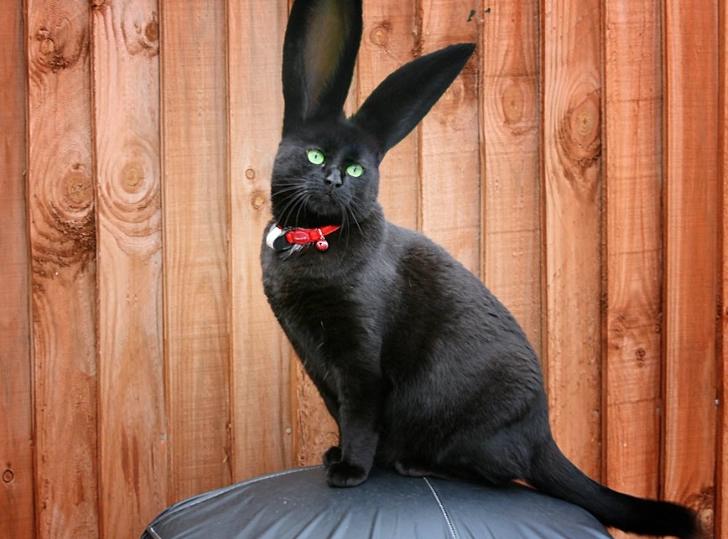
Because that's where the story gets interesting. The fact that it's not real is precisely why the concept of a Cabbit has such a powerful grip on our imagination. It's a cultural phenomenon, a meme before the internet was a thing, a staple of certain art circles, and a perfect example of how myths take on a life of their own. The journey of the Cabbit from obscure folklore to anime star to internet legend is a weird and wonderful trip.
I first stumbled across the term years ago in a dusty corner of an old forum, dedicated to... let's just say "alternative" pet enthusiasts. The passion was real, even if the subject wasn't. It fascinated me. So, let's unravel this fuzzy mystery together.
From Folklore to Fandom: The Origins of the Cabbit Idea
The desire to mash up animals isn't new. Humanity has been doing it since we started drawing on cave walls. Griffins, chimeras, mermaids – we love a good hybrid. The Cabbit fits right into this tradition, though its specific origins are a bit murky.
Some trace whispers of rabbit-like cats or peculiarly long-legged felines in regional folk tales. You'll hear anecdotes about "cabbit" sightings that usually, upon investigation, turn out to be Manx cats. Manx cats are a natural breed known for their short or absent tails and sometimes a distinctive, hopping gait. Their rounded rump and hopping movement, especially in kittens or when they're excited, can absolutely give the illusion of a rabbit. The Cat Fanciers' Association has detailed breed standards for the Manx, and nowhere does it mention rabbit DNA, for obvious reasons. But if you squint, you can see how the myth got started. A tailless cat bouncing across a field? I can see how someone's grandpa, after a pint or two, might start a tall tale.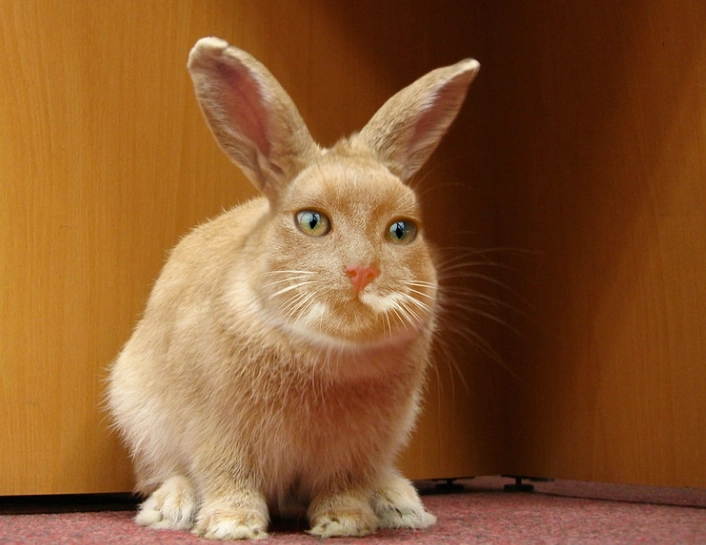
Then there's the pop culture rocket fuel. For many people my age, the definitive Cabbit isn't from folklore; it's from anime. The 1990s series Tenchi Muyo! featured a character named Ryo-Ohki, who was a small, cute, orange creature that was a spaceship, a powerful entity, and, most relevantly, a cat-rabbit hybrid. This wasn't a biological hybrid, but a magical/technological one. Ryo-Ohki looked like a rabbit with cat ears, said "Miya!" (a blend of "Nya" for cat and "Pya" for rabbit in Japanese onomatopoeia), and loved carrots. This character seared the visual and conceptual idea of a Cabbit into the minds of a global generation of anime fans. Suddenly, the Cabbit had a cute, marketable face.
From there, the idea seeped into the broader world of art and online communities. The "furry fandom," a subculture interested in anthropomorphic animal characters, embraced the Cabbit as a popular original species (often called an "open species" meaning anyone can create one). Artists began designing endless variations—fluffy, sleek, pastel-colored, fierce-looking Cabbits. It became a creative playground.
Myth vs. Reality: Dissecting the "Real Cabbit" Claims
This is the part that causes the most confusion online. You'll find forum posts, YouTube videos, and social media threads with titles like "MY CAT IS PART RABBIT!" or "CABBIT PROOF!" Let's clear this up with a heavy dose of reality.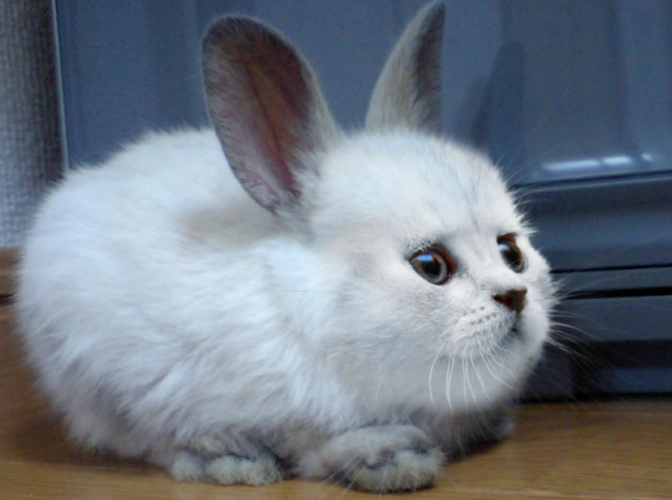
The Cold, Hard Science
Cats (Felis catus) and rabbits (Oryctolagus cuniculus) are separated by millions of years of evolution. They belong to completely different biological orders: Carnivora and Lagomorpha, respectively. Their genetics, reproductive systems, gestation periods, and even basic chromosome counts are wildly incompatible. It would be easier to cross a human with a pineapple. The idea of a natural hybrid is, from a genetic standpoint, pure nonsense. Reputable scientific bodies like the International Commission on Zoological Nomenclature don't have a classification for a "Cabbit" for a very good reason.
So, what are people actually seeing or describing? Here’s a breakdown of the usual suspects:
| What People Call a "Cabbit" | What It Actually Likely Is | Why the Confusion Happens |
|---|---|---|
| A cat with long hind legs that "hops" | The Manx cat breed, or possibly other cats with unique gaits due to conformation or minor physical quirks. | The Manx's rounded rear and sometimes upright hop can mimic a rabbit's movement perfectly. |
| A cat with a puffy, round tail or no tail | Again, often a Manx. Also, cats with injured or naturally short tails (not all are Manx). | A missing or bun-like tail breaks the classic cat silhouette, suggesting another animal. |
| A cat with unusual ear shape or posture | A cat with genetic traits like curled ears (American Curl) or just very large, expressive ears. Sometimes it's simply the angle of a photo. | Large, upright ears are a key rabbit feature. If a cat's ears look prominent, the mind can fill in the blanks. |
| A small, fluffy animal in a blurry photo/video | A young rabbit, a specific breed of small cat (like a Munchkin, which has short legs), a chinchilla, or even a stuffed toy. | Low-quality media + pareidolia (seeing patterns where none exist) = internet myth. |
| A pet that "acts like both" | A cat with a quirky, individual personality. Cats can be aloof (stereotypical cat) or social and binky-like (playful hops associated with happy rabbits). | We project traits onto animals. A playful cat's zoomies might be reinterpreted as "rabbit-like" energy. |
I once spent an hour down a rabbit hole (pun intended) on a forum where someone was adamant their rescue was a Cabbit. The photos showed a lovely domestic shorthair with large ears and a stumpy tail, probably from an old injury. The owner's love was real, but the biology wasn't. The Smithsonian Magazine has run fascinating articles on how and why hybrid myths persist in the age of science, and it often boils down to a deep emotional connection to our pets and a love for the mysterious.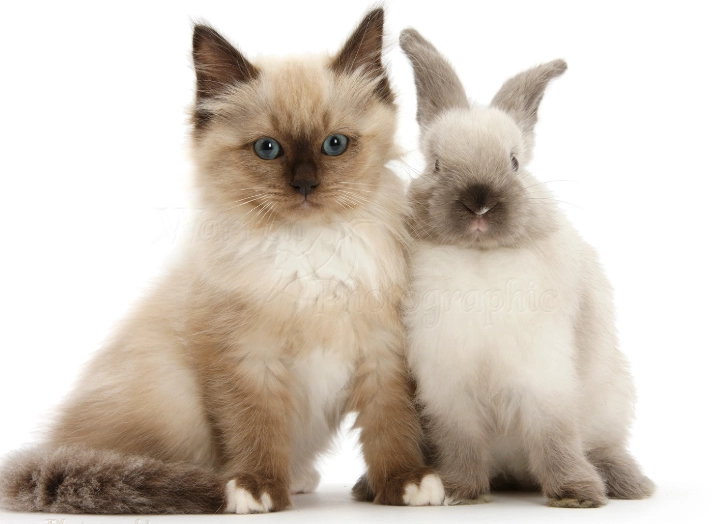
Bottom Line: If someone tries to sell you a "real Cabbit," run. It's either a scam, a misidentified animal (possibly with health issues from irresponsible breeding), or a straight-up lie. Appreciate the unique beauty of cats and rabbits for what they are.
The Cabbit in Art, Culture, and Your Imagination
This is where the Cabbit truly lives and breathes. Since it's unshackled from biology, it's free to be anything artists and creators want it to be. The Cabbit concept is a blank canvas with fuzzy ears.
Why Creators Love the Cabbit Archetype
Think about it. You get to combine two of the most popular, aesthetically pleasing, and symbolically rich pet animals.
- The Cat: Symbolizes independence, mystery, grace, curiosity, and sometimes a touch of magic or the nocturnal.
- The Rabbit: Symbolizes fertility, innocence, speed, timidity, luck, and connection to the earth (burrowing).
Mash them together, and the creative possibilities explode.
A Cabbit character can be aloof yet vulnerable, magical yet grounded, fast and agile. It can be a cute companion sidekick or a powerful mythical beast. In role-playing games and fantasy art, Cabbits might be depicted as forest spirits, messengers between realms, or magical familiars with unique powers—perhaps the stealth of a cat and the prophetic dreams associated with rabbits in some folklore.
Spotting Cabbits in the Wild (of Media)
Beyond Tenchi Muyo!, the influence pops up in subtle ways. You might see original characters (OCs) in online art communities like DeviantArt or FurAffinity. They appear in indie webcomics as unique alien species or magical creatures. Some video games feature monster-collection or pet-simulation elements where "Cabbit" is a creature type, blending traits. It's a niche but persistent aesthetic.
The design rules are fluid. Common features artists play with include:
- Ears: Long rabbit ears, cat ears, or a mix (e.g., long ears with cat-ear tufts).
- Tail: Fluffy rabbit tail (powder puff), cat tail, or something in-between.
- Legs: Powerful hind legs for hopping, or more standard feline legs.
- Face: A cat's slit pupils and nose shape, or a rabbit's softer features.
- Behavior: Purring while chewing a carrot? Binkying (happy rabbit jumps) after chasing a laser dot?
Honestly, some designs are incredibly clever and cute. Others are... a bit of a mess. Not every hybrid concept lands gracefully. I've seen some that look like they were designed by committee, trying too hard to tick every box. The best ones pick a dominant theme—mostly cat-like with rabbit ears, or mostly rabbit-like with cat eyes—and run with it.
Your Cabbit Questions, Answered (The FAQ)
No. It is biologically impossible. Anyone claiming to sell one is either misrepresenting a regular cat (possibly a Manx or a cat with a deformity) or is engaged in a scam. Please do not fund such practices. If you want a pet with unique looks, research ethical breeders of distinct cat or rabbit breeds, or better yet, adopt from a shelter.
While CRISPR and genetic tech sound like sci-fi, creating a viable, healthy hybrid between two such distantly related mammals is far beyond current or foreseeable ethical science. The goal of such research is medicine and conservation, not making fantasy pets. The welfare of such a creature would be a profound ethical nightmare. It's best to keep the Cabbit where it belongs: in art and story.
No, the Manx is 100% cat. Its unique traits are the result of a natural genetic mutation on the Isle of Man, not inter-species breeding. Calling it a Cabbit does a disservice to this fascinating breed. The Manx Cat Alliance is a great resource to learn about their actual history and care.
It combines two universally loved animals into a single, open-ended concept. It's a perfect vehicle for creativity without strict real-world rules. In communities centered around original characters and personas, a Cabbit offers a recognizable yet customizable identity. It's also a bit of an insider term, creating a sense of community among those who know it.
It was almost certainly a cat (likely a Manx) exhibiting a behavior or body shape that reminded you of a rabbit. Videos of Manx cats hopping are often mislabeled as "Cabbits" for clicks. Sometimes it's a clever edit or a costume. Always check the source and comments skeptically.
Embracing the Myth: How to Enjoy the Cabbit Concept
So, if you can't own one, how do you engage with the idea? Easily, and in ways that are actually fulfilling.
For the Artist or Writer: Go wild! Design your own Cabbit character. What's its personality? Is it a space-faring companion like Ryo-Ohki, a forest guardian, or just a quirky pet in a fantasy story? The lack of rules is your strength. Share your creations in online art communities.
For the Fan: Seek out anime, games, or art featuring Cabbits. Appreciate the design work. You might discover a whole subgenre of creative work you enjoy. Just maintain that healthy skepticism about "real" ones.
For the Pet Lover: Channel your love for the Cabbit aesthetic into caring for real animals. Volunteer at a shelter that houses both cats and rabbits (kept separately, of course!). Support ethical breeding practices if you choose a specific breed like the Manx. Learn about their real biology and behaviors—it's more fascinating than any myth.
The Cabbit is a testament to human creativity. It's a piece of shared cultural storytelling that evolved from vague folklore, got supercharged by anime, and now thrives in digital art spaces. Its persistence shows our endless desire for the magical, the hybrid, and the cute.
It’s not a real creature, but the joy, art, and conversation it inspires are very real. And in a way, that’s better. You can’t put a mythical concept in a cage, but you can let it run free in your imagination. Now, if you'll excuse me, I'm going to look at pictures of Manx cats hopping. Because that's real, and it's pretty delightful all on its own.
Reader Comments