Quick Navigation
You know, it's one of those questions that seems simple until you really start thinking about it. I remember being a kid and arguing with a friend about whether a rabbit was more like a hamster or a cat. We didn't have the internet in our pockets back then, so the debate raged on for days. Turns out, we were both a bit right and a bit wrong. The short, unequivocal answer is yes, a rabbit is absolutely a mammal. But if you're searching for "is a rabbit a mammal," you probably want more than just a yes or no. You want to know why. What makes it a mammal? How do we know for sure? And what about all those other animals it gets confused with?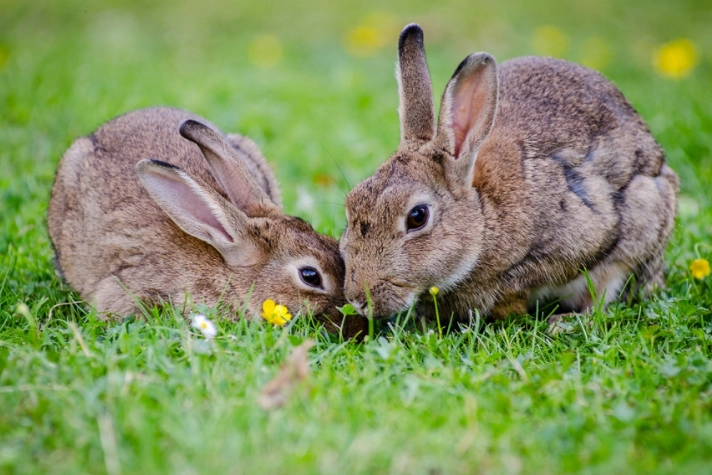
That's what we're going to dig into. We'll strip away the confusion and look at the cold, hard biological facts. No jargon, no fluff. Just a clear breakdown of what makes a rabbit a card-carrying member of the mammal club.
The Core Answer: Rabbits are placental mammals belonging to the order Lagomorpha. They share all the defining characteristics of mammals: they have fur (or hair), are warm-blooded, possess mammary glands to feed their young with milk, give birth to live young (with one quirky exception we'll get to), and have a unique jaw structure and three middle ear bones. They are not rodents, which is a common and understandable mix-up.
The Mammal Checklist: Why Rabbits Get a Perfect Score
Biologists don't just guess. Classifying animals is based on a specific set of traits. Let's run through the mammal rulebook and see how rabbits measure up. It's like a biological report card.
1. They've Got the Fur (Or Hair)
This one's obvious. From the thick winter coat of a wild cottontail to the luxurious angora wool, rabbits are covered in hair. This isn't just for cuteness—it's a key mammalian adaptation for insulation. Fur traps air, creating a layer that keeps body heat in. It's their built-in sweater, constantly growing and being shed. Even "hairless" rabbit breeds (yes, they exist) have a fine layer of fuzz. No scales, no feathers. Just mammal-standard fur.
2. The Milk Bar is Always Open
Female rabbits, called does, have mammary glands. After giving birth, they produce milk to nourish their kits. This milk is rich in fat and protein, tailored specifically for rapid bunny growth. A rabbit's mammary glands are located along her belly, and she typically nurses her young only once or twice a day for just a few minutes—a behavior that helps avoid attracting predators. But the capability is there, loud and clear. The ability to produce milk from specialized glands is a hallmark of mammals, and rabbits are no exception. So, when asking "is a rabbit a mammal," the presence of these glands is a major check in the 'yes' column.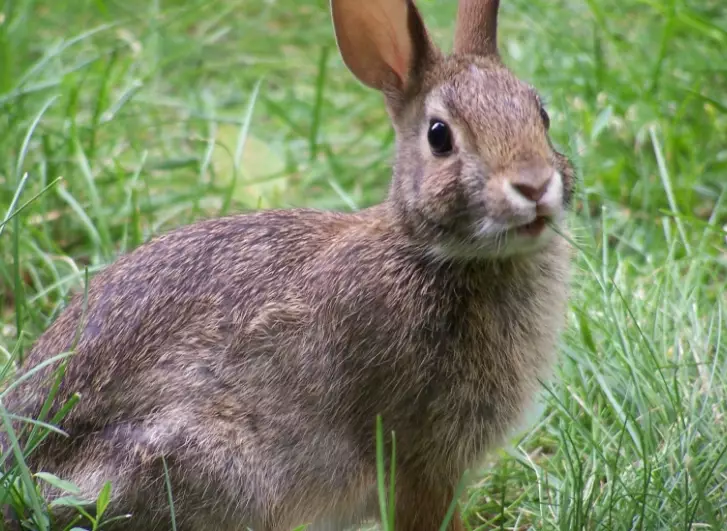
3. Warm-Blooded Hustle
Rabbits are endothermic, meaning they generate their own body heat internally. They don't need to bask in the sun like a lizard to get moving on a cold morning. Their metabolism works overtime to maintain a constant internal temperature (around 101-103°F or 38-39°C). This warm-bloodedness allows for the high-energy lifestyle mammals are known for. It's why a rabbit can suddenly bolt at incredible speed. That burst of energy requires a sophisticated, internally-fueled engine.
It's a demanding way to live, though. It means they need to eat frequently to fuel that furnace.
4. Live Birth (Mostly)
Here's where we get a tiny bit technical. The vast majority of mammals give birth to live young, and rabbits are part of that majority. The does carry their developing embryos inside a uterus, where they are nourished via a placenta—making them placental mammals, just like us, dogs, and whales.
Wait, There's an Oddball? Okay, the "live birth" rule has two famous exceptions in the mammal world: the platypus and the echidna. These are monotremes, or egg-laying mammals. Rabbits are not in that weird and wonderful club. They are 100% placental. No eggs involved.
5. The Bone Structure Giveaway
This is the stuff you can't see from the outside but is utterly definitive. Mammals have a single bone in the lower jaw (the dentary) that connects directly to the skull. Other vertebrates have multiple jaw bones. Rabbits have the single bone. Also, deep in their ears, rabbits have the classic mammalian trio of tiny bones (the malleus, incus, and stapes) that transmit sound vibrations. This intricate setup is a result of evolutionary repurposing of jaw bones from our ancient ancestors and is a dead giveaway for mammal status.
So, on every single major criterion, the rabbit passes with flying colors. The question "is a rabbit a mammal" is scientifically settled.
The Great Mix-Up: Rabbits vs. Rodents
Ah, here's the real heart of the matter. For the longest time, even scientists classified rabbits and their close relatives (hares and pikas) within the order Rodentia. They look similar, right? Small, furry, big front teeth for gnawing. It wasn't until the early 20th century that biologists took a much closer look and said, "Hold on, these are different."
The confusion is totally understandable for a casual observer. I used to group them all together as "small, nibbly things." The key differences, however, are in the details—specifically, in the teeth and the gut.
| Feature | Rabbits (Order: Lagomorpha) | Rodents (Order: Rodentia) |
|---|---|---|
| Incisor Teeth | Have two pairs of upper incisors. The large front pair, and a tiny second pair ("peg teeth") directly behind them. All incisors grow continuously. | Have only one pair of upper incisors. They also grow continuously. |
| Diet & Digestion | Strict herbivores. Practice cecotrophy: they produce and re-ingest special nutrient-rich droppings (cecotropes) to fully digest plant matter. | Mostly herbivores/omnivores. Do not practice cecotrophy. Have diverse digestive strategies. |
| Skull Bone | Have a lattice-like bone structure around the skull near the nose. | Lack this specific bony lattice. |
| Common Examples | Rabbits, Hares, Pikas | Mice, Rats, Squirrels, Beavers, Guinea Pigs, Hamsters |
That second pair of tiny upper incisors in rabbits is the smoking gun. You usually can't see them without looking closely because they're hidden right behind the big front teeth. But they're there. This, combined with their unique digestive process of cecotrophy (which is fascinating and a bit gross), firmly places them in their own separate order: Lagomorpha.
The authoritative resource International Union for Conservation of Nature (IUCN) lists Lagomorpha as a distinct order, separate from Rodentia, in its global species assessments. Similarly, the American Society of Mammalogists recognizes Lagomorpha as one of the major orders of living mammals. So, while both are mammals, they are different branches on the mammalian family tree. Think of them like cousins, not siblings.
Myth Buster: "Rabbits are just big rodents." This is false. They are separate evolutionary lines that developed similar gnawing adaptations (like ever-growing teeth) because they had similar plant-based diets. It's a classic case of convergent evolution, not close kinship.
A Rabbit's Mammalian Life: From Birth to Burrow
Seeing the theory is one thing. Seeing it play out in a rabbit's life makes it all click. Let's follow the mammalian blueprint in action.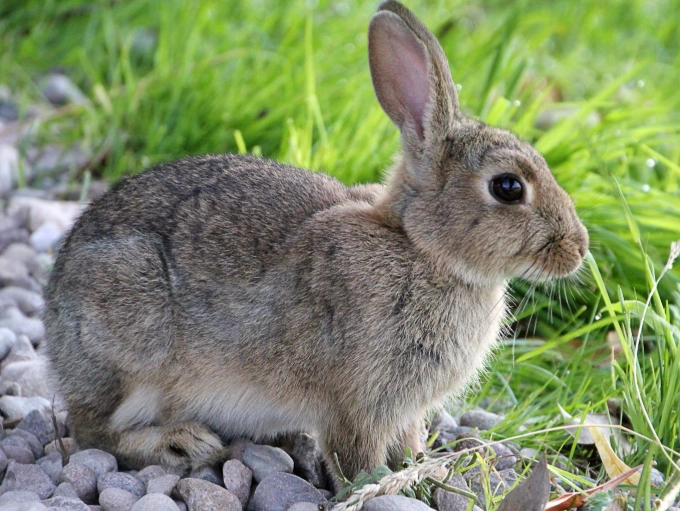
The Very Mammalian Start
A rabbit's journey as a mammal starts, like most, dependent on mom. Newborn kits are altricial—they're born hairless, blind, and completely helpless. They rely entirely on their mother's milk for the first couple of weeks. This period of intensive parental investment (at least in terms of nutrition) is a very mammalian trait. The doe's mammary glands are their sole source of food and antibodies.
I once had the chance to see a nest of wild cottontail kits. They were tiny, pink, and squirming—utterly vulnerable. It hammered home how that initial stage of milk dependency is such a core part of being a mammal, whether you're a human, a whale, or a rabbit.
Growing Up Furry and Fast
Within a week, fur starts to grow. By two weeks, their eyes open. They're leveraging that warm-blooded metabolism to develop at a breakneck pace. Soon, they're hopping out of the nest, exploring, and transitioning to solid food—but the foundation was laid by mammal milk. Their endothermy allows them to be active and learn to forage in a way a cold-blooded juvenile simply couldn't.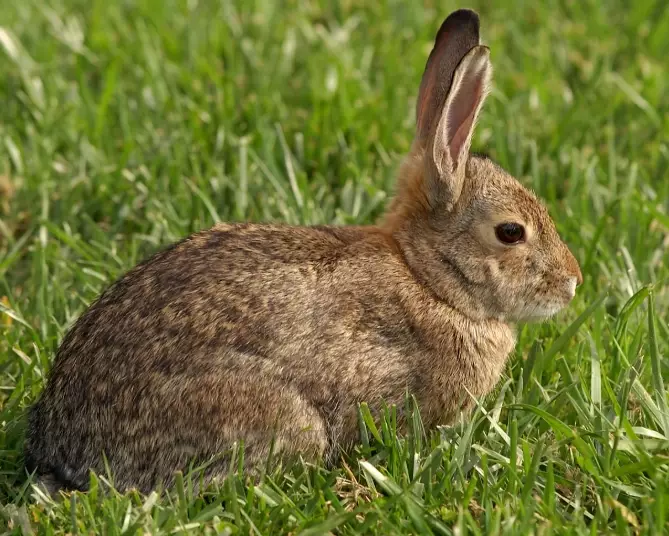
The Unique Lagomorph Twist: Cecotrophy
This is where rabbit biology gets peculiar, even for mammals. Rabbits are hindgut fermenters. They eat their food twice. Not by vomiting it up, but by producing two types of droppings: hard, round fecal pellets (the ones you see), and soft, clumpy, nutrient-packed cecotropes (sometimes called "night feces").
The rabbit re-ingests the cecotropes directly from its anus (a practice called coprophagy) to absorb vital nutrients like vitamins B and K, and proteins that weren't digested the first time through. It's a brilliantly efficient, if somewhat unappealing to us, mammalian adaptation to a tough, fibrous diet. If you see your pet rabbit seemingly "cleaning" its rear end and chewing, it's likely engaging in this critical digestive process. This specific behavior is a key reason "is a rabbit a mammal" has a more complex answer than just pointing to its fur.
When I first learned about cecotrophy, I was totally grossed out. But then you realize it's just a highly specialized digestive strategy. It's no weirder than a cow having four stomachs. It's just their mammalian solution to breaking down cellulose.
Common Questions People Actually Ask
Okay, we've covered the textbook stuff. But when you're googling "is a rabbit a mammal," other related questions pop up. Let's tackle a few of the big ones.
Wrapping It Up: A Mammal Through and Through
Look, at the end of the day, watching a rabbit—whether it's a wild one freezing in your headlights or a pet one doing a happy binky—there's an intelligence and a warmth there that feels... familiar. That's not just sentiment. It's biology. They share the fundamental blueprint that connects everything from the tiny bumblebee bat to the blue whale.
So, is a rabbit a mammal? Unequivocally, yes. It's a fascinating, specialized branch of the mammal family called Lagomorpha. It grows hair, produces milk, is warm-blooded, gives live birth, and has the signature mammalian skeleton. Its unique teeth and digestive system set it apart from rodents, granting it its own distinct branch on the tree of life.
The next time you see a rabbit, you're looking at a creature whose biology is built on the same core principles as our own. That's pretty cool. It's a testament to the incredible diversity and adaptability of the class Mammalia. They're not just cute lawn ornaments; they're complex, efficient, and wonderfully successful mammals that have hopped their way across the globe.
Reader Comments