Quick Navigation
So, you're scrolling online, maybe watching some cute videos of a cat cuddling with a bunny, and the thought pops into your head: can a cat and rabbit mate? It's one of those weird, curious questions the internet seems perfect for. I remember a friend of mine asking me this years ago, completely seriously, after her new kitten took a strange interest in her pet rabbit. She was genuinely worried. My first reaction was a laugh, but then I realized it's not such a silly question if you don't know the biology behind it.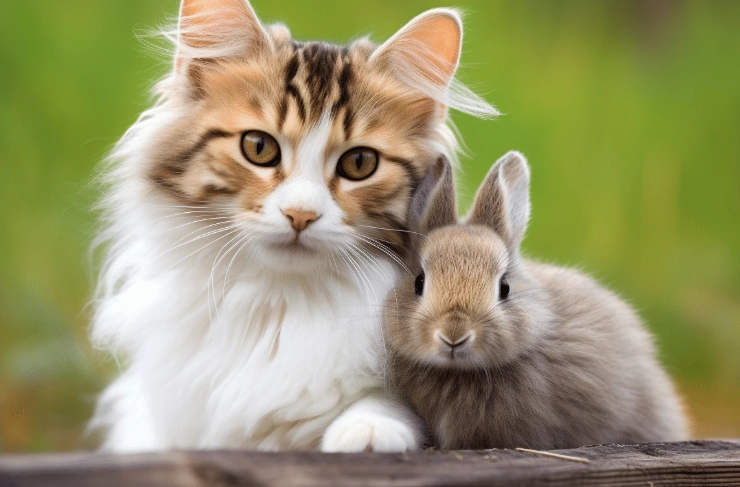
The short, definitive, no-room-for-debate answer is absolutely not. A cat and rabbit cannot mate and produce offspring. They are biologically incompatible on a fundamental level. But that quick answer doesn't really satisfy the curiosity, does it? It feels too simple. The real story is a lot more interesting than a yes or no, touching on genetics, animal behavior, and why this myth might persist. Plus, it leads to a much more important question for pet owners: if they can't mate, can they even live together safely?
Why "Can a Cat and Rabbit Mate?" is a Biological Dead End
Let's get into the nitty-gritty. The idea of a "cabbit" or some other hybrid is pure fiction, and here's the breakdown of why. It's not just one barrier; it's a whole series of insurmountable walls.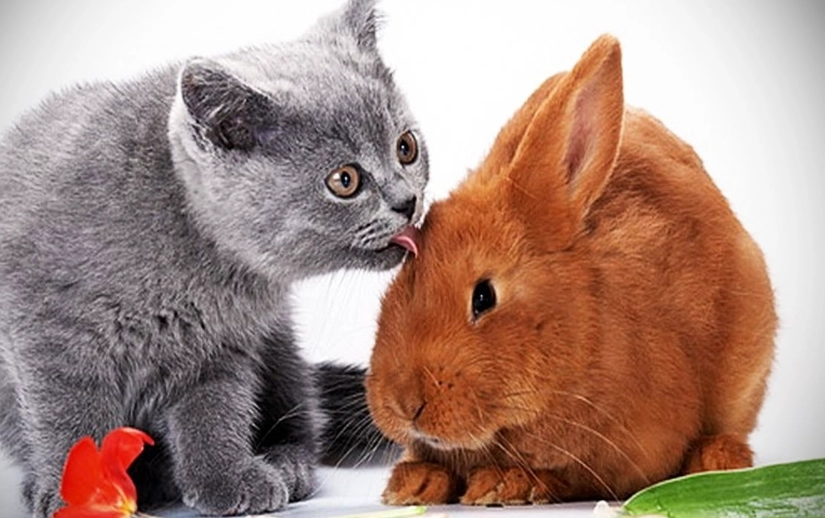
The Chromosome Wall: A Numbers Game You Can't Win
Every species has a specific number of chromosomes, which are like the instruction packets for building an organism. These packets have to match up perfectly during reproduction for viable offspring to develop.
- Cats (Felis catus): 38 chromosomes.
- Rabbits (Oryctolagus cuniculus): 44 chromosomes.
See the problem right away? It's not even close. It's like trying to complete a 1,000-piece puzzle with 800 pieces from one box and 200 from another. The sperm from a cat and the egg from a rabbit carry half their species' chromosomes (19 and 22, respectively). They cannot pair up correctly to form the first cell of a new individual. The process would fail immediately at conception, if it even got that far. This basic genetic mismatch is the most fundamental reason why the question "can a cat and rabbit mate" has a solid scientific "no."
The Species Barrier: More Than Just Numbers
Even if we ignored the chromosome count (which we can't), the biological divergence is vast. Cats are carnivores from the order Carnivora and the family Felidae. Rabbits are herbivores from the order Lagomorpha. They split from a common ancestor tens of millions of years ago. Their reproductive systems, the chemical signals on their eggs and sperm (proteins called binding proteins), and the entire internal environment needed for embryo development are entirely different and incompatible. The American Society of Mammalogists maintains detailed taxonomic records that highlight this profound separation. Their bodies are simply not designed to communicate or cooperate reproductively.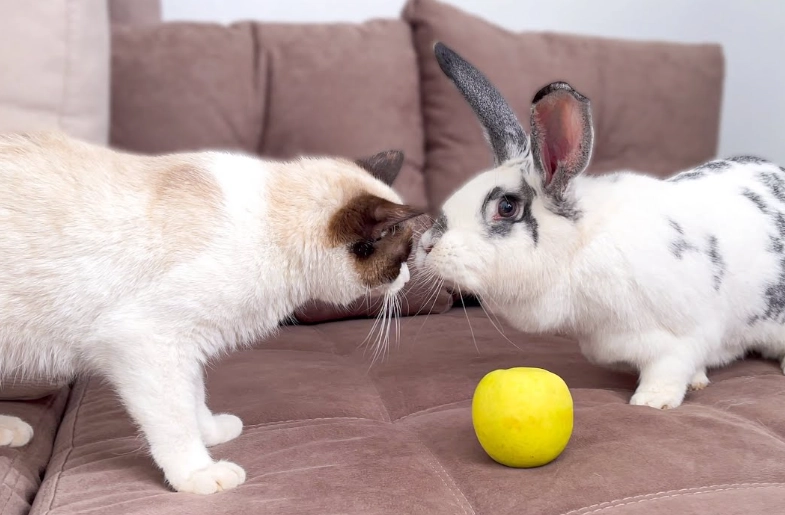
Sometimes people point to rare inter-species hybrids like ligers (lion-tiger) or mules (horse-donkey) as evidence that "anything is possible." But those are exceptions that prove the rule. Those animals are from the same genus or very closely related families, sharing a recent common ancestor, similar chromosome counts, and compatible reproductive biology. The gap between a feline and a lagomorph is orders of magnitude wider.
So, What ARE You Actually Seeing? Behavior vs. Breeding
This is where things get interesting, and where confusion might arise. If a cat and rabbit can't mate, why do we sometimes see mounting behavior? This is a classic case of misunderstanding animal actions.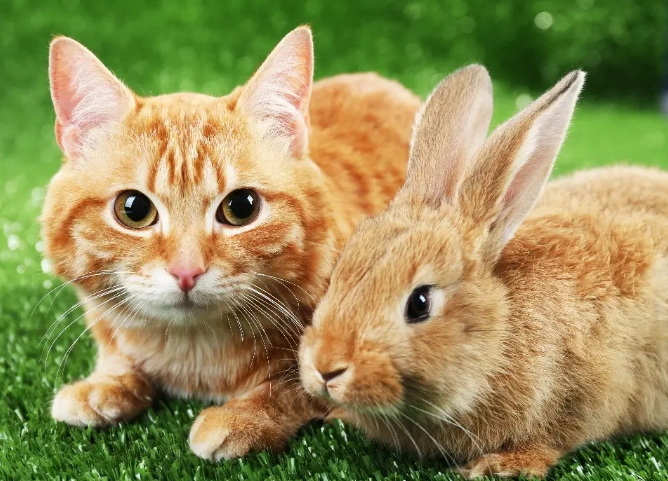
Mounting isn't always about reproduction. In the animal world, it's often about dominance, play, stress, or even just misplaced instinct. A cat might mount a rabbit (or vice versa) as a way to assert control in their shared space. It can be a component of rough play, especially in animals that haven't been properly socialized or neutered. A bored or anxious pet might also display such behaviors.
I once saw a neutered male rabbit persistently mount a very confused, passive cat. It wasn't sexual; the rabbit was the dominant personality in that pairing and was constantly reinforcing his status. The cat just tolerated it. It looked bizarre, but it had nothing to do with trying to create some impossible hybrid. It was purely social communication, albeit a confusing one to our human eyes.
This behavioral quirk is precisely why someone might witness an interaction, snap a blurry photo, and ask online, "Can a cat and rabbit mate?" They're seeing an action and interpreting it through a human lens. Understanding the context is key.
The Real Question: Can Cats and Rabbits Live Together Safely?
Now we get to the practical, important part that most pet owners who stumble upon this topic actually care about. Since a cat and rabbit mating is off the table, is cohabitation a good idea? This isn't a simple yes or no either. It's a "proceed with extreme caution, and probably don't."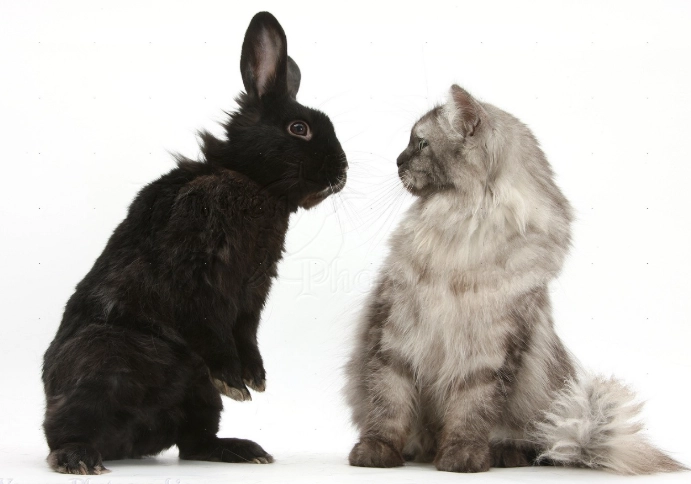
Cats are predators (even the lazy, well-fed ones). Rabbits are prey animals. This is a hardwired dynamic. A rabbit's instinct is to run, which can trigger a cat's instinct to chase. Even a playful swat from a cat can cause serious injury to a rabbit—their skin is surprisingly delicate and their bones can be fragile. A scratch can lead to a deadly infection.
| Aspect | Cat (Predator) | Rabbit (Prey) | Potential Conflict Point |
|---|---|---|---|
| Primary Instinct | Hunt, chase, pounce | Hide, freeze, flee | A rabbit's sudden movement can trigger a cat's chase instinct. |
| Communication | Tail flicks, stares, slow blinks | Thumping, freezing, wide eyes | Signals are misinterpreted. A cat's stare is a threat to a rabbit. |
| Body Language | Forward posture, direct approach | Crouched, ready-to-run posture | Normal cat curiosity appears as looming aggression to a rabbit. |
| Play Style | Uses claws and teeth in mock combat | Binkies (jumps), quick dashes | Cat play is too rough and can cause real injury. |
| Health Risk | Carries bacteria (e.g., Pasteurella) in saliva harmless to cats but potentially fatal to rabbits. | Extremely susceptible to stress-related illnesses (e.g., GI stasis). | Even a friendly lick or minor bite can transmit disease. The mere presence of a predator can stress a rabbit to death. |
That last point in the table is a silent killer. Cats carry bacteria like Pasteurella multocida as normal flora in their mouths. A tiny bite or scratch that barely breaks the skin can introduce this bacteria into a rabbit's system, leading to a rapid and severe infection called pasteurellosis, which is often fatal if not treated immediately. Organizations like the House Rabbit Society provide extensive resources on rabbit health and safety, and they strongly advise against mixing rabbits with predator species.
If You're Determined to Try: A Rigid Safety Protocol
Maybe you already have both pets. I get it. Rehoming isn't always an option. If you must manage a household with both, your number one job is to be the rabbit's security guard. Here’s a non-negotiable checklist:
- Separate Living Quarters: The rabbit must have a large, secure enclosure (like an exercise pen or a dedicated rabbit-proofed room) that the cat cannot access. The roof matters too—cats jump. This is the rabbit's safe haven, 24/7.
- Supervision is NOT Optional: Any time they are in the same space, you must be physically present, alert, and within arm's reach. No distractions, no phone scrolling. This isn't casual co-existence; it's active monitoring.
- Train the Cat (Yes, Really): Use positive reinforcement to redirect the cat's attention away from the rabbit. Teach a strong "leave it" command. Keep the cat's claws trimmed. A well-exercised, mentally stimulated cat is less likely to fixate on the rabbit.
- Read the Rabbit's Stress Signals: If the rabbit is frozen in place, thumping, has wide eyes with the whites showing, or is pressed into a corner, the interaction is over immediately. You've already failed if you let it get to this point. The RSPCA has excellent guides on recognizing stress in prey animals.
- Never Force Interaction: Let the rabbit initiate any curiosity. The cat should be indifferent or calmly curious at best. Any sign of stalking, pouncing, or intense staring means permanent separation is the only safe option.
It's exhausting just writing that list. For most people, keeping them completely separated is the only truly ethical and safe choice.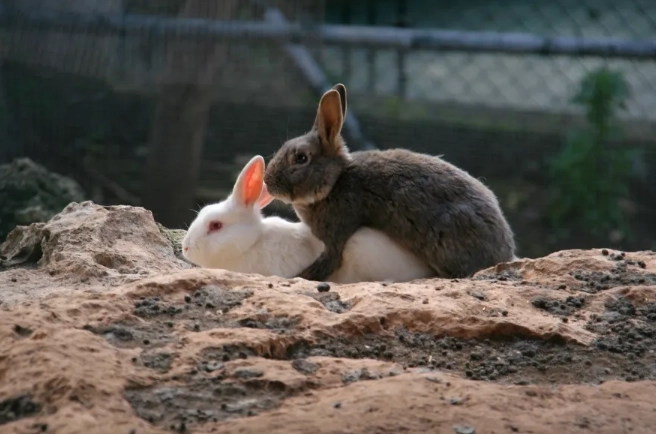
Your Burning Questions, Answered (The FAQ)
Wrapping It Up: Science Over Myth
So, can a cat and rabbit mate? We've been over it. It's biologically impossible. The chromosome counts don't match, their evolutionary paths diverged eons ago, and their bodies wouldn't know how to begin the process. The real-world implications are far more about responsible pet ownership than speculative biology.
The cute internet videos are often carefully curated moments from highly managed situations. They don't show the years of careful management, the separate rooms, or the constant vigilance. For every one successful tolerance story, there are many more that end in tragedy—a rabbit injured, sick, or dead from stress or a seemingly minor interaction.
If your curiosity was purely academic, I hope the science was interesting. If you're a pet owner considering this mix, my strongest advice is to reconsider. Love both species for what they are: wonderful, but very different, companions. Provide them with appropriate, safe environments and companions of their own kind (another rabbit for your bunny, for instance). That's how you ensure their happiness and well-being, which is ultimately what matters most.
Focus on understanding their natural behaviors and needs. The American Veterinary Medical Association (AVMA) is a great resource for general pet care guidelines from a trusted, scientific authority. Giving our pets the best life means respecting their nature, not forcing connections that go against millions of years of evolution.
Comment