Quick Guide
- Why the Confusion? Debunking the "Omnivore Rabbit" Myth
- The Herbivore's Toolbox: A Rabbit's Digestive System Explained
- Herbivore vs. Omnivore: A Side-by-Side Look
- The Real Rabbit Diet: What Should They Actually Eat?
- Answering Your Burning Questions (FAQs)
- Practical Tips for a Healthy Herbivore Household
- When in Doubt, Trust the Experts
So, you're wondering, are rabbits omnivores? It's a question that pops up more often than you'd think. Maybe you saw a weird video online, or heard a friend mention something about their rabbit nibbling on a leftover chicken nugget (true story, and it made me cringe). Let's cut straight to the chase: rabbits are not omnivores. They are what we call obligate herbivores or strict herbivores. That means their entire biology—from their teeth to their stomach to their long intestines—is engineered by evolution to process plant matter and only plant matter.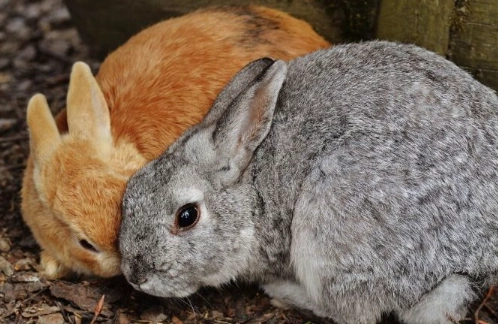
Feeding a rabbit meat, dairy, or any animal protein isn't just a bad idea; it's a fast track to making them seriously, painfully ill. I've seen the aftermath of well-meaning but misinformed owners, and it's not pretty. The confusion is understandable, though. In the wild, survival can force rare, aberrant behaviors, and sometimes pet rabbits display puzzling cravings. But one odd event doesn't rewrite millions of years of digestive design.
Why the Confusion? Debunking the "Omnivore Rabbit" Myth
If rabbits are so clearly plant-eaters, why does anyone ask "are rabbits omnivores" in the first place? A few things feed this myth.
First, rabbits are curious and will mouth or nibble on many things. A rabbit might take an investigative bite of a piece of cooked meat left within reach. This isn't dietary choice; it's exploration. Mistaking this for hunger or nutritional need is a big error.
Then there are those viral stories or anecdotes. "My rabbit ate a bite of my hamburger and was fine!" People love sharing these outliers. But one rabbit not immediately dropping dead from a tiny bit of meat is not evidence of omnivory. It's luck, and it risks normalizing a dangerous practice. It's like saying "I didn't wear a seatbelt once and didn't crash, so seatbelts are useless." The logic just doesn't hold.
There's also a broader misunderstanding about small pets. Some people think all small mammals eat a bit of everything. Guinea pigs? Herbivores. Hamsters? Omnivores (they really are!). Rabbits? Herbivores. You have to know the species.
The bottom line: curiosity and anecdotal luck don't change biological facts.
The Herbivore's Toolbox: A Rabbit's Digestive System Explained
To really get why the answer to "are rabbits omnivores" is a firm no, you need to peek under the hood. A rabbit's gut is a finely tuned fermentation vat for breaking down tough cellulose from plants. It's brilliant for grass, but a disaster for meat.
Teeth Built for Grinding, Not Tearing
Look at a rabbit's teeth. They have large, flat-topped molars in the back for grinding fibrous plants into a pulp. Their famous front incisors are for slicing through tough vegetable matter like stems and roots. They grow continuously to compensate for the wear from all that grinding. These aren't the sharp, pointed teeth of a carnivore or omnivore designed for tearing flesh.
The Cecum: The Secret Fermentation Chamber
This is the star of the show. The cecum is a large pouch where the small and large intestines meet. It's a microbial powerhouse, packed with specific bacteria and protozoa that ferment indigestible plant fibers. This process creates nutrient-rich cecotropes (soft, shiny pellets the rabbit re-ingests directly from its anus—yes, really). This "cecotrophy" is crucial for extracting vitamins like B and K.
A Gut That Needs Constant Movement
A rabbit's digestion is motility-driven. High-fiber food (like hay) provides the bulk to keep everything moving smoothly. Meat and fatty foods are low in fiber and high in protein/fat, which can cause the gut to slow down or stop. A stopped gut in a rabbit is life-threatening within hours.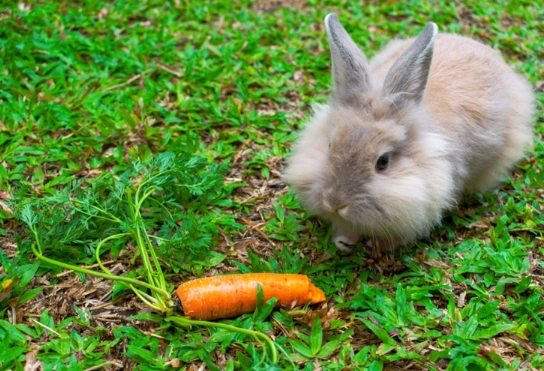
When you look at it this way, the system is so specifically adapted that it feels almost silly to ask if rabbits are omnivores. It's like asking if a gasoline engine can run on olive oil.
Herbivore vs. Omnivore: A Side-by-Side Look
Sometimes a clear comparison helps. Let's break down the key differences between a strict herbivore like a rabbit and a true omnivore like a human or a rat.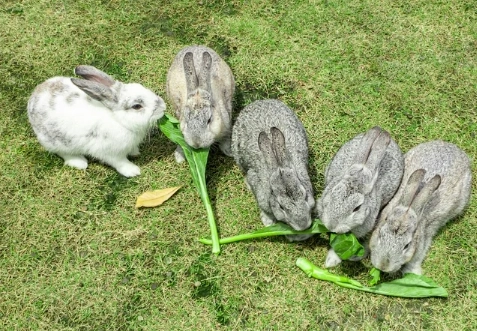
| Feature | Rabbit (Strict Herbivore) | Human/Example Omnivore |
|---|---|---|
| Primary Diet | Exclusively plant-based (grasses, leaves, vegetables). | Mixed plant and animal matter. |
| Teeth | Flat molars for grinding; long, continuously growing incisors for slicing plants. | Combination of sharp canines for tearing and flatter molars for grinding. |
| Digestive Tract Length | Very long, especially the cecum and colon, to allow slow fermentation of fiber. | Moderate length; shorter than a herbivore's, longer than a carnivore's. |
| Key Digestive Organ | Cecum: Large fermentation chamber for breaking down cellulose with microbes. | Stomach & Small Intestine: Primary sites for breaking down diverse proteins, fats, and carbs. |
| Nutrient Extraction | Relies on microbial fermentation in the cecum and re-ingestion of cecotropes. | Relies on stomach acids and intestinal enzymes. |
| Ability to Digest Cellulose | Excellent, via symbiotic gut bacteria. | Very poor; we lack the necessary enzymes and microbes. |
| Risk from Animal Protein | Very High. Causes dysbiosis (microbial imbalance), GI stasis, and liver/kidney strain. | Low to None. Essential part of the diet when consumed in appropriate forms. |
See the mismatch? Every part of the rabbit is screaming "plants only." Asking if rabbits are omnivores ignores this fundamental biological blueprint.
The Real Rabbit Diet: What Should They Actually Eat?
Okay, so if rabbits aren't omnivores, what's on the menu? Getting this right is the single most important thing you can do for your rabbit's health. It's not complicated, but the proportions are key.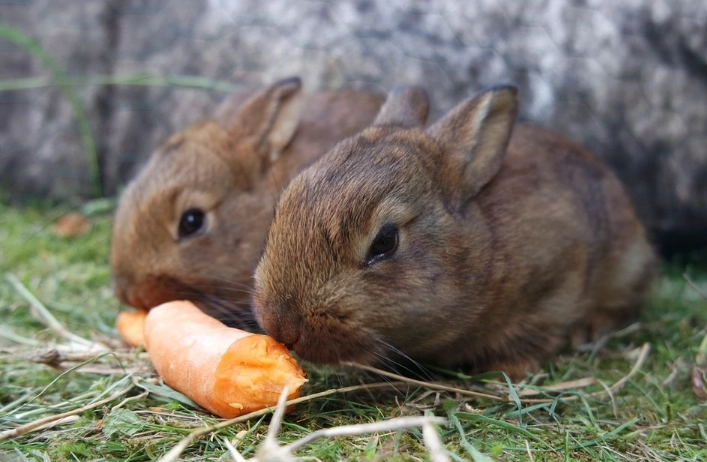
The Foundation: Unlimited Grass Hay (80-90% of diet)
This isn't optional. It's mandatory. Hay provides the essential long-strand fiber that keeps their gut moving and their teeth worn down. Timothy hay, orchard grass, meadow hay—these are great for adult rabbits. Alfalfa hay is too rich in calcium and protein for adults but is perfect for growing kits.
If your rabbit isn't eating enough hay, nothing else in their diet will work properly. I can't stress this enough. A hay-only diet would be far healthier for a rabbit than a diet full of veggies but low on hay.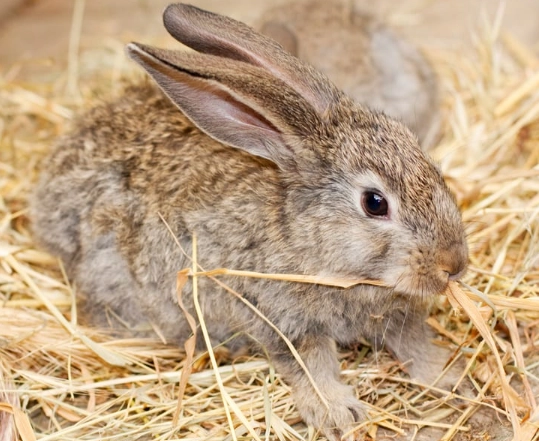
The Fresh Layer: Leafy Greens & Vegetables (10-15% of diet)
This is where you add variety and moisture. Aim for about 1 packed cup of fresh greens per 2 lbs of body weight daily. Rotate them to provide a range of nutrients.
- Daily Staples: Romaine lettuce, green/red leaf lettuce, cilantro, parsley, dill, mint, bok choy, carrot tops (not the carrot!).
- 2-3 times a week: Kale, spinach, Swiss chard (these are higher in oxalates, so rotate).
- Occasional Veg Treats: Bell pepper, broccoli florets (small amount), zucchini.
The Supplemental Layer: High-Quality Pellets (5% or less)
Pellets are a concentrated supplement, not the main course. For an average adult rabbit, 1/4 cup of plain, timothy-based pellets per day is plenty. Look for pellets high in fiber (18% minimum) and low in protein and fat. Avoid the colorful mixes with seeds, nuts, and dried corn—they are junk food and a leading cause of selective feeding and obesity.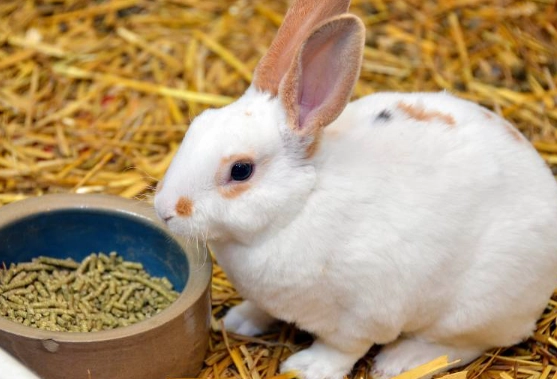
The Tiny Apex: Occasional Treats (
This means a small slice of apple, a blueberry or two, a small piece of banana (high in sugar!). Think of it as a thumbnail-sized portion, not a whole fruit. Treats are for bonding, not nutrition.
Answering Your Burning Questions (FAQs)
Can rabbits eat eggs for protein?
Absolutely not. This is a persistent and dangerous myth. Rabbits have zero dietary requirement for animal protein. The protein they need comes entirely from plants (hay, leafy greens, pellets). Egg protein is not digestible for them and will rot in their cecum, causing a toxic bacterial overgrowth. It's one of the quickest ways to induce fatal GI stasis.
My rabbit accidentally ate a piece of chicken. What do I do?
Don't panic, but be vigilant. A single, tiny accidental bite is unlikely to cause immediate catastrophe, but it's a red flag. Remove ALL access to any other inappropriate food. Ensure your rabbit has unlimited hay and fresh water to keep their gut moving. Monitor them closely for the next 24-48 hours for signs of GI stasis: reduced or no fecal pellets, lethargy, hunched posture, loss of appetite, or loud tooth grinding (a sign of pain). If you see any of these signs, get to a rabbit-savvy vet immediately. Time is critical.
Why did my wild rabbit eat a dead bird/insect?
This is the behavior that often sparks the omnivore debate. In extreme survival situations, a starving wild rabbit might consume animal matter out of desperation. It's an aberrant, last-resort act, not a reflection of their optimal biology. Think of it like a human eating tree bark to survive—it's possible, but it's not what our system is designed for, and it comes with severe risks. It doesn't mean humans are "barkivores." The same logic applies to rabbits.
Are baby rabbits (kits) omnivores?
No. From the moment they begin weaning, their diet is plant-based. Mother rabbit's milk is specifically formulated for lagomorph infants, but as soon as they start exploring solid food, it's hay and greens. Their digestive systems are even more sensitive than adults'.
What about rabbits eating their own feces? That's not herbivore behavior!
Ah, but it is! This is cecotrophy, and it's a hallmark of a specialized herbivore. The soft, nutrient-rich cecotropes are packed with vitamins and proteins synthesized by the cecum's bacteria. Re-ingesting them is like taking a vital probiotic and vitamin supplement. It's a completely normal, essential process and has nothing to do with scavenging or omnivorous behavior.
See? The rabbit's own behaviors, even the weird ones, point back to herbivory.
Practical Tips for a Healthy Herbivore Household
Knowing the theory is one thing. Living it is another. Here’s how to make sure your rabbit’s herbivore life is smooth.
- Hay Everywhere: Offer hay in multiple locations—in a rack, in a box, in a pile. Make it the most available and interesting thing in their space.
- Veggie Prep: Wash all greens thoroughly. Introduce new greens one at a time and in small amounts to watch for soft stools.
- Pellet Portion Control: Measure the daily pellets. Don't free-feed. Overfeeding pellets is a top reason rabbits ignore hay.
- Treats with Sense: Use a tiny piece of fruit or a fragrant herb like basil as a training reward, not a daily entitlement.
- Educate Everyone: Make sure all family members and pet sitters know the rules. A well-meaning grandparent giving a cracker can cause real harm.
It's simple, really. Mimic nature: mostly grass (hay), some foraged greens (your veggies), and minimal extras.
When in Doubt, Trust the Experts
If you're ever unsure about a food, don't guess. The internet is full of bad advice. Rely on resources from established rabbit welfare organizations and veterinary associations. For instance, the House Rabbit Society has exhaustive, science-backed diet guides. The Merck Veterinary Manual provides detailed physiological explanations of why rabbits are herbivores. Your local exotics veterinarian is your best ally—find one before you have an emergency.
These sources don't have a vested interest in cute myths; they have a vested interest in animal health. Their consensus is unanimous.
So, the next time someone asks you, or you see it online—"are rabbits omnivores?"—you can confidently say no. They are exquisite, delicate, fascinating herbivores. And feeding them like one is the greatest act of care we can offer.
Comment