Let's get straight to the point: yes, a pet rabbit and dog can live together. But that "yes" comes with a mountain of caveats, careful planning, and a fundamental shift in how you view your home. It's not about putting two cute animals in a room and hoping for the best. It's about managing a predator-prey dynamic under your own roof. I've seen it work beautifully, and I've seen it go terribly wrong in a split second. The difference always boils down to the owner's understanding and commitment.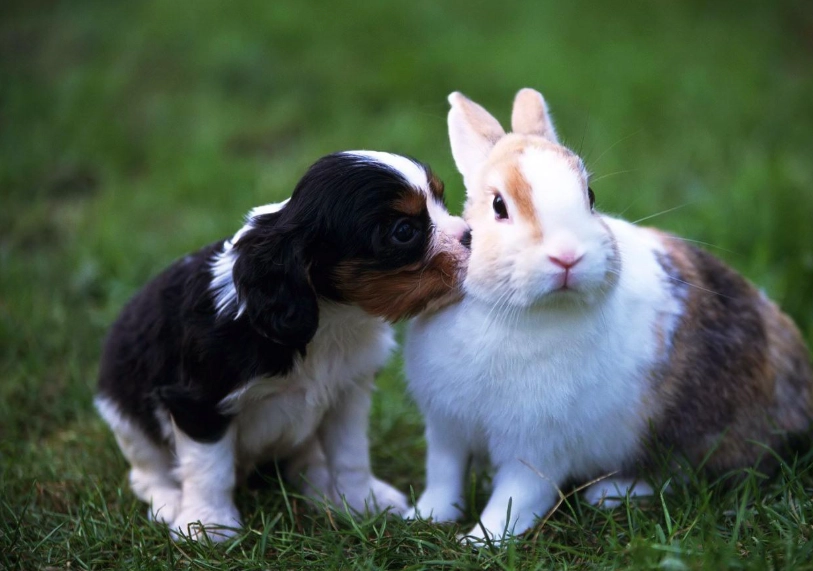
Quick Navigation: What You'll Find Here
- The Uncomfortable Truth About Their Nature
- Why Your Dog's Breed (and History) Matters Most
- The Step-by-Step Introduction Protocol
- Non-Negotiable Training Essentials for Your Dog
- Creating a Rabbit-Safe Home: A Room-by-Room Guide
- Reading the Signs: Stress in Rabbits and Over-Excitement in Dogs
- Your Top Questions, Answered Honestly
The Uncomfortable Truth About Their Nature
This is the part most fluffy articles gloss over. Your dog, even the one that sleeps in a tutu, is a predator. Your rabbit is prey. This isn't a judgment; it's hardwired biology. A dog's chase instinct can be triggered by a sudden movement—a rabbit's zoomie across the floor. The rustle of hay, the thump of a foot, even the high-pitched squeak a scared rabbit might make, can flip a switch in a dog's brain from "family member" to "interesting thing to investigate... vigorously."
Ignoring this is the number one mistake. Success isn't about eliminating the instinct—that's impossible. It's about managing it through training, environment, and constant supervision. The goal is mutual indifference, not forced friendship. If they choose to snuggle, that's a bonus miracle, not the objective.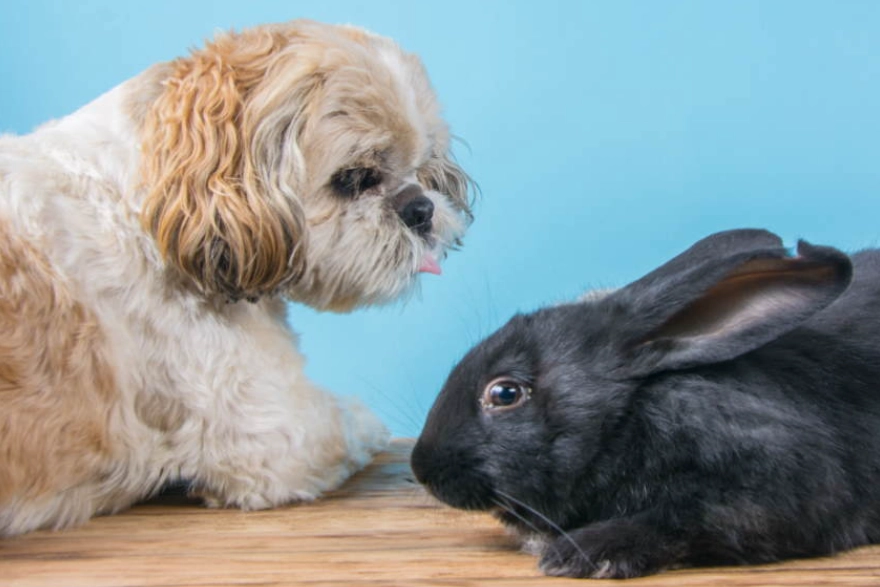
Why Your Dog's Breed (and History) Matters Most
While any dog has potential, genetics load the gun. Breeds with high prey drive—think Terriers, Sighthounds (Greyhounds, Whippets), Spitz breeds, or many hunting breeds—present a significantly higher challenge. It's not a deal-breaker, but it means your training and management must be flawless.
More important than breed is your dog's individual history and temperament. A rescued dog with an unknown past around small animals is a giant question mark. An adult dog with a known history of chasing squirrels or cats will see your rabbit as the ultimate squirrel. Starting with a young puppy and a rabbit is often the easiest path, as you can shape the puppy's perceptions from day one.
Ask yourself these questions honestly:
- Does your dog obsessively stare at or lunge at squirrels/birds on walks?
- Does it get fixated on squeaky toys, shaking them violently?
- What's its general impulse control like? Can it "leave it" when you drop a piece of chicken?
The answers tell you your starting point.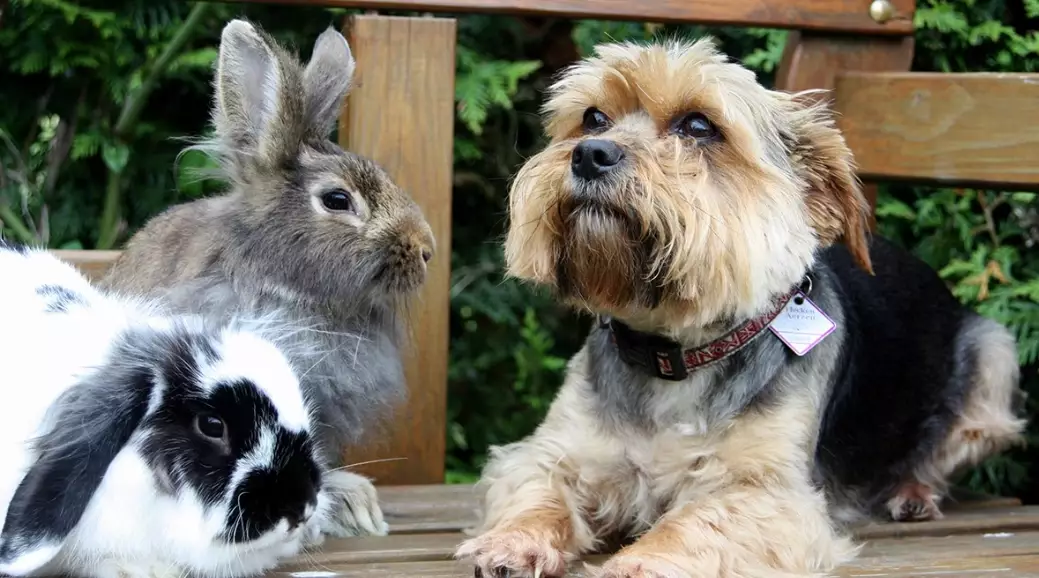
The Step-by-Step Introduction Protocol
Rushing this is the second biggest mistake. We're talking weeks, maybe months. Not hours.
Phase 1: Scent Swapping and Separate Zones
Keep them completely physically separate. Swap their bedding. Rub a cloth on your rabbit and let your dog sniff it (reward calm sniffs). Do the reverse for the rabbit in its safe space. Feed them on opposite sides of a closed door. This builds a neutral, non-threatening association with each other's smell.
Phase 2: The Barrier Introduction
Use a sturdy exercise pen (x-pen) or a baby gate. The rabbit should be in its familiar pen or a secure area. The dog is on a leash with you. Bring the dog into the room, but keep your focus on the dog, not the rabbit. Watch for stiffening, intense staring, whining, or lunging. The moment you see any, calmly lead the dog away. The goal is a few seconds of calm presence. Reward that heavily. Keep sessions extremely short (2-5 minutes).
Phase 3: Controlled Co-Presence
This is the long haul. Only progress here if the dog is consistently calm behind the barrier. With the dog on a secure leash and harness (not just a collar), allow slightly closer proximity. Practice obedience commands like "sit," "watch me," and "leave it" in the rabbit's presence. The rabbit should always have the option to hop away and hide. If the rabbit seems frozen in fear, end the session.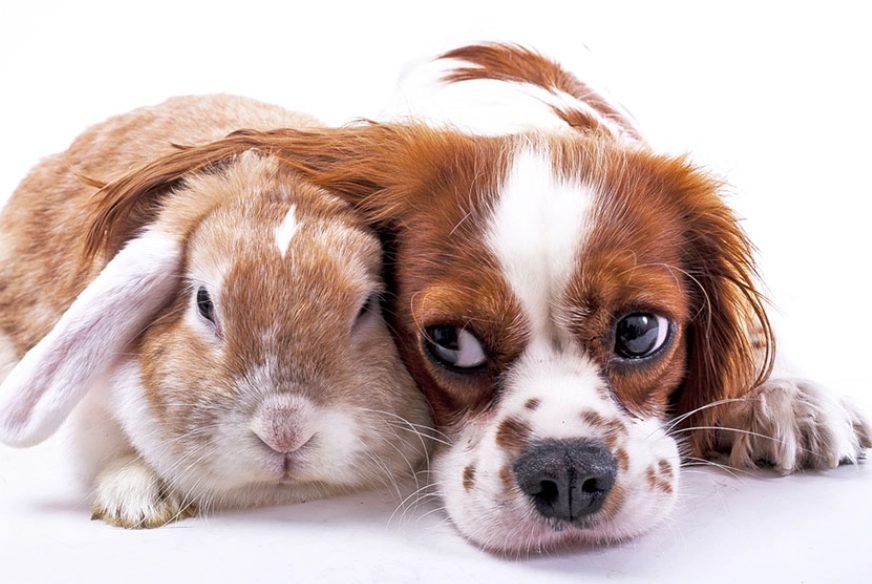
Non-Negotiable Training Essentials for Your Dog
You need rock-solid reliability on three commands. Not "most of the time" reliable. Always reliable.
| Command | What It Means for Rabbit Safety | How to Train It |
|---|---|---|
| Leave It | The emergency brake. Stops investigation, chasing, or nipping before it starts. Applied to the rabbit itself, its toys, its hay. | Start with low-value items, progress to high-value food, then practice with the rabbit in sight (behind barrier). Use the highest-value treats (real chicken, cheese) for compliance near the rabbit. |
| Recall (Come) | To call your dog away from the rabbit instantly, even mid-movement. A lifesaver if a gate is left open. | Practice in high-distraction environments. Never punish a dog when it comes to you, even if it took a while. Make coming to you the best thing ever. |
| Place / Mat | Teaches an off-switch. The dog goes to its bed/mat and settles down, redirecting focus from the rabbit to a calm behavior. | Use during introduction sessions. "Go to your place" becomes the default behavior when the rabbit is moving around. |
This training isn't optional. It's your primary safety system.
Creating a Rabbit-Safe Home: A Room-by-Room Guide
Your home needs to be a fortress for the rabbit and a structured environment for the dog. Think of it as creating "rabbit zones" and "shared zones."
The Rabbit's Base Camp: This is a large exercise pen or a dedicated rabbit-proofed room (like a study) that is always 100% dog-free. The rabbit's main enclosure (hutch or pen) should be inside this zone. This is where it eats, sleeps, and uses its litter box. The door must be secured with a lock or hook the dog cannot manipulate.
Shared Spaces (Living Room): Rabbit access here is only during direct, active supervision. Use tall, sturdy baby gates (not pressure gates a big dog can push over) to section off areas. Ensure all rabbit hideaways (tunnels, boxes) have two exits so it can't be cornered. Pick up all rabbit poop immediately—some dogs find it a tasty snack, which is a terrible habit and a health risk.
Danger Zones: Kitchens (cords, cleaners), bathrooms (toxic chemicals, toilets), and bedrooms with under-bed gaps should generally be off-limits to the rabbit during doggy hours.
I recommend a "rabbit up, dog down" rule for furniture. Train your rabbit to use ramps to access couches or window sills (great for observing safely), and train your dog that these are not dog zones. This gives the rabbit an escape route and a sense of security.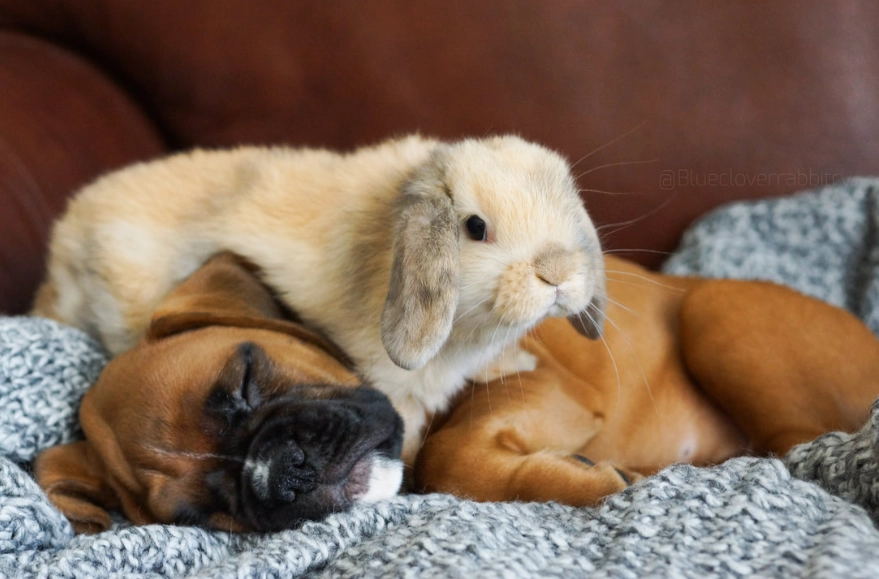
Reading the Signs: Stress in Rabbits and Over-Excitement in Dogs
You must become a fluent reader of both species' body language.
Rabbit Stress Signals (Time to Intervene):
- Freezing in place: Not curious stillness, but tense, wide-eyed paralysis.
- Thumping: A loud warning thump with a hind leg. Means "danger!"
- Running away and hiding for prolonged periods.
- Aggressive posturing: Grunting, boxing with front paws, charging the gate. This is a scared rabbit trying to look big.
- Loss of appetite or changes in poop habits.
Dog Over-Arousal Signals (Time for a Break):
- Hard stare: Locked eyes on the rabbit, body rigid.
- Whining or high-pitched barking.
- Pacing back and forth along the barrier.
- Ignoring you and your high-value treats completely.
- Any lip-licking or yawning in this context is often stress, not tiredness.
See any of these? Session over. Redirect the dog to another activity. Let the rabbit retreat to its base camp. Trying to push through these signals is asking for trouble.
Your Top Questions, Answered Honestly
My dog is calm around my rabbit in the pen, but goes crazy when the rabbit runs. What do I do?
This is the most common trigger. It confirms the prey drive is just under the surface. You need to pre-empt it. Before allowing the rabbit free-roam time, give your dog a strong physical and mental workout. Keep the dog on a leash during the rabbit's exercise. The instant the rabbit starts to run, use your "leave it" or "watch me" command and reward the dog *before* it reacts. If it still reacts, the rabbit's freedom needs to be more controlled—perhaps in a gated section where it can move but not trigger a full sprint chase. This may mean your rabbit never gets full, dog-present zoomies, and that's okay. Safety trumps perfect freedom.
Can I ever leave my rabbit and dog alone together unsupervised?
No. Full stop. Not after a week, not after a year. The risk is never zero. That split-second instinct can cost a life. When you are not home or cannot actively watch them (like when sleeping), they must be physically separated by closed doors and/or pens. The rabbit should be in its secure base camp. This isn't a lack of trust in your training; it's responsible risk management. The House Rabbit Society and the American Society for the Prevention of Cruelty to Animals (ASPCA) strongly advocate for this rule.
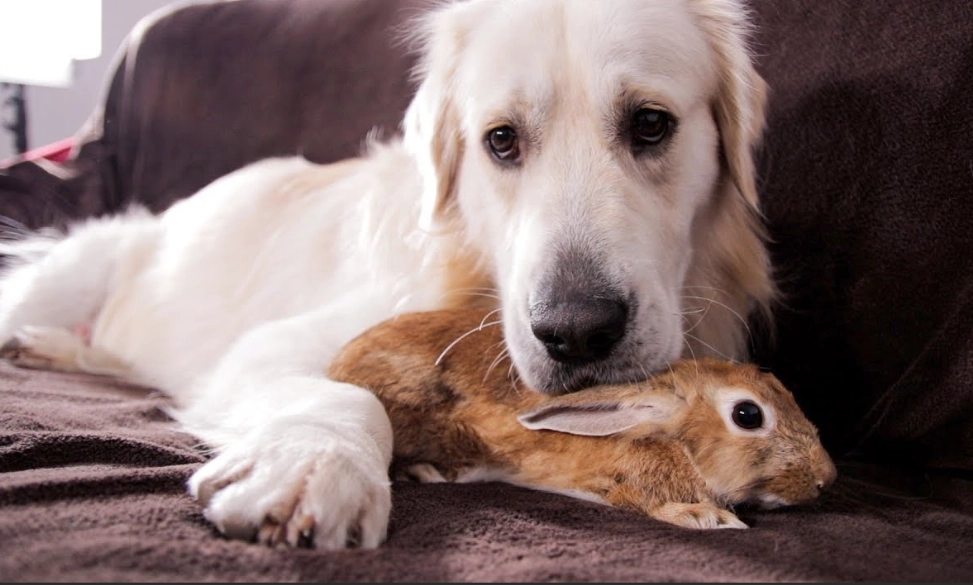 My rabbit seems to bully my dog—chasing it and nipping. Is this okay?
It might look funny, but it's a red flag. This usually means the rabbit is territorially stressed or feels insecure, leading to offensive aggression. It's trying to control the space because it feels threatened. This dynamic is dangerous because it can provoke a defensive reaction from even a gentle dog. Increase the rabbit's safe, dog-free territory. Ensure it has plenty of high-up places to retreat to. You may need to scale back their interactions and reinforce the dog's "place" command more strongly, giving the rabbit a wider berth. Don't mistake bravado for bonding.
What's the best dog breed to live with a rabbit?
There's no perfect breed, only better starting points. Generally, breeds with lower prey drives and calm temperaments have an easier time. Think of companion breeds like many Cavalier King Charles Spaniels, Maltese, or Bichon Frises, or larger, gentle giants like Newfoundlands. However, I've met a feisty terrier who was meticulously trained to be calm around rabbits, and a laid-back retriever who couldn't be trusted. Focus less on the breed label and more on the individual dog's observable behavior, energy level, and trainability. A calm, biddable dog from any background is a better candidate than a high-strung dog from a "gentle" breed.
Comment