You've seen the pictures. A rabbit the size of a small dog, cradled in someone's arms like a furry toddler. The Flemish Giant's size is its defining feature, but most articles just throw out "up to 20 pounds!" and move on. That's not helpful. If you're considering one of these gentle giants, you need to know what that size really means for your home, your wallet, and your lifestyle. It's not just about weight; it's about floor space, vertical reach, food costs, and vet bills that scale up dramatically. Let's get past the novelty and into the practical, sometimes gritty, details of living with a rabbit that can be taller than your coffee table.
What You'll Find in This Guide
How Big Do Flemish Giants Get? A Realistic Look
The American Rabbit Breeders Association (ARBA) standard states Flemish Giants should ideally weigh a minimum of 13 pounds for senior does (females) and 14 pounds for senior bucks (males), with no upper limit. In practice, 15-20 pounds is common for healthy adults, with some exceeding 22 pounds.
But weight is a poor measure. You need dimensions.
An adult Flemish Giant can easily measure 2.5 feet (76 cm) or more from nose to tail when stretched out. Their body alone can be over 20 inches long. They stand tall on their hind legs, often reaching over 2 feet (60 cm) in height. This means their world—and what they can interact with—is vastly different from a Netherland Dwarf's.
Here’s a comparison that puts it in perspective:
| Rabbit Breed | Average Weight | Average Body Length | Comparable Household Object |
|---|---|---|---|
| Netherland Dwarf | 2 - 2.5 lbs | 7 - 9 inches | A small loaf of bread |
| Mini Rex | 3.5 - 4.5 lbs | 9 - 11 inches | A standard pillow |
| Standard Rex | 7.5 - 10.5 lbs | 12 - 15 inches | A large house cat |
| Flemish Giant | 15 - 22+ lbs | 20 - 30+ inches | A medium-sized dog (e.g., Beagle, Cocker Spaniel) |
I visited a breeder who had a 19-pound buck named Gus. Putting him next to my own 8-pound Rex was laughable. Gus's head was wider than my rabbit's entire torso. His feet were the size of a small dog's paws. This scale impacts everything.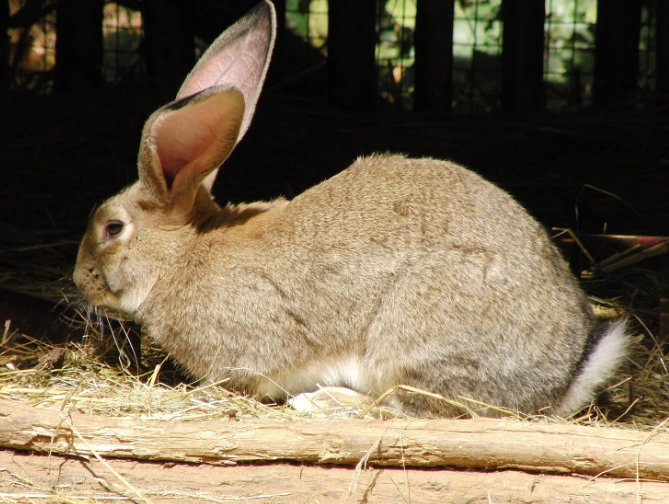
Space Needs & The Hidden Challenges of Giant Rabbit Care
The standard advice for rabbit cages is useless here. A typical "large" pet store cage is a prison for a Flemish Giant. The House Rabbit Society recommends a minimum enclosure of 12 square feet for giants, but that's just their home base—their bedroom and dining room.
The real need is for extensive, daily free-roam time. We're talking a whole room or a large, dedicated section of your living area. You're not just rabbit-proofing baseboards; you're rabbit-proofing at countertop height. They can and will investigate bookshelves, end tables, and kitchen counters.
A common mistake I see: People buy an extra-large dog crate and think it's sufficient. It's not. A Flemish Giant needs space to take at least three full hops in any direction within their enclosure. A dog crate rarely allows this. Lack of space leads to muscle atrophy, osteoporosis, and severe behavioral issues like aggression or depression.
Think about logistics. A litter box for a Flemish Giant isn't a corner tray. It's more like a shallow storage tote. They need larger, heavier food bowls and water crocks that won't tip over. Their tunnels and hideouts must be XL size—a standard plastic igloo is a tight squeeze.
The Vertical Factor
This is often overlooked. Their height means they perceive your home differently. A chair isn't just something to go under; it's a platform to get onto the sofa. A sofa is a platform to get onto a side table. You need to think in 3D when securing your space.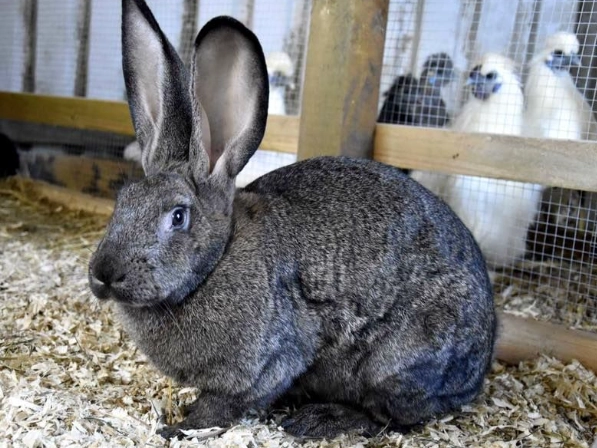
The Cost-Size Relationship: It's Not Linear
Everything costs more, and it's not just "a little" more. The increase is exponential in some areas.
Food & Hay: An adult Flemish can eat over 1/2 cup of pellets daily (vs. 1/4 cup for a 5 lb rabbit) and will go through a bale of Timothy hay at an alarming rate. Their fresh veggie portion is the size of a large salad. Budget at least double the monthly food cost of a standard rabbit.
Veterinary Care: This is the biggest financial shock. Medications are dosed by weight. Antibiotics for a 20 lb rabbit cost 4-5 times more than for a 5 lb rabbit. Spaying/neutering is major abdominal surgery on a large animal; quotes can be $400-$800+, significantly higher than for smaller breeds. Even routine check-ups might cost more. Find an exotic vet experienced with giant breeds before you bring one home. Don't assume your local small animal vet is comfortable; ask specifically.
Supplies: Carriers must be extra-large dog carriers. Playpens need to be heavy-duty and tall (they can jump over standard ones if motivated). Beds, toys, everything is bigger and often more expensive.
Is a Flemish Giant Right for Your Home? A Honest Checklist
Forget the "gentle giant" romanticism for a moment. Let's be practical.
Probably a Good Fit If: You have a dedicated rabbit-proof room or very large area. Your household is calm without very young children (a giant rabbit can be injured by a fall or improper handling, and its size can intimidate kids). You have a stable income to cover the heightened costs, especially vet bills. You want a more sedentary, lap-oriented companion (generally true, but not guaranteed). You're prepared for a 8-10 year commitment to a large animal.
Think Twice If: You live in a small apartment without significant free-roam space. You're on a tight budget. You travel frequently and rely on pet sitters (finding someone experienced with giants is harder). You expect a cuddly lap dog; some Flemish are aloof and independent. You have other large pets (dogs) that may not be properly introduced.
I know someone who adopted a Flemish Giant for their spacious suburban home. They loved him, but the constant hay tracking, the sheer volume of poop to clean, and a $700 emergency vet bill for GI stasis wore them down. They made it work, but they admitted they were naive about the day-to-day reality.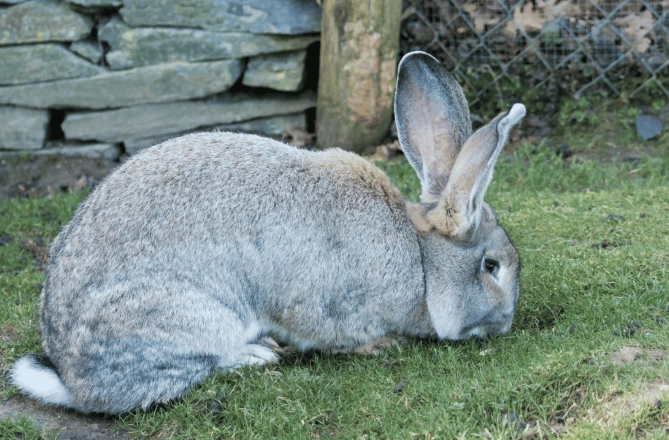
Common Size Misconceptions & Tips from Long-Time Owners
Misconception 1: "They're lazy because they're big." No, they still need exercise. A sedentary giant is at high risk for obesity and joint problems. They need space to run and binky, just like any rabbit.
Misconception 2: "Their temperament is always docile." Size can correlate with calmness, but it's not a guarantee. A hormonal or scared Flemish Giant is a powerful animal. Spaying/neutering is non-optional for behavior and health.
Misconception 3: "You can feed them like any other rabbit, just more." You must be vigilant about their calcium intake to prevent bladder sludge, a common issue in large, less active rabbits. Limit high-calcium veggies like kale and spinach.
Pro Tip: Get a digital baby scale that goes up to 30+ lbs. Weekly weight checks are crucial to catch health issues early. A 1-pound loss on a 5 lb rabbit is catastrophic; on a 20 lb rabbit, it can go unnoticed until it's too late.
Your Flemish Giant Size Questions, Honestly Answered
Can a Flemish Giant rabbit live happily in an apartment?
What's the biggest hidden cost of owning a Flemish Giant related to their size?
Do Flemish Giants act differently because of their large size?
How much more do Flemish Giants eat compared to a regular rabbit?
Owning a Flemish Giant is a unique experience. Their size is awe-inspiring, and their personalities can be wonderfully dog-like. But it's a commitment that scales up in every sense—space, time, and money. It's not just about having a big rabbit; it's about adapting your life to a giant's needs. If you do it right, with eyes wide open to the realities, you'll have an unforgettable companion. If you wing it, you'll both suffer. Measure your space, check your budget, and then decide if you're ready for a rabbit that doesn't just live in your home, but reshapes it.
Comment