In This Guide
- The Rabbit Gestation Period: Breaking Down the Timeline
- Signs Your Rabbit is Pregnant: What to Actually Look For
- Caring for a Pregnant Rabbit: The Month-Long Checklist
- The Big Day: Kindling and What to Expect
- Factors That Can Influence Rabbit Gestation Time
- Post-Birth Care: The Doe and Her Kits
- Common Questions About Rabbit Gestation Time
- Final Thoughts on Rabbit Pregnancy
So, you think your rabbit might be pregnant. Or maybe you're planning a litter. Your mind is probably racing with questions. The biggest one? How long is the gestation time for rabbits? You've come to the right place. I've been through this more times than I can count, from the nervous first-time breeder to the (slightly) more relaxed seasoned owner. Let's cut through the noise and get into the real, practical details of rabbit pregnancy, from that first day to the moment the kits arrive.
The short, textbook answer is 28 to 31 days. That's it. But if you stop there, you're missing everything that matters. Anyone can Google a number. What you need is the context, the signs, the pitfalls, and the "what do I do now" steps that actually help. The rabbit gestation period is a fascinating and intense month, and understanding it fully is key to the health of the doe and her babies.
It seems straightforward, right? It's not always. I remember waiting on pins and needles for a doe who went to day 34 once. Turns out, she was just taking her time, and everything was fine. But that wait felt like forever. Other times, they surprise you early. That's why knowing more than just the average is crucial.
The Rabbit Gestation Period: Breaking Down the Timeline
Let's get into the nitty-gritty of those 31 days. It's not a passive waiting game. Inside that doe, a whole lot is happening on a tight schedule.
The clock starts ticking at the moment of successful mating. You might see the male fall off—that's a pretty good sign. From there, the embryos travel and implant in the uterus. By around day 10, implantation is usually complete. This early stage is quiet. You won't see a thing. The doe acts normally, eats normally. It's easy to wonder if anything happened at all.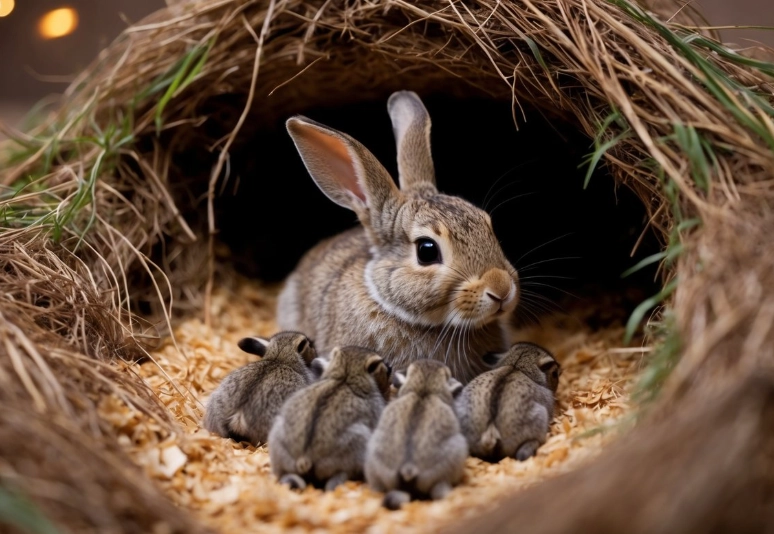
The middle period, days 14 to 21, is when things start to change. This is when you might start feeling the babies, a process called "palpation." I'll be honest, I was terrible at this when I started. You need a gentle touch. Around day 21-25, you might see her start to pull fur from her chest and belly. This is a classic sign, but here's a heads-up: some does do this even when they're not pregnant (a false pregnancy). It can get your hopes up for nothing.
The final week. Days 28-31. This is go-time. Her appetite might skyrocket, or it might drop. She'll likely become more reclusive, seeking out a dark, quiet corner. The nest-building instinct kicks into high gear. She'll meticulously arrange that pulled fur (and any hay or bedding you've provided) into a perfect, warm nest for her kits.
And then, birth happens. It's usually quick, often at night or in the early morning, and over in under 30 minutes. She'll clean the kits, eat the placenta (perfectly normal and important for her nutrition), and tuck them into the nest.
Signs Your Rabbit is Pregnant: What to Actually Look For
You can't just ask her. So how do you know? Vets can do an ultrasound, but that's costly. Most of us rely on observation. Here's the real-world list, separated by what's reliable and what's just a hint.
Physical Signs of Rabbit Pregnancy
These are the tangible changes.
- Weight Gain: This is gradual. Don't expect a huge belly until the last week. A steady increase of 0.5 to 1 pound over the month is typical for a medium-sized breed.
- Swollen Abdomen: In the last 10 days, her sides will start to round out noticeably. Be gentle if you try to feel.
- Nipple Development: Her nipples will become more prominent and pinker, usually around the second or third week. This is a pretty good indicator.
- Fur Pulling: As mentioned, she'll create a bald spot on her dewlap and belly to line the nest. This is a strong behavioral sign of pregnancy or false pregnancy.
Behavioral Signs of Rabbit Pregnancy
Her personality might do a 180.
- Grumpiness: A sweet doe can turn into a territorial grump. She might grunt, box at your hand, or just want to be left alone. Don't take it personally—hormones.
- Nesting: The big one. She'll start gathering hay, straw, paper—anything she can find—and arranging it in a chosen spot. Combined with fur pulling, it's a near-certain sign the end is near.
- Increased Thirst & Appetite: She's eating and drinking for a whole litter. Make sure fresh food and water are always available, especially water.
I had a doe once who was the queen of false pregnancies. She'd build these elaborate nests every few months, and I'd get all prepared. Nothing. It taught me patience and to not count my kits before they're... kindled.
Caring for a Pregnant Rabbit: The Month-Long Checklist
This is where you make a real difference. A stressed or poorly nourished doe can have complications. Your job is to provide a supportive, stable environment.
Diet: Feeding for Two (or Eight)
Nutrition is non-negotiable. In the final third of the gestation time for rabbits, her energy needs can double.
- Unlimited Hay: Timothy hay or another grass hay should be the bedrock of her diet, as always. It provides essential fiber for her digestive system, which is critical.
- Increased Pellets: Gradually increase her high-quality alfalfa or growth-formula pellets in the last two weeks. Alfalfa is richer in calcium and protein, which she needs now. Don't just dump a huge amount suddenly; ramp it up.
- Fresh Greens: Continue daily leafy greens (romaine, kale, cilantro) for vitamins and moisture. Avoid iceberg lettuce—it's just water.
- Water, Water, Water: I can't stress this enough. A pregnant and nursing doe will drink a ton. Use a heavy bowl she can't tip over, and check it multiple times a day. Dehydration is a serious risk.
Housing and Environment: Keeping Her Calm
Stress is the enemy. Loud noises, frequent handling, predator smells (like from dogs or cats), and dramatic temperature changes can all cause problems.
Give her a spacious, clean enclosure. About a week before her due date, provide a sturdy nesting box. A simple wooden box about 12" x 18" with low sides works perfectly. Fill it with a base of aspen shavings or straw, and then top it with lots of soft hay. Show it to her, but let her do the rest. She'll arrange it to her liking and line it with her fur.
Limit handling, especially in the final week. If you need to check on her, do it calmly and quietly. This isn't the time for introducing her to new people or animals.
The Big Day: Kindling and What to Expect
The rabbit gestation period culminates in kindling. It's usually hassle-free, but knowing what's normal and what's not will save you a panic attack.
Most does kindle at night or in the very early morning. It's instinctual—they feel safest in the dark. The process is fast. You might hear faint squeaks from the kits. She'll deliver each one, clean it, chew off the umbilical cord, eat the placenta, and move on to the next.
When it's over, she'll hop away, often to get a big drink and some food. The kits will be buried under a thick layer of fur in the nest.
Your Role: Hands Off (Mostly)
The rule is: interfere as little as possible. A nervous human can cause a doe to abandon or harm her litter.
Wait a few hours after you're sure she's done. Then, very quietly and with hands that don't smell like food or other animals, you can do a quick nest check. Gently push back the fur. Count the kits. Remove any that are stillborn (they will be cold and unmoving). Make sure the nest is intact. That's it. Don't hang around. Don't play with them. The goal is to confirm they're alive and the nest is warm, then leave.
The kits will be pink, hairless, and their eyes and ears will be sealed shut. They look incredibly fragile, but they're tougher than they appear. They'll nurse once or twice a day for just a few minutes. The doe does not stay with them like a cat or dog would. This is normal rabbit behavior.
Factors That Can Influence Rabbit Gestation Time
Why might one rabbit go 28 days and another 35? It's not random. Several things play a role.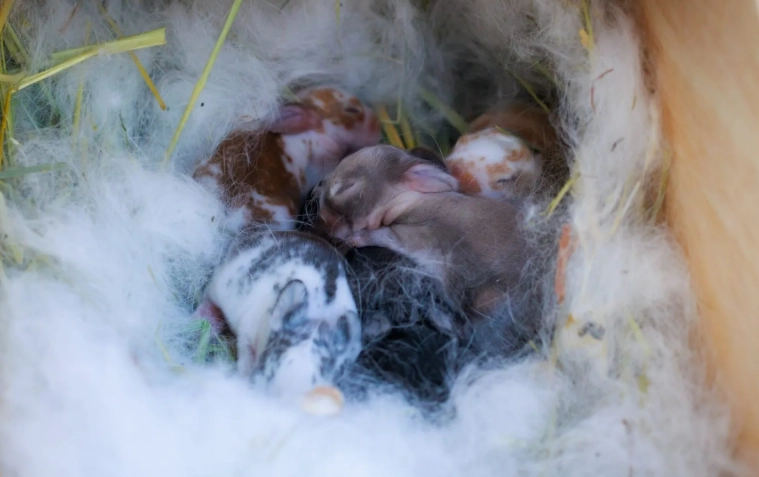
| Factor | Influence on Gestation Time | Notes |
|---|---|---|
| Breed | Larger breeds (Flemish Giants) may trend toward the longer end (31-35 days). Smaller breeds (Netherland Dwarfs) are often on the shorter side (28-31 days). | The size and development rate of the kits can vary by breed. |
| Litter Size | Very large litters (10+) sometimes come a day or two early. Very small litters (1-2 kits) might cook a bit longer. | The doe's body seems to have a sense of when they're "done." |
| First-Time Mothers | May be slightly less predictable. Sometimes they kindle a day early due to inexperience or stress. | They also have smaller litters on average. |
| Environmental Stress | High stress can potentially delay birth or cause premature labor. | High heat is a major stressor. Keep the environment cool and quiet. |
| Health & Nutrition | A poorly nourished doe may have a harder time carrying to term. | This underscores the importance of the diet discussed earlier. |
I find that my New Zealand whites are almost clockwork at 31 days. My smaller mixes are a bit more variable. You get to know your own rabbits' patterns over time.
Post-Birth Care: The Doe and Her Kits
The gestation time rabbits experience is over, but the work isn't. The next eight weeks are about growth and weaning.
For the doe, keep the high-calorie diet going. She needs it to produce milk. Continue unlimited alfalfa hay and pellets, plus plenty of greens and water. She'll be hungry!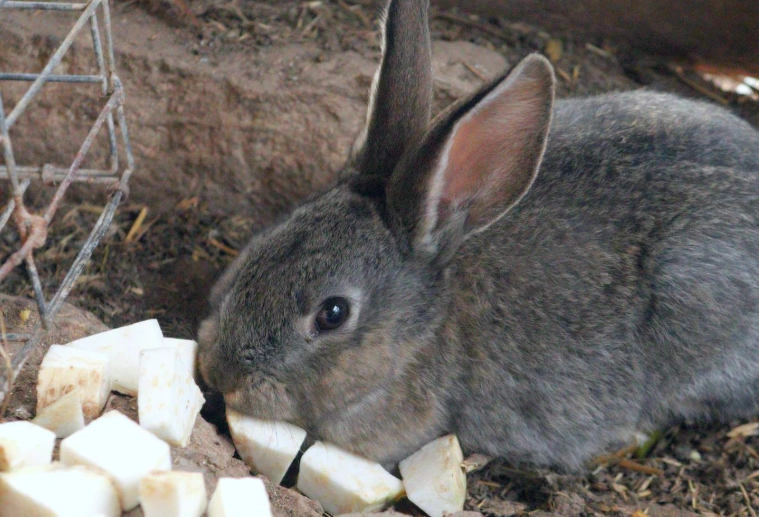
For the kits, just monitor. They should look plump and have full, white bellies after nursing. Their skin will go from pink to darker as fur starts growing in by day 4-5. Eyes open around day 10. By three weeks, they'll start venturing out of the nest and nibbling on hay and mom's pellets.
Weaning happens naturally between 6 and 8 weeks. By 8 weeks, they should be fully independent and eating solid food. This is also the time to separate them by sex if you haven't already, as they can start breeding incredibly young.
Common Questions About Rabbit Gestation Time
Let's tackle some of the specific questions that keep rabbit owners up at night.
Speaking of spaying, let's talk about that for a second. If you are not a committed, knowledgeable breeder with homes lined up for every single kit, the best thing you can do for your female rabbit's health and longevity is to spay her. It eliminates the risk of uterine cancer (very common in older unspayed does), ends false pregnancies, and of course, prevents unwanted litters. It's a responsible choice. The House Rabbit Society has excellent resources on the benefits of spaying/neutering.
Final Thoughts on Rabbit Pregnancy
Understanding the gestation time rabbits go through is more than memorizing 31 days. It's about appreciating the biological process and your role as a caretaker. It's a month of subtle changes, careful preparation, and then a burst of new life.
The key takeaways? Provide excellent nutrition, minimize stress, respect her space, and know when to intervene and when to step back. Have a vet experienced with rabbits on call just in case. And remember, if you're not breeding intentionally, spaying is the simplest and healthiest path.
Raising a litter from birth to weaning is an amazing experience. Watching those tiny, blind kits transform into bouncy, curious little rabbits in just a few weeks never gets old. But it's also a big responsibility. I hope this guide gives you the confidence and practical knowledge to navigate it successfully. Good luck!
Comment