Quick Guide
- What Exactly Is a Jack Rabbit? Biology and Key Features
- Where Do Jack Rabbits Live? Habitat and Range
- Daily Life of a Jack Rabbit: Behavior and Diet
- Jack Rabbit vs. Cottontail Rabbit: Spotting the Difference
- Living With Jack Rabbits: Management and Control
- Common Questions About Jack Rabbits Answered
- Final Thoughts
Let's be honest, the first time you see a jack rabbit, you do a double-take. It looks like someone stuck a rabbit on stilts and gave it satellite dishes for ears. I remember spotting one on a dusty roadside in Arizona, frozen perfectly still, and for a second I thought it was some weird desert statue. Then it vanished in a blur of powerful legs. That's the jack rabbit for you – a creature that seems almost exaggerated, a cartoon character come to life in the scrublands and prairies.
But there's so much more to these animals than just their looks. If you're a gardener battling nibbled plants, a nature enthusiast curious about local wildlife, or just someone who wonders what the difference is between these and the fluffy bunny in your backyard, you've come to the right place. We're going to dig into everything about jack rabbits, from their biology to their behavior, and yes, we'll talk about what to do if they've decided your vegetable patch is their personal buffet.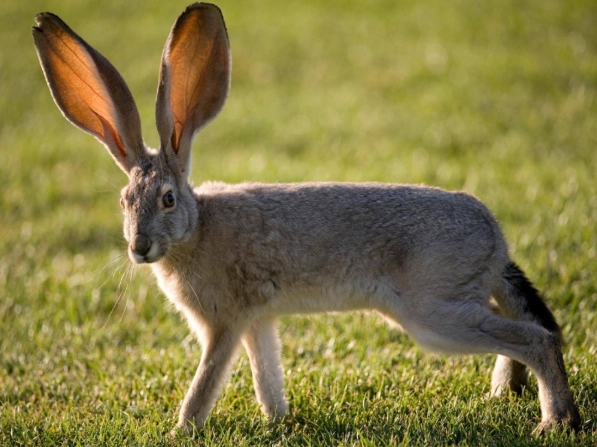
Quick Truth Bomb: They're not even true rabbits. Scientifically, jack rabbits are hares. That means they're born ready to roll – furred, eyes open, and mobile within a short time, unlike the helpless, naked kits of rabbits. This is a crucial distinction that explains a lot about their tough, independent nature.
What Exactly Is a Jack Rabbit? Biology and Key Features
So, you want to know what makes a jack rabbit tick? Or, more accurately, what makes it run at nearly 40 miles per hour. The name "jack rabbit" is a common name that bundles a few species of large North American hares. The most widespread are the black-tailed jackrabbit and the white-tailed jackrabbit. They belong to the genus Lepus, the same as all hares.
Their anatomy is a masterclass in adaptation for open-country survival. Everything about them is built for speed, vigilance, and enduring harsh conditions.
Those Legendary Ears
You can't talk about jack rabbits without mentioning the ears. Good grief, those ears. On a large black-tailed jackrabbit, they can be over 7 inches long. They're not just for show, and they're definitely not just for hearing (though their hearing is exceptional). Those massive ears are a primary cooling system. A dense network of blood vessels runs close to the skin's surface. As blood flows through, the large surface area allows heat to radiate away into the air. It's a brilliant, passive air-conditioning unit essential for surviving in scorching desert and prairie summers. On cooler days, they can reduce blood flow to conserve heat.
Built for the Sprint
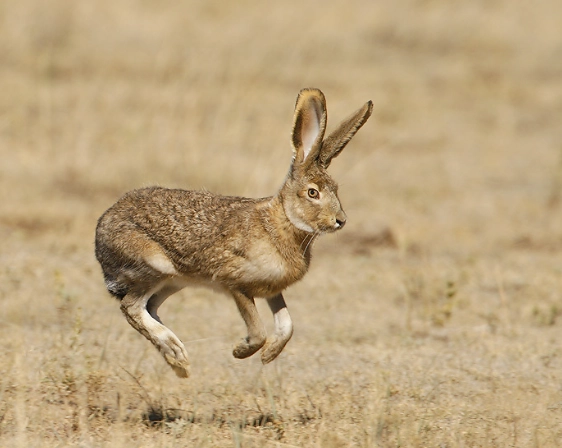
Look at their legs. Their hind legs are enormously powerful and elongated, much more so than a cottontail rabbit's. This gives them incredible acceleration and top speed to escape predators like coyotes, foxes, and birds of prey. Their running style is more like a gallop than a hop. When they're at full tilt, they can cover 15-20 feet in a single bound. I've seen one clear a low fence without even breaking stride – it was almost casual, like it was just stepping over a crack in the pavement.
Their large feet act like snowshoes in sandy or snowy terrain, preventing them from sinking in. The fur on the soles of their feet provides extra insulation against hot ground or ice.
| Feature | Adaptation Purpose | Cool Fact |
|---|---|---|
| Long Ears | Thermoregulation (cooling) & acute hearing | Can move ears independently to pinpoint sounds from multiple directions. |
| Powerful Hind Legs | High-speed escape from predators | Can leap 3-5 meters (10-15 feet) in a single bound. |
| Large Eyes | Wide-field, panoramic vision to spot threats | Eyes are positioned high on the head for a nearly 360-degree view. |
| Camouflage Fur | Blending into grasslands and desert scrub | Coat color changes seasonally for some species (e.g., White-tailed turns white in winter). |
| Constantly Growing Teeth | For grinding down tough, abrasive vegetation | Wears down by constant chewing; if they don't chew, teeth overgrow painfully. |
Their eyes are another key feature. Set high and on the sides of their head, they provide a nearly panoramic field of view. They can see almost all the way around them without moving their head, a huge advantage for spotting a stalking coyote. The trade-off is a small blind spot right in front of their nose, which is why they sometimes seem a bit hesitant up close.
Where Do Jack Rabbits Live? Habitat and Range
Jack rabbits are iconic symbols of the American West, but their range is pretty specific. They thrive in open spaces. I mean really open. Dense forests are a no-go for them. They need room to run and sightlines to see danger coming from a mile away.
The black-tailed jackrabbit is the champion of adaptability. Its range stretches from the western United States (east to Missouri and Nebraska) down into central Mexico. You'll find it in deserts, sagebrush plains, agricultural fields, grasslands, and even arid scrublands. It's the one you're most likely to encounter.
The white-tailed jackrabbit prefers cooler climates. Its domain is the northern Great Plains, the Intermountain West, and up into parts of Canada. It favors grasslands, prairie, and farmland. In winter, its coat turns a brilliant white (except for the black ear tips), which is a stunning adaptation you can read more about on the U.S. Fish and Wildlife Service website, which has great resources on native species adaptations.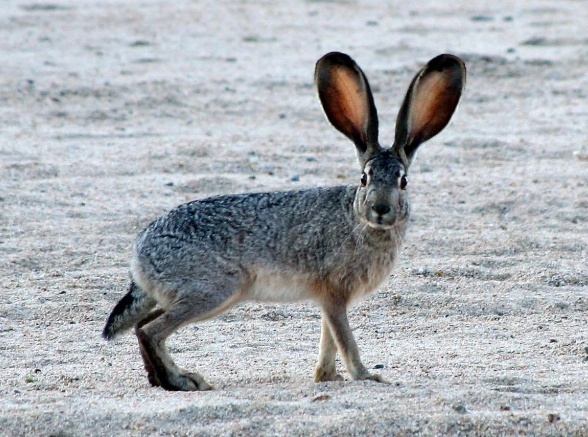
Other species, like the antelope jackrabbit (with even bigger ears) are more range-restricted to the Sonoran Desert of the Southwest.
What makes a perfect jack rabbit home?
- Open Terrain: Flat or rolling land with low vegetation. No thick woods.
- Low Cover: They need some shrubs, tall grasses, or even a fence line to duck into for quick, temporary shelter. They don't dig complex burrows like rabbits. They use shallow depressions called "forms" to rest in.
- Food Source: Access to grasses, forbs, shrubs, and in lean times, bark and twigs.
- Firm Ground: Good footing for those explosive sprints.
Daily Life of a Jack Rabbit: Behavior and Diet
Jack rabbits are primarily crepuscular and nocturnal. That's a fancy way of saying they're most active at dawn, dusk, and through the night. During the blistering heat of a summer day, they'll be hunkered down in their form, conserving energy and water. I learned this the hard way trying to photograph them at noon in July – nothing but empty landscapes.
What's on the Menu?
They are strict herbivores, but not picky ones. They're opportunistic feeders, which is why they sometimes become garden pests. Their diet shifts with the seasons:
- Spring/Summer: Lush green grasses, clover, dandelions, alfalfa, and a variety of leafy weeds (forbs). This is also when they'll happily munch on young vegetable plants, flowers, and tree seedlings.
- Fall/Winter: As green stuff dies back, they switch to drier grasses, shrubs, the bark of young trees and vines (a behavior called "girdling" that can kill the plant), and any remaining seeds or crops.
They practice coprophagy – eating their own special soft droppings (called cecotropes) directly from the anus. Sounds gross, but it's vital. This allows them to pass food through their digestive system twice, extracting maximum nutrients, especially vitamins B and K, from tough plant material. It's an efficiency hack for a low-quality diet.
Personal Observation: I once watched a jack rabbit systematically work its way down a row of young bean plants in a community garden. It wasn't frenzied eating. It was calm, methodical, almost business-like. It taught me that they don't just randomly forage; they can decimate a specific area if the food is good and they feel safe.
Social Life and Communication
They're not social animals like some rodents. They're mostly solitary, coming together only to mate. They communicate through a few key methods:
- Thumping: Like rabbits, they thump their powerful hind feet on the ground as a danger signal. The sound can travel surprisingly well through the earth.
- Body Language: Ears are the big tell. Ears forward and up mean alert and curious. Ears flattened back tight against the body signal fear or submission. A relaxed jack rabbit might have its ears at a sort of half-mast.
- Vocalizations: They can scream if caught by a predator – a piercing, shocking sound. They also grunt and make low clicking noises.
Jack Rabbit vs. Cottontail Rabbit: Spotting the Difference
This is a common point of confusion. If you see a long-eared mammal hopping away, which is it? Here’s a quick breakdown to end the debate.
Size and Build: Jack rabbits are significantly larger. An adult black-tailed jackrabbit can weigh 3-7 pounds and measure over 2 feet long. A cottontail is more compact, usually 1-3 pounds. Jack rabbits look leggy and lean; cottontails look rounder and fluffier.
Ears and Feet: The ears are the dead giveaway. Jack rabbit ears are absurdly long, often as long as or longer than their head. Cottontail ears are proportionate. Also, look at the hind feet – a jack rabbit's are massive.
Tail: A cottontail's namesake is its fluffy, cotton-ball white tail. A black-tailed jackrabbit has a tail with a black stripe on top. A white-tailed jackrabbit has a mostly white tail.
Babies: This is the biological clincher. Jack rabbit (hare) leverets are born in the open, fully furred, eyes open, and mobile within hours. Cottontail rabbit kits are born naked, blind, and helpless in a fur-lined nest.
So next time you're out west and see one, you'll know. The gangly, ear-heavy speedster is the jack rabbit.
Living With Jack Rabbits: Management and Control
Alright, let's get to the part many readers are here for. Your garden looks like it's been hit by a tiny, fuzzy lawnmower. What can you do? First, a reality check: completely eradicating jack rabbits from your property is often impossible and ecologically unwise. They're a native species and a key prey animal. The goal is deterrence and damage management.
Important Note on Lethal Control: Always, always check your local and state regulations before considering any lethal methods. Many areas have strict laws protecting wildlife, and hunting/trapping seasons and methods are regulated. The USDA Animal and Plant Health Inspection Service (APHIS) provides state-specific guidance, but your local wildlife agency is the final authority. What's legal in rural Texas may be illegal in suburban Colorado.
Physical Barriers: The Gold Standard
This is the most effective long-term solution, especially for prized gardens or young orchards.
- Fencing: It needs to be the right kind. Chicken wire or hardware cloth with mesh no larger than 1 inch. Height should be at least 3 feet tall. But here's the kicker – jack rabbits can burrow. You need to bury the bottom 6-10 inches of the fence outward in an "L" shape, or secure it tightly to the ground with stakes. They can also jump high from a standstill, so some recommend 4-foot fencing for total security.
- Tree Guards: To prevent winter girdling, protect the trunks of young trees with cylindrical plastic or wire mesh guards. Make sure they're tall enough – a hungry jack rabbit can stand on its hind legs.
- Cloches and Row Covers: For individual plants or rows, use wire cloches or floating row covers made of lightweight fabric. This is great for seedlings.
Habitat Modification
Make your yard less inviting. This is about removing the "cover" part of their habitat needs.
- Clear Brush Piles: Eliminate hiding spots near your garden.
- Keep Grass Mowed: Tall grass around the perimeter gives them a sense of security to approach.
- Remove Food Sources: Keep fallen fruit picked up, and consider not planting their absolute favorite snacks (like lettuce, beans, and young carrots) right on the edge of your property.
Repellents
These are a mixed bag. Their effectiveness varies wildly, and they require constant reapplication, especially after rain.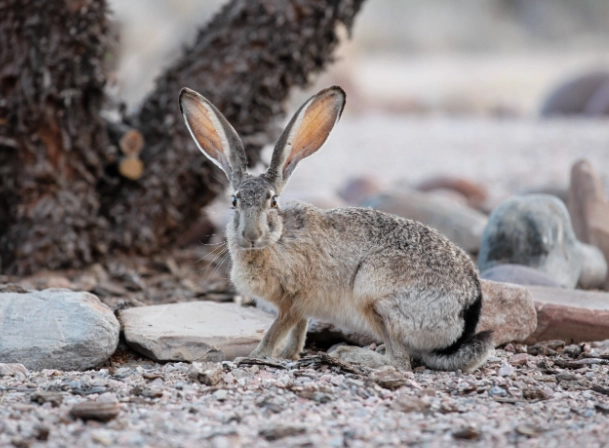
Commercial Repellents: Look for ones with ingredients like putrescent egg solids, capsaicin (hot pepper), or garlic. Spray them directly on plants. Some work by taste, some by smell. I've had moderate success with the egg-based ones, but the smell on a hot day... well, it repels humans too.
Home Remedies: People swear by sprinkling cayenne pepper, blood meal, or human hair around plants. The truth is, these are highly temporary and can wash away or blow away quickly. A determined, hungry jack rabbit will often ignore them.
My neighbor tried the "scarecrow with flapping arms" method. The jack rabbits ignored it within two days. They're smart and quickly habituate to static threats.
A Note on "Natural Predators"
Attracting hawks, owls, foxes, or coyotes sounds great in theory, and it's ecologically sound for overall balance. But you can't really "order" a predator to patrol your half-acre garden. Plus, attracting larger predators comes with its own set of potential problems. Don't rely on this as a primary control strategy.
Common Questions About Jack Rabbits Answered
Final Thoughts
Jack rabbits are more than just a pest or a funny-looking animal. They're a testament to evolutionary ingenuity, perfectly sculpted for the vast, open landscapes of North America. They play a crucial role in the food web, and watching one in its element is a special experience.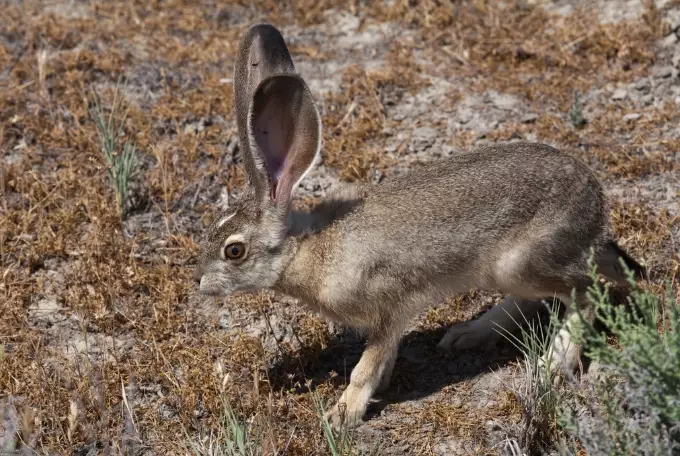
If they're causing you trouble, remember that persistence and the right barrier are your best friends. Understand their habits, protect your most valuable plants, and accept that a little sharing might be part of living near wild spaces. They were here long before our gardens, after all.
For more detailed, scientific information on hare species and their conservation status, reputable sources like the IUCN Red List or the National Geographic Society are fantastic places to dive deeper. These organizations provide verified, global context for the wildlife in our backyards.
Hopefully, this deep dive has answered your questions, whether you're dealing with a jack rabbit "problem" or just marveling at their unique place in the natural world.
Reader Comments