In This Guide
Let's be real for a second. The idea of a perfectly litter-trained rabbit feels a bit like a myth sometimes, doesn't it? You see these adorable pictures online of bunnies neatly using their boxes, and then you look at your own fluffball who seems to think the entire living room is one giant bathroom.
I get it. I've been there too. My first rabbit, Mochi, had a particular fondness for the corner behind the bookshelf. It was his spot. No amount of cleaning seemed to change his mind.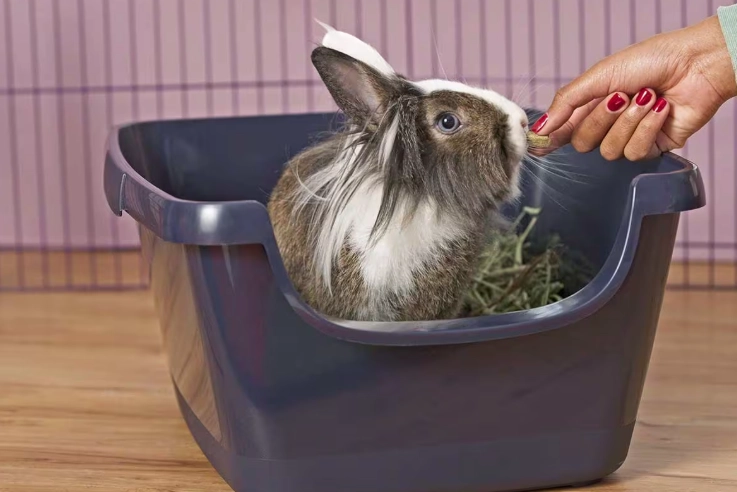
But here's the truth that changed everything for me: rabbits are naturally clean animals who prefer to use one or two specific areas as a toilet. They're not like dogs you have to walk or cats you have to constantly convince. The instinct is already there. Our job isn't to train them in the traditional sense, but to communicate with them. We need to show them that the litter box we've provided is that preferred spot.
So, if you're wondering how to litter train a rabbit, you're already on the right track. You're recognizing their intelligence and cleanliness. This guide isn't about quick tricks or forcing behavior. It's about understanding your rabbit's world and setting up an environment where using the litter box is the easiest, most obvious choice for them.
We'll walk through it all, step-by-step. From the gear you absolutely need (and the stuff you should avoid) to reading your bunny's subtle signals and fixing problems when they pop up. Forget the frustration. Let's build a cleaner, happier home for both of you.
First Things First: Getting Inside Your Rabbit's Head
You can't successfully litter train a rabbit if you don't know why they do what they do. This isn't about being stubborn or spiteful—those are human emotions we project onto them.
Rabbits have hardwired instincts driven by survival.
In the wild, dropping pellets everywhere is a way to mark territory and communicate. They also tend to eat, poop, and pee in the same general area to avoid attracting predators to their main living space. They're actually pretty tidy creatures by design. Your house rabbit still has these instincts. Your goal is to channel them into a single, easy-to-clean location.
The Golden Rule: Spaying or Neutering is Non-Negotiable
I'm putting this right up front because it's the single most important factor. If your rabbit is not spayed or neutered, you are trying to hold back a tidal wave with a teaspoon.
Intact rabbits are hormonally driven to mark their territory constantly. That means spraying urine, scattering hard pellets, and leaving soft cecotropes everywhere. It's a powerful biological imperative to advertise their availability and claim their space. You can follow every other tip perfectly, but without this surgery, reliable litter habits are often impossible.
Organizations like the House Rabbit Society and the RSPCA strongly advocate for spaying/neutering not just for litter training, but for your rabbit's long-term health and temperament. It dramatically reduces cancer risks and curbs aggressive or frustrated behaviors. Talk to your rabbit-savvy vet about it. It's the foundation everything else is built on.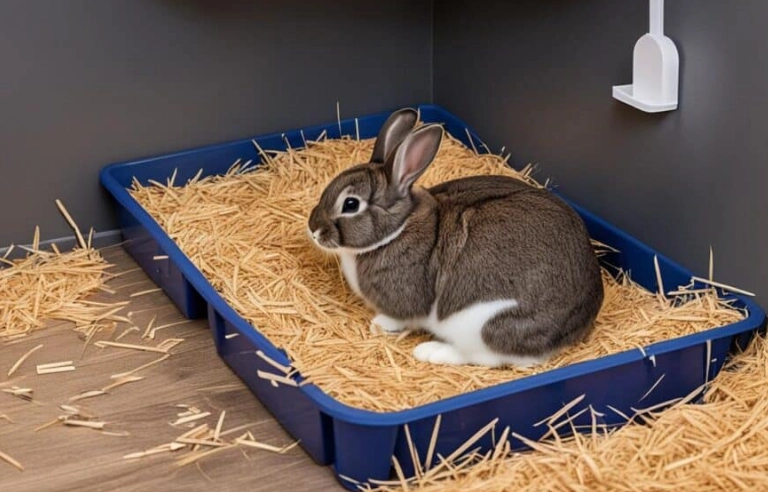
Gathering Your Supplies: The Right Tools for the Job
You wouldn't try to build a bookshelf with a butter knife. Setting up for litter training success means having the right equipment. Getting this wrong is a common first stumble.
The Litter Box: Bigger is Always Better
Forget those tiny corner triangles sold for small animals. A rabbit needs room to turn around, settle in, and maybe munch on some hay while they're at it. The ideal litter box is a simple, large, low-sided cat litter box. I'm a big fan of the ones with low entry sides (about 3-4 inches high) so even older or smaller bunnies can hop in easily.
Some rabbits also love covered boxes for privacy, while others find them spooky. You might have to experiment. But start big and simple.
The Litter Itself: Safety First, Always
This is critical. Rabbits have delicate respiratory systems and will inevitably nibble on their litter. Many common small animal litters are dangerous.
Avoid like the plague: Clumping cat litter (can cause fatal blockups), cedar or pine shavings (toxic phenols), clay litter (dusty), and anything scented.
So what should you use? Here's a breakdown of the safe, effective options:
| Litter Type | Pros | Cons | Best For |
|---|---|---|---|
| Paper-Based Pellet (e.g., Yesterday's News, Carefresh) | Highly absorbent, controls odor well, very safe if ingested, low dust. | Can be more expensive, doesn't have a "natural" feel. | Most rabbits, especially beginners. My top recommendation for starting out. |
| Aspen Wood Shavings | Natural, inexpensive, safe for chewing. | Less absorbent than paper pellets, can be messier, may not control odor as well. | Rabbits who prefer a more natural substrate, if you change it frequently. |
| Compressed Wood Pellet Stove Fuel | Extremely cheap, highly absorbent, turns to sawdust when wet. | Can be very heavy, sourcing from a hardware store requires ensuring it's 100% wood with no additives. | Budget-conscious owners with larger set-ups. A great insider tip. |
The Magic Ingredient: HAY, HAY, and More HAY
This is the secret sauce most people miss. You don't just put hay near the box. You pile it right inside the box, in a hay rack attached to the side, or in a heaping mound at one end.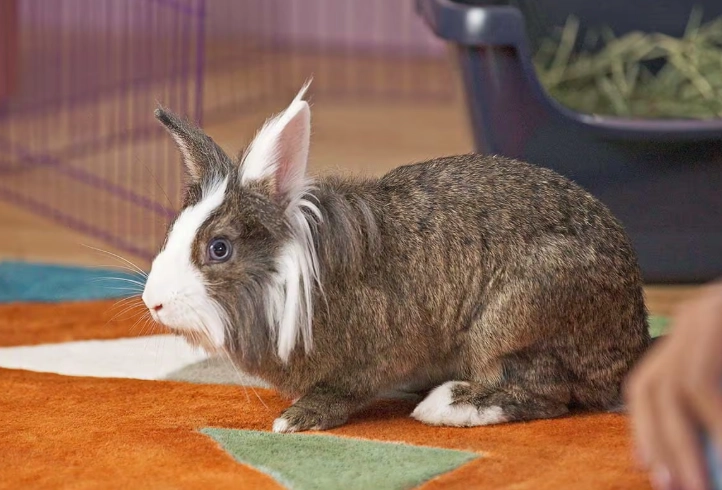
Why? Because rabbits love to graze while they poop. It's their prime time for a snack. By putting the hay in or directly over the litter box, you create a powerful incentive for them to spend time there. They associate the box with good things (food!) and are already in position when nature calls.
I use a cheap, wall-mounted hay rack that hangs over the box. It keeps the hay clean and encourages them to hop in.
The Step-by-Step Training Process: Patience is Key
Okay, you've got your spayed/neutered bunny, a giant box, safe litter, and a mountain of hay. Now let's get down to the actual process of how to litter train your rabbit.
Start small. Confine your rabbit to a smaller, manageable space like a puppy pen (x-pen) or a single, bunny-proofed room. A huge, unfamiliar area is overwhelming and encourages territory marking.
Step 1: Observation and Placement
For the first day or two in this small space, just watch. Where does your rabbit naturally choose to pee? You'll often see them favor a corner. That's your target.
Once you've identified the preferred corner, place the fully set-up litter box right on top of that spot. You're not forcing a new habit; you're accommodating an existing one. This is the biggest head start you can give yourself.
Step 2: The Clean-Up Strategy
Any accidents outside the box are your data points. Scoop up any stray poop pellets and put them in the litter box. Soak up urine with a paper towel and place that soggy paper towel in the box too.
Then, clean the accident site thoroughly with a white vinegar and water solution (50/50 mix). This neutralizes the urine smell completely. Household cleaners with ammonia are a bad idea—ammonia smells like rabbit urine to them and can actually attract them back to the spot.
You're doing two things: making the litter box smell like the bathroom, and making everywhere else smell like nothing.
Step 3: Gradual Freedom
Once your rabbit is reliably using the box in their small space for a few days (we're talking 90% of the time), you can grant a little more freedom. Open the pen door to let them explore a new area for a short, supervised period. Put a second litter box in the new area, especially if it's far from the first one.
If they have an accident in the new space, don't get mad. Just gently herd them back to their pen or main room for a while. It's a signal they're not quite ready for that much space. Slowly increase the territory as their consistency holds.
Troubleshooting the Common Problems
Even with the best setup, things can go sideways. Here's how to decode and fix the most common issues.
"My rabbit pees in the box but poops everywhere!"
This is incredibly common and usually the easiest to fix. Poop scattering is often a territorial marker or just a happy little trail they leave while exploring. It's less about bodily function and more about communication.
The solution? Just keep doing what you're doing. Scoop the stray poops into the box. As your rabbit becomes more settled and feels secure in their environment (this can take weeks or even months), the territorial pooping will decrease dramatically. Spaying/neutering is, again, crucial here. You'll likely always find a few stray pellets—it's just part of living with a rabbit. Consider them bunny confetti.
"He uses it perfectly, then suddenly starts peeing next to it."
Regression happens. Don't panic. First, ask yourself:
- Did I change the litter type or box location suddenly?
- Is the box clean enough? A dirty box is a major turn-off.
- Has something new stressed them? A new pet, visitor, furniture moved?
- Could there be a medical issue like a Urinary Tract Infection (UTI)?
Medical issues are a big one. If your previously well-trained rabbit suddenly starts having accidents, especially if the urine looks strange or they seem to be straining, a vet visit is your first stop. Pain can cause them to avoid the box.
"She sleeps in her litter box! Is that normal?"
Totally normal. Rabbits feel safe in enclosed, scent-filled spaces. If the box is big enough, they might just decide it's a comfy bed. This is fine, as long as it's kept clean. Just make sure you're providing other cozy sleeping areas (like a hidey-house) as an alternative.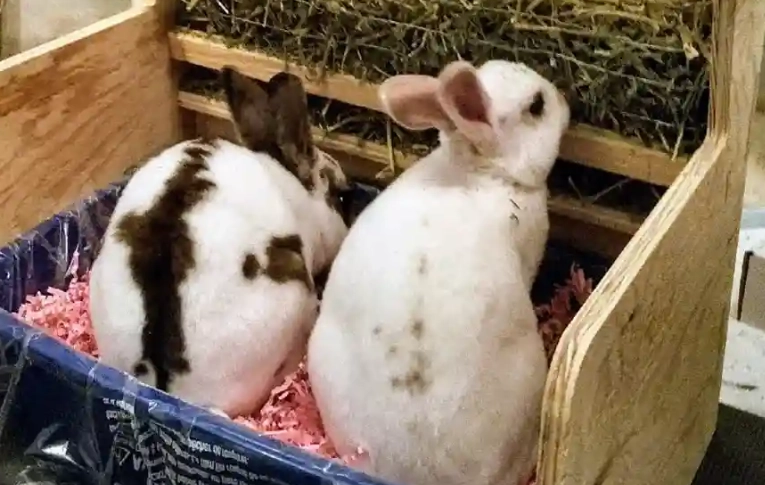
Advanced Tips and Fine-Tuning
Once you've got the basics down, these finer points can make life even smoother.
- Multiple Rabbits: If you have a bonded pair, you must provide multiple litter boxes. The general rule is one per rabbit, plus one extra. They need options to avoid territorial squabbles.
- The Digging Bunny: Some rabbits love to dig and fling litter everywhere. A large, high-sided storage tote with a U-shaped entrance cut out of one side can be a great DIY solution. Or, place a washable mat under and around the box to catch the mess.
- Maintenance Routine: Scoop out wet spots and soiled hay daily. Completely change the litter and wash the box with mild soap and water 1-2 times per week. A clean box is a used box.
Honestly, the brand of litter matters less than the consistency of your cleaning. A dirty box is the fastest way to undo all your hard work on how to litter train a rabbit.
Look, at the end of the day, learning how to litter train a rabbit is a partnership. It's about listening to them as much as directing them. Some days will be perfect, and some days you'll find a surprise behind the couch. That's okay.
The goal isn't robotic perfection. It's a manageable, clean coexistence where you both understand the rules of the house. When it clicks, it's incredibly rewarding. You'll look over and see your bunny hop calmly into their box, do their business, and then flop out for a nap, and you'll think, "We did it."
And you know what? You will.
Start with the basics—the surgery, the big box, the safe litter, the hay. Be patient, be consistent, and clean a lot. Your rabbit wants to be clean. You just have to show them how.
Comment