Quick Navigation
Okay, let's tackle this one head-on. It's a question that pops up more often than you'd think in online pet forums and curious Google searches. You've maybe seen some weird photo online or heard a wild story from a friend of a friend. So, can a cat and a rabbit breed? The short, definitive, no-room-for-debate answer is absolutely not. It's biologically impossible for a cat and a rabbit to produce offspring together. Zero chance. Nada.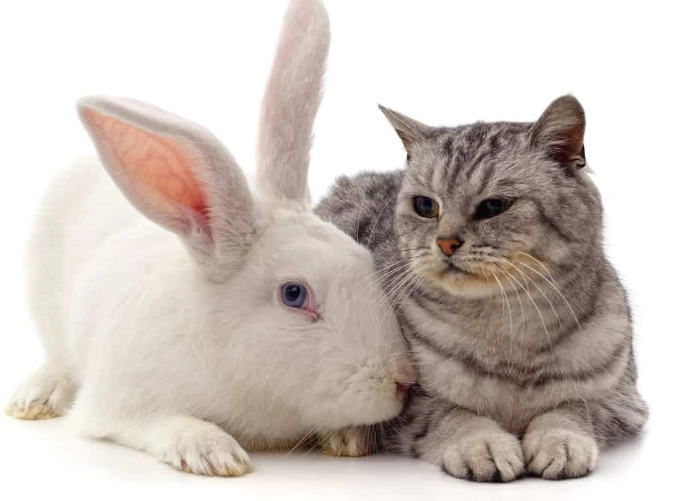
But hey, if the answer was that simple, you wouldn't be here reading this, right? You're probably wondering why it's impossible, what would happen if they tried, and maybe you're really asking a deeper question: can these two very different animals even live together safely? I've been around pets my whole life, and I've seen some pretty optimistic (and misguided) attempts at interspecies friendships. Sometimes it works out okay with careful management, but often it's a stress-fest for everyone involved, pets and owners alike.
This article is going to dig into the real science behind why a cat and a rabbit cannot breed, bust some persistent myths, and then get practical. Because most people asking "can a cat and a rabbit breed" are often really trying to figure out if they can have both a fluffy bunny and a curious cat in the same home without disaster. We'll cover that too.
Why It's Biologically Impossible: The Science Part (Made Simple)
Let's break down the concrete barriers. This isn't just about them "not being interested" in each other. It's about fundamental biological roadblocks that no amount of curiosity can overcome.
1. They're From Completely Different Branches of the Tree of Life
This is the biggest deal. Cats are carnivores. They belong to the order Carnivora and the family Felidae. Their entire evolutionary history is built around hunting. Rabbits are lagomorphs (order Lagomorpha), not even rodents, which is a common mistake. Their evolution is built around being prey. These orders split from each other tens of millions of years ago. The genetic gap between them is enormous.
Think of it like trying to plug a USB-C cable into an old AC power outlet. The shapes, the wiring, the fundamental purpose—it's all wrong.
2. The Chromosome Mismatch is a Deal-Breaker
This is the technical knockout. Every species has a specific number of chromosomes, which are like the instruction packets for building an organism.
| Animal | Chromosome Number | Scientific Name |
|---|---|---|
| Domestic Cat | 38 | Felis catus |
| Domestic Rabbit | 44 | Oryctolagus cuniculus |
See that? A cat has 38, a rabbit has 44. For reproduction to even have a ghost of a chance, the chromosome numbers need to be compatible so they can pair up correctly during meiosis (that's the cell division that creates sperm and eggs). A cat's sperm carrying 19 chromosomes meeting a rabbit's egg with 22 chromosomes? The resulting cell would have 41 chromosomes with completely mismatched, non-homologous pairs. The embryo would fail to develop at the earliest cellular stage, if fertilization somehow occurred, which it can't.
So, can a cat and a rabbit breed on a genetic level? Not a hope.
3. Reproductive Anatomy and Physiology Don't Align
Even if we ignore genetics, the mechanics don't work. The anatomy is incompatible for successful mating. Furthermore, the reproductive cycles and signals are entirely different. A rabbit is an induced ovulator (she releases eggs in response to mating), while a cat is also an induced ovulator but responds to completely different biological triggers and hormones. Their "languages" of reproduction are foreign to each other.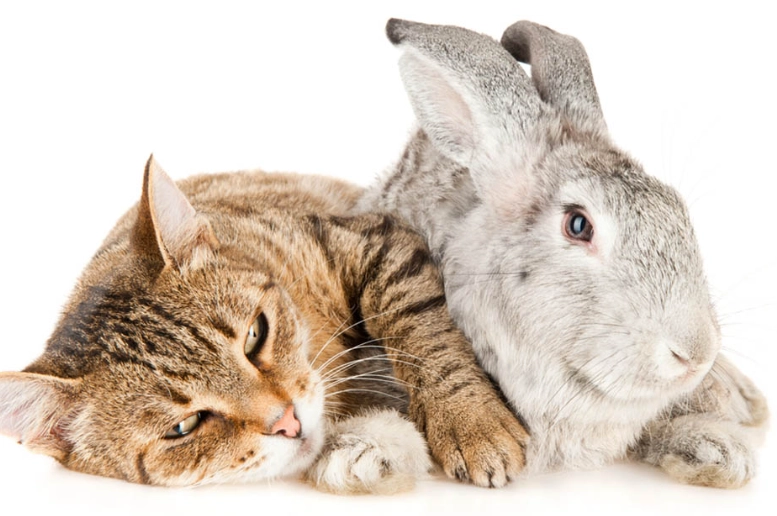
What About Mating Behavior? Could They Even Try?
This is where things get dark, and it's crucial to understand for pet safety. While they cannot breed, you might observe what looks like mating behavior.
Sometimes, a cat (especially an unneutered male) may mount a rabbit. This is not a romantic or reproductive attempt. It is almost always an act of dominance, aggression, or misplaced play behavior. A rabbit is a prey animal. Being mounted by a predator is an intensely terrifying and stressful experience, not a consensual one. It can lead to severe injury, as a scared rabbit can kick out with powerful hind legs, breaking its own back or causing the cat to retaliate with claws and teeth.
I once knew someone who thought their cat was "being friendly" to their rabbit this way. They didn't intervene. It ended with a frantic trip to the emergency vet for the rabbit, who suffered deep scratches and shock. The owner felt terrible, but the misunderstanding had real consequences.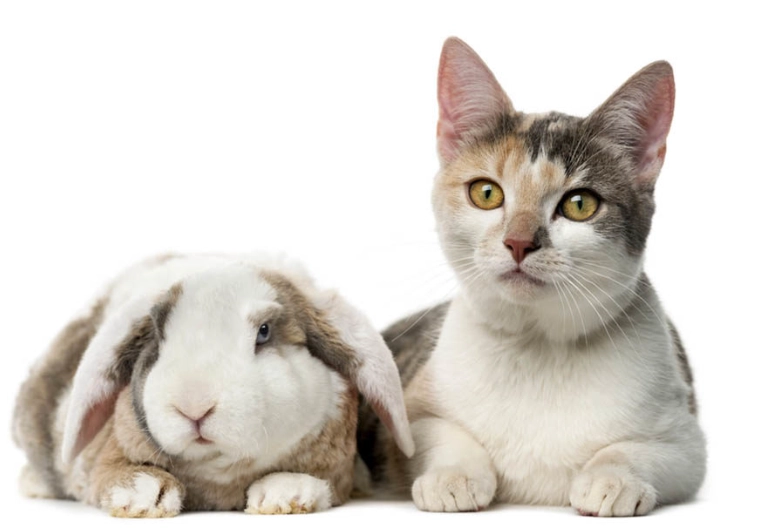
So, if you're searching "can a cat and a rabbit breed" because you've seen odd behavior, please interpret it as a potential threat, not a curiosity.
The Real Question Behind the Search: Can Cats and Rabbits Live Together?
I think this is the heart of it for most people. They aren't really expecting a miraculous hybrid; they want a multi-species pet family. So, let's shift gears from impossible biology to practical cohabitation.
It's not a simple yes or no. It's a "maybe, but with extreme caution, preparation, and an acceptance that it might never work." A rabbit's natural instinct is to flee from predators. A cat's natural instinct, even a well-fed one, is to chase small, quick-moving things. You're asking two creatures to override millions of years of evolution.
Factors That Increase the Chance of Success
- Personality is Everything: A cat with a very low prey drive—think a lazy, senior cat who ignores birds outside—is the only candidate. An energetic kitten or a hunting breed like a Siamese is a terrible idea. The rabbit should be confident, large (like a Flemish Giant), and not easily spooked.
- Spay and Neuter: This is non-negotiable. It reduces hormonal drives, aggression, and territorial behaviors in both animals.
- Early, Controlled Introduction: Introducing a kitten to a resident rabbit, or vice versa, is generally easier than introducing adult animals with set behaviors.
- The Rabbit's Space is a Sanctuary: The rabbit must have a large, secure enclosure (like an exercise pen) that the cat cannot access. This is the rabbit's safe zone, where it can retreat and feel completely secure 24/7. The cat should never be allowed in this space.
- Supervision, Supervision, Supervision: Any time they are together outside the rabbit's sanctuary, you must be in the same room, fully attentive. No scrolling on your phone. Be ready to intervene instantly.
Why It Often Fails (The Realistic, Negative Side)
Let's be brutally honest. Many attempts fail, causing stress and risk. The rabbit lives in a state of low-grade fear, which is terrible for its health (they are fragile stress-wise). The cat becomes frustrated or fixated. The owner becomes a constant referee. It's exhausting and unfair to the pets.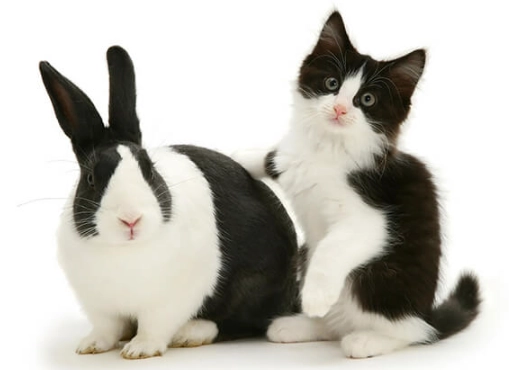
Organizations like the House Rabbit Society, a highly respected authority on rabbit care, generally advise against housing rabbits with predator species. They emphasize that the welfare of the rabbit—the prey animal—must be the absolute priority, and that risk is inherent in such pairings.
Answers to Your Other Burning Questions (FAQ)
Can a cat and a rabbit be friends?
"Friends" is a human concept. They can learn to tolerate each other's presence, and in rare, ideal cases, exhibit behaviors we interpret as affiliative, like sitting near each other calmly. But it's more accurate to call it peaceful coexistence under careful management, not friendship in the way two cats or two rabbits bond.
What about other rabbit-predator pairs, like rabbits and dogs?
The same biological rule applies: no breeding is possible. The cohabitation risks are similar, often worse due to dogs' size and strength. Extreme caution is needed, referencing resources from groups like the American Veterinary Medical Association (AVMA) on safe multi-pet households.
I saw a picture of a "Cabbit" online. What is it?
"Cabbit" is an internet myth. The photos are usually of cat breeds with genetic mutations (like the Munchkin cat with short legs), rabbits with certain fur patterns, or simply clever photo angles and Photoshop. They are not evidence that a cat and a rabbit can breed.
Is it dangerous for a rabbit to be around a cat?
Yes, it can be, both physically and psychologically. Even if the cat doesn't attack, the stress of living with a predator can suppress a rabbit's immune system, leading to illness (a condition called "stress-induced ileus" where their gut stops moving, which can be fatal). A cat's mere presence can be a constant threat.
So, what SHOULD I do if I have both pets?
Prioritize safety. Keep them separate with solid barriers. Provide the rabbit with a predator-proof haven. Scent-swap blankets before slow, gated introductions. Always err on the side of the rabbit's comfort. And please, get both pets fixed by a veterinarian experienced with both species.
Wrapping It Up: The Final Word
So, can a cat and a rabbit breed? We've been over it. It's a biological impossibility due to genetics, chromosomes, and anatomy. The question itself stems from a misunderstanding of animal biology.
The more relevant and ethical question is about cohabitation.
If your dream is to have a home with both a cat and a rabbit, your primary responsibility is to be a fierce advocate for the rabbit's safety and well-being. Understand that you are managing a predator-prey dynamic, not facilitating a fairytale. It requires immense work, ideal animal personalities, and a willingness to accept failure and keep them permanently separated if needed.
Focus on providing each animal with the best, most species-appropriate life possible. Sometimes, that means loving them separately. Their health and happiness are what truly matter, far more than answering a quirky question about whether a cat and a rabbit can breed. The answer to that is a firm no, but the answer to giving them both a good life is a thoughtful, informed, and compassionate yes.
Comment