Quick Navigation
If you've ever watched a rabbit suddenly launch itself into the air, you know the feeling. One minute they're munching calmly, the next they're a fuzzy projectile. It's impressive, a bit startling, and it makes you wonder about the limits of those powerful back legs. I remember the first time my own rabbit, Mochi, cleared the side of a laundry basket I thought was safely containing him. My jaw literally dropped. That casual leap over a foot-high barrier sparked my obsession with understanding just what these animals are capable of.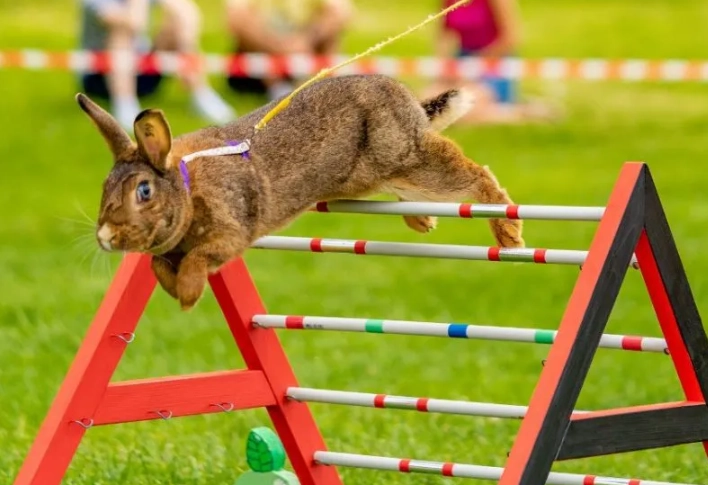
The short, and frankly mind-blowing answer to "how high can rabbits jump?" is this: a typical healthy domestic rabbit can easily jump 2 to 3 feet (60 to 90 cm) vertically. But that's just the average. Athletic individuals, certain breeds, and rabbits with a good reason (like fear or a tempting treat) can shatter that ceiling. We're talking recorded leaps of 4 feet (1.2 meters) and, in extreme cases, claims of rabbits clearing obstacles over 9 feet (2.7 meters) in height when combining a vertical jump with a horizontal scramble. Let that sink in for a second. A creature that often fits snugly on your lap can potentially jump higher than your average kitchen countertop.
But throwing out a big number isn't that helpful on its own, is it? If you're a rabbit owner, you need to know what this means for your pet's safety, enclosure design, and happiness. If you're just curious about animal abilities, you probably want to know the why and the how. This isn't just a trivia fact; it's a core piece of understanding rabbit behavior and biology. We're going to dig into everything: from the muscle power behind the hop to the practical steps you need to take to bunny-proof your life.
What Really Determines How High a Rabbit Can Jump?
It's not a one-size-fits-all answer. Asking "how high can rabbits jump?" is like asking how fast humans can run. It depends on a whole bunch of factors. Some rabbits are natural Olympians, while others are more... couch potatoes. And that's okay! But knowing what influences their jumping ability helps you understand your own bunny.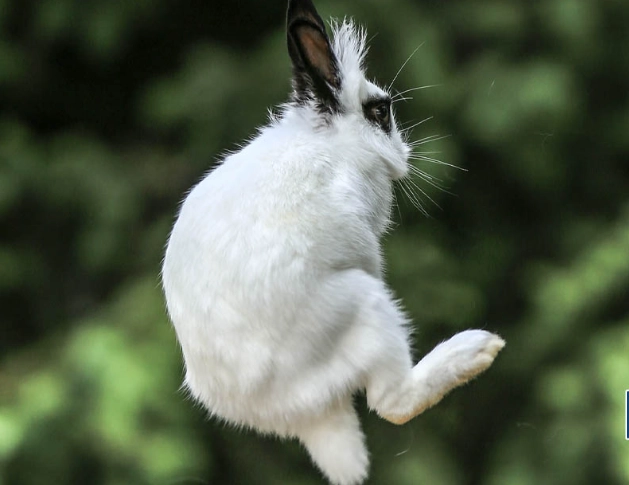
Breed and Size: The Bigger Isn't Always Better Rule
This one often surprises people. You'd think a giant Flemish Giant would be the high-jump champion, right? Not necessarily. While they have immense power, their large, heavy frame works against them for pure vertical lift. Smaller, lighter, and more compact breeds are often the agility superstars. Think of the difference between a weightlifter and a gymnast. Here's a quick breakdown of how some common breeds stack up:
| Rabbit Breed | Average Size | Typical Jumping Height | Notes on Agility |
|---|---|---|---|
| Netherland Dwarf | Very Small (2-2.5 lbs) | 2 - 2.5 ft (60-75 cm) | Extremely quick and agile. Their small size lets them achieve great relative height. Can be escape artists. |
| Dutch | Small/Medium (4-5.5 lbs) | 2.5 - 3 ft (75-90 cm) | A well-balanced, athletic breed. Often used in rabbit hopping sports. Reliable and powerful jumpers. |
| Mini Rex | Small (3.5-4.5 lbs) | 2 - 3 ft (60-90 cm) | Muscular and compact. Their powerful hindquarters give them a strong explosive push. |
| English Spot | Medium (5-8 lbs) | 3+ ft (90+ cm) | Known for being active and athletic. Long-legged build contributes to high, graceful jumps. |
| Flemish Giant | Giant (13+ lbs) | 1.5 - 2.5 ft (45-75 cm) | Powerful but less vertical spring. More likely to push through or over obstacles than purely jump them. |
| Lop Breeds (Holland, Mini) | Small/Medium | 1.5 - 2 ft (45-60 cm) | Often less athletic due to body structure and sometimes a more placid temperament. Not known for high jumping. |
See what I mean? The compact powerhouses often take the lead. Of course, there are always exceptional individuals in any breed. I've heard of a particularly spry Holland Lop that could give a Netherland Dwarf a run for its money.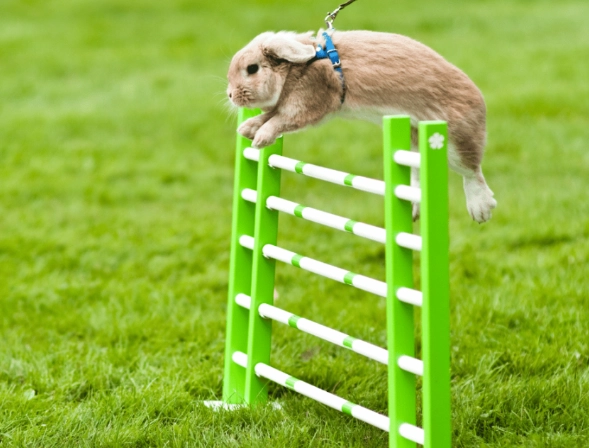
Age, Health, and Fitness: The Use-It-or-Lose-It Principle
A young, healthy rabbit with plenty of space to run and play will be at peak jumping performance. Baby rabbits (kits) might be bouncy, but they don't reach their full powerful potential until they're fully grown, around 6-9 months old. Prime jumping age is generally from 1 to 5 years old.
After that, arthritis, weight gain, or general loss of muscle tone can slowly reduce how high a rabbit can jump. An overweight rabbit is carrying extra baggage that makes getting airborne much harder and is terrible for their joints. It's a sad cycle: less movement leads to less ability to move.
Health issues are a major factor. Sore hocks (ulcerated feet), spinal problems, or past injuries can severely limit or even eliminate a rabbit's desire and ability to jump. That's why observing changes in your rabbit's jumping behavior is important. If your once-acrobatic bunny suddenly stops hopping onto the couch, it's a vet visit signal, not just a sign of laziness.
Fitness is huge. A rabbit confined to a small hutch will not have the muscle development or confidence of one with a large exercise area. Jumping is a skill that improves with practice. Which leads perfectly to the next point...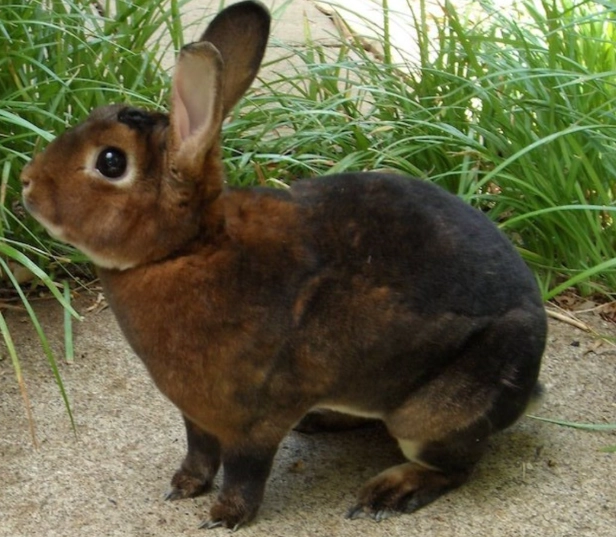
Motivation and Environment: The X-Factor
This is where things get interesting. A rabbit's maximum jump height is one thing. What they do every day is another. Motivation is a massive driver. What will make a rabbit attempt a heroic leap?
- Fear: This is the biggest one. An adrenaline surge from a perceived predator (the vacuum cleaner, a sudden loud noise, an unfamiliar dog) can trigger an astonishing, seemingly impossible jump. This is how stories of rabbits clearing 4-foot fences originate. It's a panic-powered survival instinct.
- Curiosity/Exploration: Rabbits are naturally inquisitive. If they see something interesting on the other side of a barrier, they might just try to get to it. A tasty-smelling treat on a table can be a powerful lure.
- Playfulness & Enrichment: A happy, bored rabbit might jump just for the fun of it! Providing safe platforms, tunnels, and cardboard castles encourages this natural behavior and keeps them fit.
- Territoriality or Social Reasons: Trying to get to (or away from) another rabbit.
The environment itself teaches them. A rabbit living in a home with low furniture they're allowed on will become a proficient and confident jumper. A rabbit in a barren pen might not develop those skills or the bravery to try.
The Science Behind the Hop: Why Are Rabbits So Good at This?
It's not magic; it's brilliant evolutionary engineering. Understanding the "how" makes the "how high" even more impressive.
First, those back legs. They're not just strong; they're a specialized propulsion system. The muscles in a rabbit's hindquarters (the glutes and thighs) are enormous relative to their body size. These are fast-twitch muscles, designed for explosive power, not endurance. The skeleton is lightweight but strong, and the spine is flexible, allowing for a powerful coiling and uncoiling motion during the jump.
Then there are the feet. Rabbit hind feet are long, acting like natural levers to increase the force of the push. They're also heavily padded to absorb the shock of landing. It's a perfect system: maximum launch power, minimum landing impact.
Their light body weight is the final piece of the puzzle. All that power is launching a relatively light frame. The power-to-weight ratio is off the charts compared to many other animals. According to research into lagomorph locomotion, this musculoskeletal design is almost perfectly optimized for rapid, evasive leaps, a primary defense mechanism against predators in the wild. You can read more about the biomechanics of animal jumping in studies available through resources like PubMed, which often reference the unique adaptations of rabbits and hares.
It's a survival tool, hardwired into their DNA. The wild European rabbit, ancestor to all our domestic bunnies, lives in warrens but needs to quickly evade foxes, birds of prey, and other threats. That instant, high, and often unpredictable jump is what kept them alive.
Rabbit Jumping as a Sport: Yes, It's a Thing!
If you're amazed by how high rabbits can jump, you should know some people have turned it into a competitive hobby. It's called "rabbit hopping" or "kaninhop," originating in Sweden in the 1970s. Think dog agility, but for bunnies.
Rabbits are trained (using positive reinforcement with treats, never force) to navigate a course of small jumps, tunnels, and sometimes even ramps. The jumps start very low and can be raised for advanced competitors. Organizations like the American Rabbit Breeders Association (ARBA) sometimes include hopping demonstrations or have affiliated clubs. While not all rabbits take to it, for athletic and confident bunnies, it's fantastic mental and physical stimulation. It's a structured way to see just how high and far a motivated, happy rabbit can go in a safe environment. Watching a competition completely changes your perspective on their abilities—they look so focused and proud!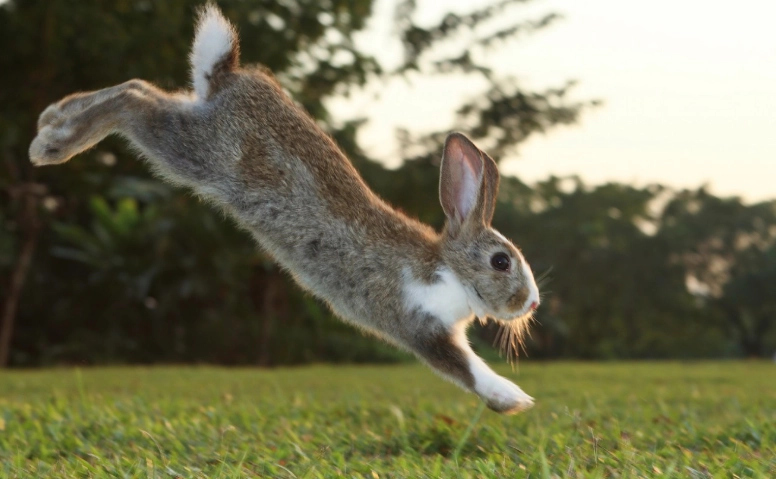
The Critical Safety Stuff: Bunny-Proofing for Jumpers
Okay, so we know rabbits are incredible jumpers. This isn't just cool trivia; it's a major responsibility for an owner. Underestimating how high your rabbit can jump is the number one cause of escapes, lost bunnies, and household accidents.
Here’s my practical, battle-tested advice for living safely with a furry astronaut:
- Indoor Pens/X-Pens: The standard 24-inch or 30-inch tall pens are useless as a primary containment for most rabbits. They are for temporary blocking, not for leaving a rabbit unattended. You need a pen that is at least 36 inches (3 feet) tall. For Netherland Dwarfs and other high-jump breeds, go for 42 or 48 inches if you can. Or, just get a lid. A wire shelf panel from a hardware store makes a great, cheap lid.
- Outdoor Hutches & Runs: This is non-negotiable. An outdoor run must have a secure roof. Not just to prevent jumping out, but to protect from predators climbing in. The sides should be high, but the roof is essential. For hutch attachments, the run should be fully enclosed with wire mesh on all sides, including the top.
- House Bunny Proofing: Assume your rabbit can reach anything on a surface up to 3 feet from the floor. This includes:
- Wires: Chewed wires are a fatal electrocution risk. Hide them in cord protectors, PVC piping, or raise them completely out of reach.
- Houseplants: Most are toxic. Move them to high shelves or hang them.
- Furniture Access: Decide which furniture you're okay with them on. If you don't want them on the bed or couch, be consistent. They can learn, but it's easier to provide approved alternatives like a sturdy stool or cat tree.
- Balconies & Windows: Secure with sturdy mesh. A rabbit can easily jump through an open, unscreened window.
Common Questions About Rabbit Jumping (FAQ)
Can my rabbit hurt itself from jumping too high?
Yes, absolutely. This is a big concern. Landing is the risky part. Slippery floors (hardwood, tile, laminate) are dangerous because their feet can splay out, leading to spinal injuries, broken legs, or torn ligaments. Always provide plenty of traction with rugs, mats, or fleece. Jumping down from excessive heights (like off a high bed or table) is also risky. It's less about the ascent and all about the controlled descent. Provide ramps or step-stools for favorite high spots.
My rabbit never jumps. Is something wrong?
Not necessarily. Some rabbits are just less confident or less athletic by nature. Lop breeds, older rabbits, or those from a confined background may prefer to keep all four on the ground. However, a sudden change in behavior—a jumper who stops—is a red flag for pain or illness and warrants a vet check.
How can I encourage my rabbit to jump more (safely)?
Create a fun, safe agility course! Use cardboard boxes with holes, low tunnels, and small, stable platforms. Start with obstacles just a few inches high and lure them over with a favorite green like cilantro. Never force them. The House Rabbit Society has great enrichment ideas on their website. Praise and treats make it a positive game. It builds their confidence, muscles, and bond with you.
What's the highest jump ever recorded for a rabbit?
This is hard to verify officially, as most extreme claims are anecdotal. In organized rabbit hopping competitions, jumps are typically set up to a maximum of about 1 meter (3.3 feet) for the highest class, and rabbits clear them cleanly. The legendary claims of 4+ feet usually involve panic-induced leaps over fences. The Guinness World Record for the highest rabbit jump, last I checked, was 99.5 cm (just over 3.25 ft) by a rabbit named Mimrelunds Tösen in Denmark. But in a backyard scenario with the right motivation, I genuinely believe some rabbits can exceed that.
How does a rabbit's jump compare to a cat's or a dog's?
Pound for pound, rabbits are arguably more powerful vertical jumpers than cats or most dogs. A cat might jump higher in absolute terms onto a counter (5-6 feet), but they use a different technique, often climbing with their claws. A rabbit's jump is a pure, clean explosive push. They lack the claws to grip and pull themselves up, so their leap has to clear the obstacle in one go. It's a purer measure of leg power.
Final Thoughts: Respect the Hop
So, how high can rabbits jump? Higher than you think, and with more grace and power than we often give them credit for. It's not just a cute trick; it's the essence of what a rabbit is—a prey animal built for breathtaking, evasive bursts of speed and height.
As owners or admirers, our job is to respect that ability. Respect it by providing safe spaces where they can express it without injury. Respect it by securing our homes so their curiosity doesn't lead them into danger. And respect it by marveling at the natural engineering that allows a gentle, grass-eating creature to launch itself like a coiled spring into the air.
The next time you see your rabbit hop onto the sofa, don't just shoo them off. Take a second to appreciate the minor miracle of biomechanics you just witnessed. Then maybe give them a head scratch for being such an amazing athlete. Just keep an eye on your bookshelf after that.
Comment